
What Live Green-Screen Production Teaches B2B Video Marketing About Trust
The finished shot can look effortless while dozens of decisions are being checked underneath it.
That is the pressure behind a live green-screen composite, and it is also the lesson for business video: viewers only see the final moment, but their trust depends on the work that keeps it believable.
TL;DR
- Live production depends on several checks happening at once, not on adding an effect at the end.
- A green screen is only the starting point: keying, masks and clean feeds protect the final image.
- Production teams monitor issues in real time because there is no comfortable pause button in live television.
- Business content needs the same discipline: a clear idea, careful creation and consistent distribution.
- ClientWorkSystem is presented as a way to organise videos, graphics and ads in two minutes a week.
What Is This? (Short Answer)
This is a practical lesson in how invisible production checks create a believable video, then how that same mindset can improve business content.
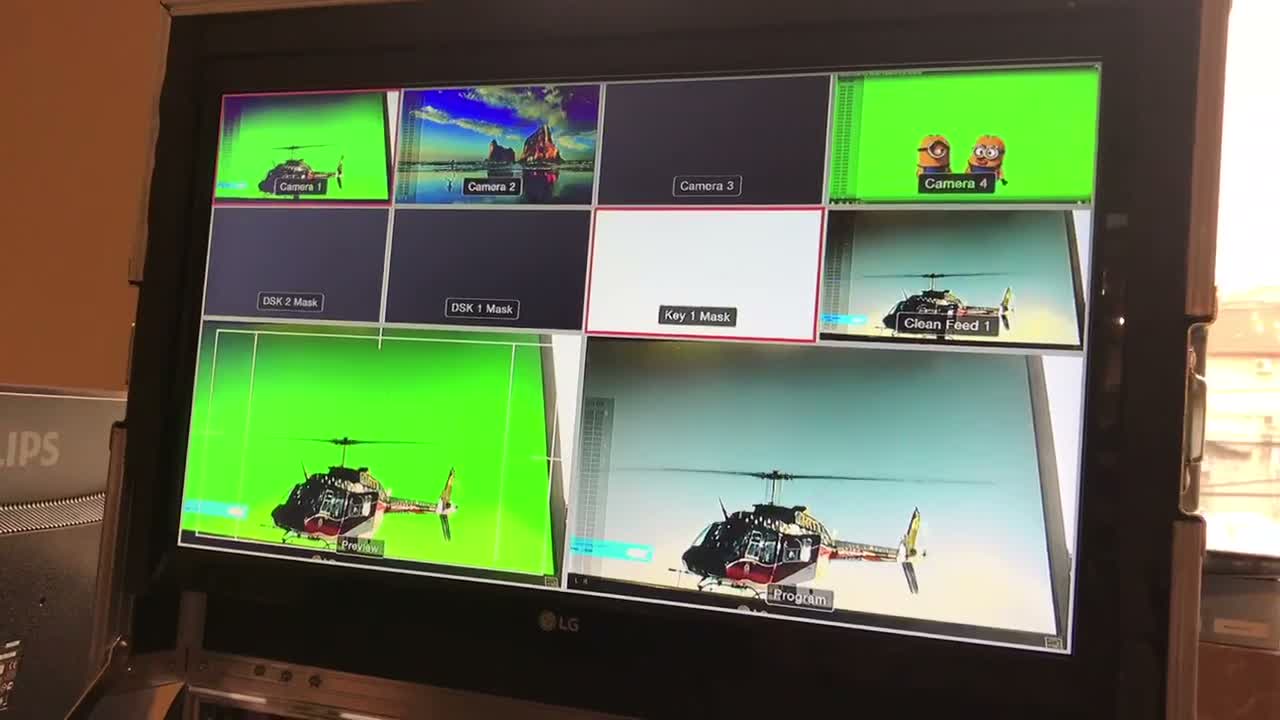
In the live setup described, the team watches Camera 1 through Camera 4 alongside the green-screen source, keyed image, mask views and clean feed. Each view answers a different question before the audience sees the result.
For video marketing for UK businesses, the equivalent is not simply posting more. It is making sure the idea is clear, the content is carefully created and distribution remains consistent.
How does this work?
A believable composite works because the team checks every layer while the production is happening.
The green screen separates the subject from the background only after the key is created. The mask controls where the effect is allowed to appear, while the clean feed shows the picture the audience should receive.
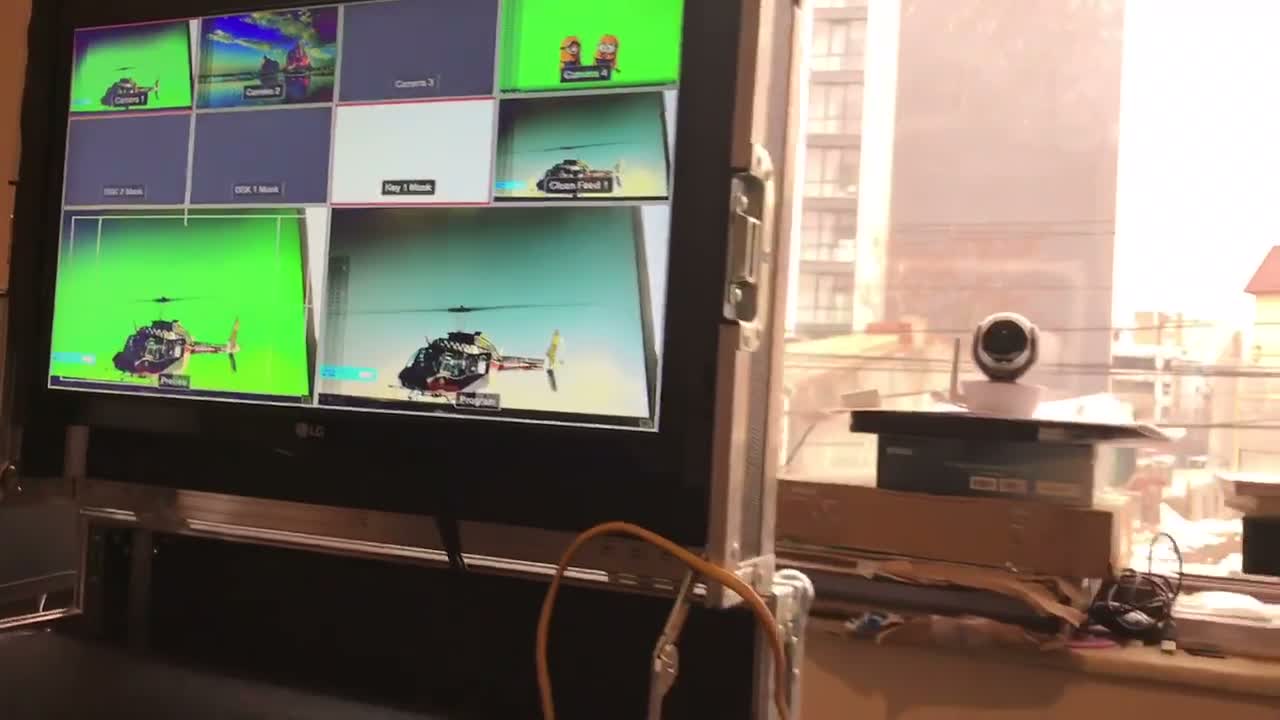
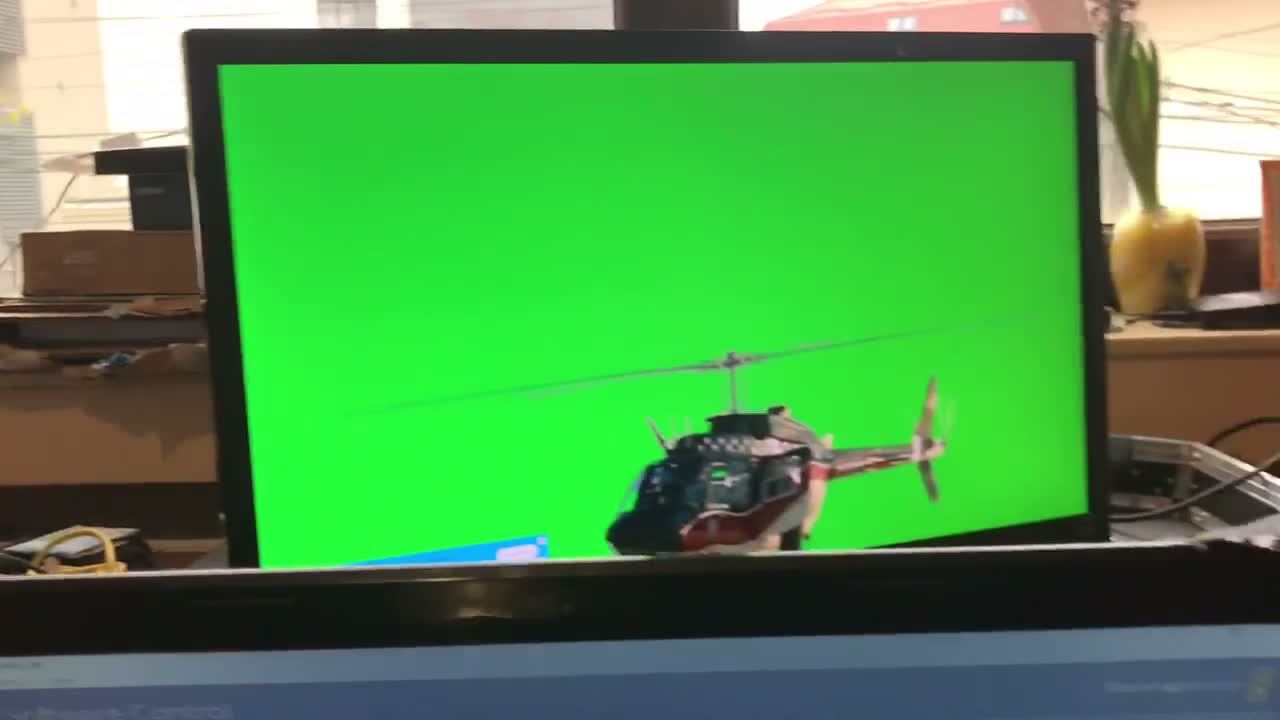
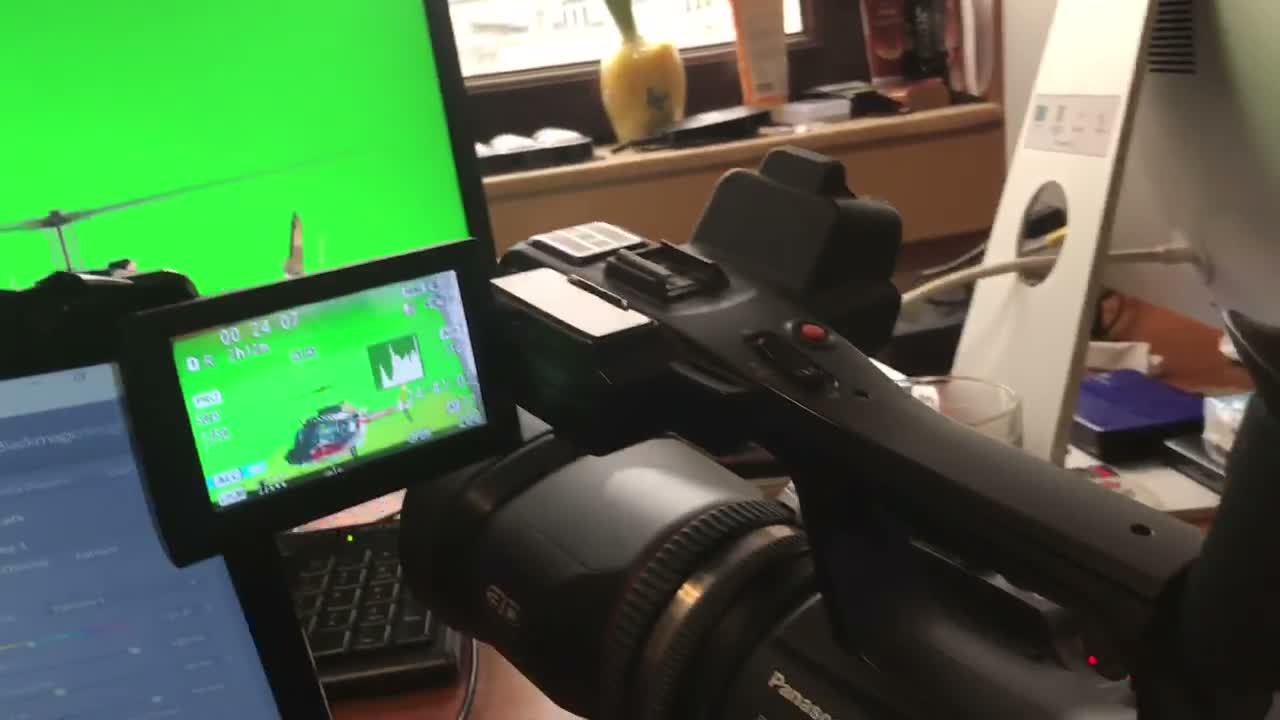
On one monitor, a Panasonic camera display is capturing a reliable image. On the larger LG production screen, the team checks whether the composite still looks believable.
This matters because the helicopter is not simply added after filming. The production team can see the result in real time, find problems early and protect the final picture while cameras and control equipment keep moving.
Key Takeaways
- Good video has more than one layer. What viewers see is the final result of framing, exposure, edges, timing and technical checks working together.
- The clean feed is the standard that matters. Internal views may be useful, but the audience experience is the test.
- Live work rewards early problem spotting. There is no comfortable pause button, so issues must be caught while the moment is still happening.
- Believability is a production outcome. The result has to hold together, not merely contain the right visual effect.
- Business content benefits from the same care. Clear ideas and consistent distribution make an online presence more dependable.
Why does this matter for business video?
Viewers notice the finished moment, but trust is built through the checks they never see.
That does not mean every business needs a live green-screen production desk. It means content should be treated as a connected process rather than a last-minute post.
A video can have a good message and still lose impact if the framing is weak, the presentation feels unreliable or distribution stops after one upload. The production example shows why checking the whole picture matters.
Who is this for?
This is for business owners and professionals who need their online presence to keep working while they run the business.
It is especially relevant to people who understand that social media matters but do not want a complicated content process taking over their week.
The source describes ClientWorkSystem as a way to organise AI-supported videos, graphics and ads with two minutes a week from the business owner. The intended outcome is consistent business content, not a one-off production trick.
What does it cost?
The source material does not state a price for ClientWorkSystem or for the production workflow shown.
That distinction matters. A useful content system should be judged against the time and attention it asks from the person running the business, as well as what it helps them create and distribute consistently.
What are the risks?
The main risk is treating the visible result as the entire job.
In live television, a composite can break when exposure, framing, edges or timing stop lining up. In business content, the comparable problem is publishing without a clear idea, careful creation or a repeatable distribution process.
Another risk is assuming the green screen does all the work. It does not: the key, mask and clean feed are separate controls, and the believable outcome depends on checking all of them.
Concrete Mini-Example: The Helicopter Shot
The helicopter effect is the clearest example in the source.
Rather than filming first and hoping the effect can be fixed later, the team watches the green-screen source, keyed image, masks and clean feed in real time. That gives them a chance to spot a problem before the audience receives a picture that no longer feels believable.
The business-content parallel is simple: build checks into the process before publishing, so the finished video supports trust rather than asking the audience to overlook avoidable gaps.
Implementation Checklist
- Define the single idea your audience should take from each video.
- Check the audience-facing version, not just the working version.
- Review framing, exposure, timing and visual edges before content goes out.
- Use a repeatable process for video, graphics and ads instead of starting from scratch each time.
- Plan for consistent distribution so your online presence does not disappear between posts.
- Keep the owner input focused, then organise the production work around it.
Common Mistakes to Avoid
- Assuming the green screen alone creates a convincing result.
- Checking only the camera image and not the final composite.
- Leaving exposure, framing, edges and timing until the end.
- Publishing business content without a clear idea behind it.
- Making content carefully once, then failing to distribute it consistently.
- Confusing a visible effect with a reliable audience experience.
What should you take from the finished shot?
The point is not that every business video needs a helicopter or a green screen.
The point is that reliable video marketing comes from the checks behind the finished moment. When the idea, creation and distribution work together, your content can keep working while you focus on running the business.
FAQ: Practical Questions People Ask
What is the fastest way to apply What Live Green-Screen Production Teaches B2B Video Marketing About Trust in a real business?
Start with one repeatable workflow, define the outcome, and automate only that part first. For example: The finished shot hides the hardest part: making several live decisions line up before the audience sees anything.
On the monitor, Camera 1 to Camera 4 are watched alongside the green-screen source, the keyed image, mask views and the clean feed. The green screen is only the starting point.
How does this approach improve consistency and trust?
It creates a repeatable publishing cadence with clearer messaging and fewer manual delays, which improves audience confidence over time.
Do small teams need expensive tools to implement this?
No. A lightweight stack can work if it covers recording, editing, scheduling, and analytics with a clear process and ownership.
What should be measured first to validate results?
Track output consistency, content completion time, and conversion indicators (qualified leads, booked calls, or sales conversations).
Why is LPV Agency focusing on this strategy?
Because it reduces execution friction while improving visibility and lead quality. The goal is practical growth, not vanity metrics.