Business marketing systems help owners stay visible by connecting their message, content, publishing and follow-up into a repeatable process. At London Tech Week, seeing the Atlassian Williams F1 Team car brought that idea into focus for me: the result gets attention, but the work behind it makes performance possible.
What can business marketing systems learn from Formula One?
Business marketing systems can learn from Formula One that speed depends on coordination, data, timing and people making calm decisions under pressure.
Barclays Eagle Labs brought the Atlassian Williams F1 Team car into the room at London Tech Week. It was more than a good photo opportunity: it made a business truth very visible.
Seeing the car indoors was not my usual office parking spot, but it made the point instantly. Formula One is glamorous on the surface, yet the performance comes from everything the audience does not see.
The data. The timing. The team. The calm decisions under pressure.
Those ingredients also help separate businesses that look busy from businesses that build momentum. In F1, speed without coordination is chaos; in business, marketing without a system is just noise.
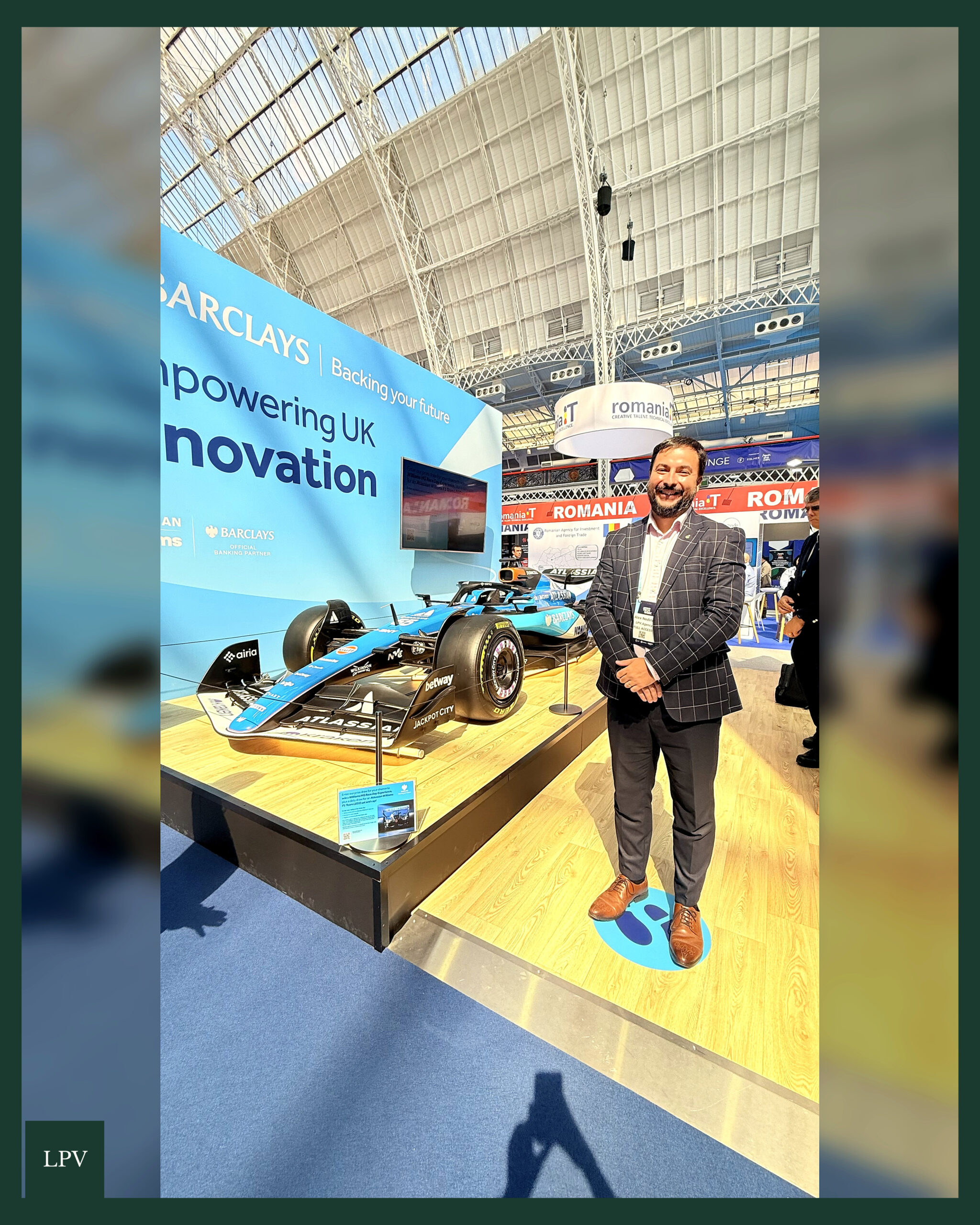
Caption: Barclays Eagle Labs brought Formula One theatre to London Tech Week with the Atlassian Williams F1 Team car — a reminder that performance is built behind the scenes.
London Tech Week always brings together energy, ambition and ideas. The car stood out because it gave those ideas a tangible setting: the visible result matters, but the system behind it matters more.
That is also why the Barclays message, “Backing your future,” landed well with me. Founders do not just need more ideas; most already have plenty of those.
They need better backing, better rooms, better partners and better systems. That applies whether you are scaling a start-up in London, building a local service business in Harold Wood, or trying to become the obvious choice in Romford.
For another perspective on the value of the people and ideas in the room, read our reflection on London Tech Week and the value of being in the room.
What goes into a repeatable marketing process?
A repeatable marketing process connects positioning, content strategy, production, publishing, measurement and follow-up so that visibility does not depend on a burst of motivation.
The visible output is the final expression of a deeper operating model. For a racing team, that model includes engineers, telemetry, pit strategy, driver feedback and rapid decision-making.
For a business, it might include positioning, content strategy, CRM workflows, video editing, scheduling, reporting and follow-up. Each part has a job, and the parts need to work together.
Data helps you know what is working instead of guessing. In marketing, that can mean looking at watch time, enquiries, reach, conversions and local search visibility.
Timing matters too. Publishing consistently and responding quickly can compound trust, while a clear distribution rhythm means posting does not happen only when someone remembers.
The team matters because I do not think one founder should have to remain the strategist, editor, copywriter, scheduler and analyst forever. A process should also keep moving when the business gets busy, so decisions can stay calm under pressure.
That is where our work at LPV Agency connects with the idea of performance behind the scenes. We position LPV as a social media autopilot for UK businesses that hate marketing but understand its importance.
The business owner records just two minutes of video per week. Our agents handle the strategy, editing, posting and consistency, turning a small weekly input into a visible authority-building system.
The aim is not to do more marketing for its own sake. It is to build a repeatable way to stay visible while the owner focuses on delivery, sales and leadership.
Our article on how done-for-you social media helps London businesses reclaim their week explores that approach further.
Who can benefit from a video marketing system?
A video marketing system is especially relevant to founders, consultants, service businesses and male business owners who want to be more visible without letting marketing take over their week.
It is also useful for businesses looking for done-for-you social media support in London, automated video marketing services in the UK, or a B2B video marketing agency in London that understands practical execution as well as content strategy.
Whether you are based in London, Harold Wood, Romford or elsewhere in the United Kingdom, the principle is the same. You do not need to become a full-time content creator to build trust online.
You need a repeatable way to capture your thinking, package it clearly and distribute it consistently. Video can help prospects hear your thinking, understand your personality and see your expertise before they enquire.
Consistent content can also support local visibility when it aligns with search terms, service pages, location signals and useful answers to customer questions. If you serve London, Harold Wood, Romford or clients across the UK, make that clear in your content.
For businesses considering how their wider processes support growth, our article on better systems for small businesses that want to grow online looks at the connection between craft and systems.
How can a business build a marketing pit crew?
A business can build a marketing pit crew by creating a simple rhythm for recording, repurposing, publishing, measuring and following up on useful content.
Start with a real customer question. A short answer captures your expertise without requiring you to invent a new topic every time you sit down to record.
- Record one short video each week answering a real customer question.
- Turn that video into multiple assets, including social posts, short clips, blog ideas and email content.
- Create a simple weekly publishing rhythm instead of posting randomly.
- Track the basics: reach, engagement, enquiries, profile visits and website traffic.
- Use a CRM or workflow tool to connect content with follow-up.
- Review your message monthly so your positioning gets sharper over time.
- Delegate editing, scheduling and repurposing if those tasks slow you down.
These steps give each piece of work a place in the process. Recording captures the idea, production prepares it for different uses, and publishing puts it in front of the people you want to reach.
Measurement and follow-up matter because visibility is not the whole job. You also need to understand which content supports trust, enquiries or sales and have a way to respond when someone shows interest.
HighLevel CRM integration, digital twin script testing, local SEO digital marketing in Harold Wood and authority building for professionals work best when they are connected rather than scattered. The same principle applies to the wider workflow: each element should support the others.
That connection between timing, information and reliable results is also the subject of our article on what elite sports timing teaches UK businesses.
What marketing mistakes make consistency harder?
The biggest marketing mistake is confusing activity with progress: a business can post often and still fail to build authority if the content has no strategy behind it.
Vague positioning makes content forgettable. Without a simple capture and production process, ideas get lost; without measurement, the business cannot tell what its content is helping to achieve.
One-off bursts of motivation are another risk. Just as Formula One teams do not win through one fast lap alone, businesses do not win attention through one strong post.
Trying to sound too polished can also get in the way. Clear and useful beats corporate and vague, and relevance matters more than chasing every trend.
Posting only when you feel inspired leaves consistency to your calendar mood. Doing everything manually can create the same problem, because manual marketing often breaks as soon as the business gets busy.
There are consequences to inconsistency: missed enquiries when prospects cannot understand what you do, lower trust when your social presence looks inactive, and fatigue when the founder tries to handle every task.
It can also mean lost authority when competitors show up more often and more clearly. That is why I see done-for-you video marketing as a way to build a working process, not simply a way to post for the sake of posting.
Key takeaways and next step
My main takeaway from London Tech Week is that business marketing systems make consistent visibility possible by bringing the visible content and the quieter work behind it together.
- Speed is never just speed. A system makes the result possible.
- The visible result matters. The car, the post, the campaign and the brand presence all need to look strong.
- The quiet machine matters more. Strategy, timing, editing, automation and consistency create the advantage.
- Founders need better backing. Ideas matter, and the right rooms, partners and systems help turn them into traction.
- Marketing should not depend on mood. A strong content process keeps working when the founder is busy.
Barclays Eagle Labs brought energy, ambition and a bit of Formula One theatre to London Tech Week. The Atlassian Williams F1 Team car was the obvious highlight, but the deeper message was about what sits behind performance.
For me at LPV Agency, that is the heart of effective video marketing for UK businesses. You do not need to become louder; you need a better system behind your visibility.
And yes, I would happily take the F1 car as our next company car — purely for operational reasons, of course. 🏁
Start by recording a short video answering a real customer question, then build a consistent process to turn your thinking into useful content.