
Three Lessons for Clearer Business Videos from 15 Years Behind the Camera
TL;DR
- Start with a question your customers already ask.
- Choose one point you want viewers to remember.
- Answer in your own words, as you would in a conversation.
- Use one useful conversation as the starting point for your next video.
What Is This? (Short Answer)
These are three practical lessons for making business videos that give customers a clear answer. They come from Alex’s experience filming business owners, beginning with his first camera in 2008 and continuing in his work with clients today.
When a business owner sits down to record, it can be tempting to explain everything at once. Alex begins with a simpler question: what should the viewer understand?
That question shapes the seven-part story below and offers a useful starting point for video marketing for UK businesses.
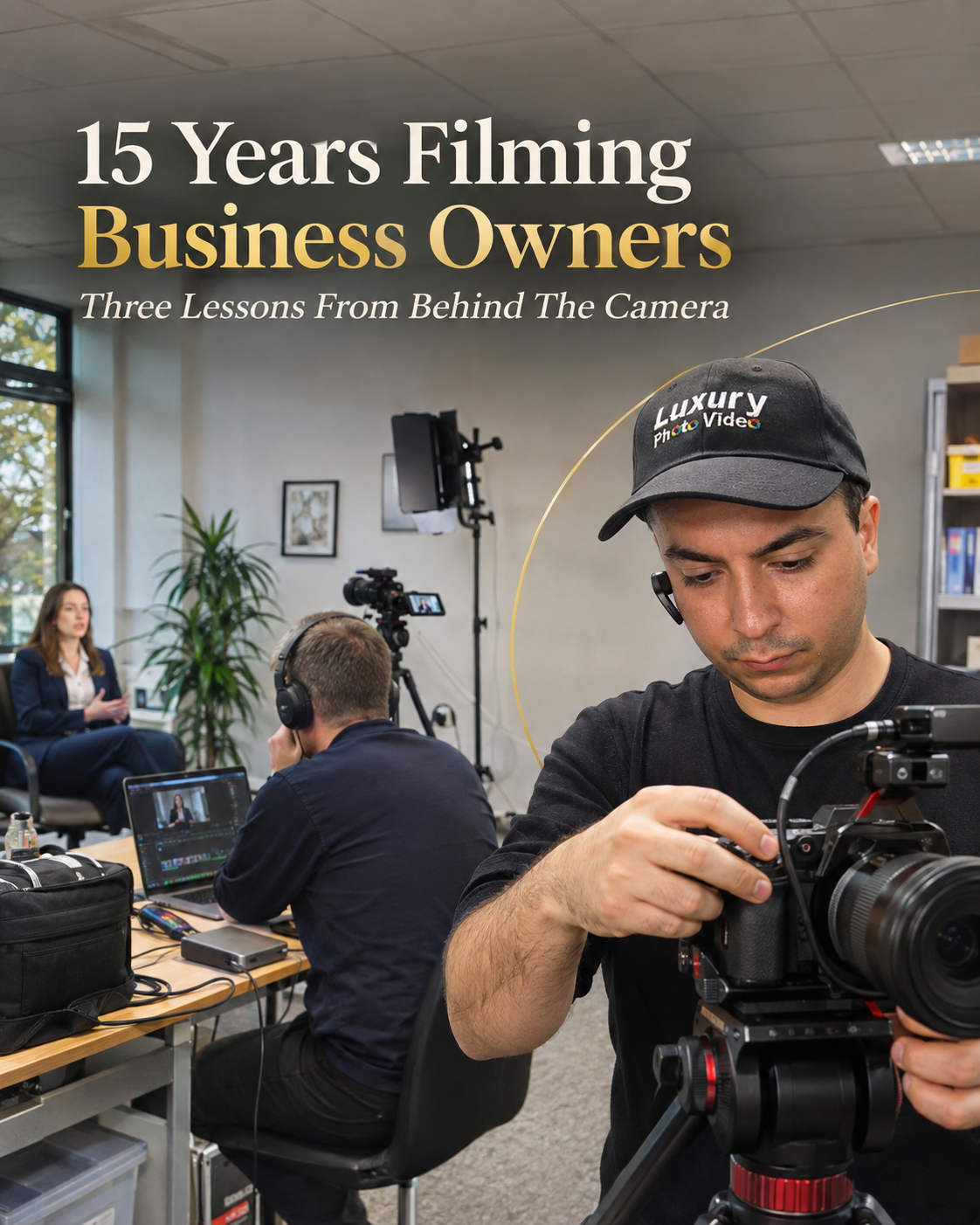
1. Fifteen Years Filming Business Owners
Over years behind the camera, Alex has worked with business owners who know their services inside out. The challenge is often choosing which part of that knowledge will help a customer right now.
A clear video starts by identifying the answer someone needs. That gives the business owner a purpose for speaking and the viewer a reason to keep watching.
2. The Camera Came First, but the Viewer Comes First Today
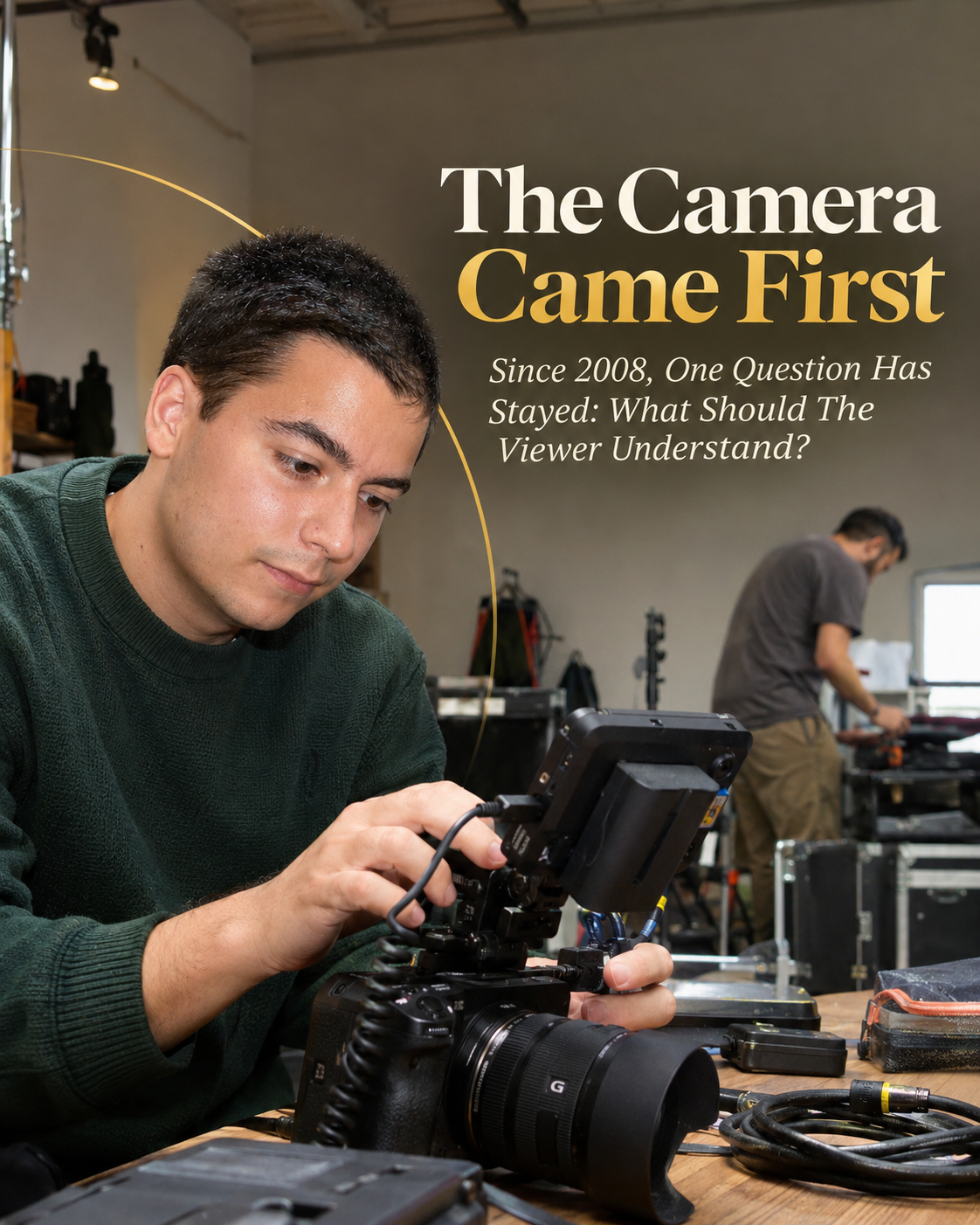
Alex’s first camera arrived in 2008. The equipment has changed since then, but the question he brings to a shoot remains the same: what should the viewer understand?
For a business owner, that might mean helping a customer understand what happens when they first get in touch. The answer gives the video a clear place to start and a practical purpose.
3. Lesson One: Start With the Viewer
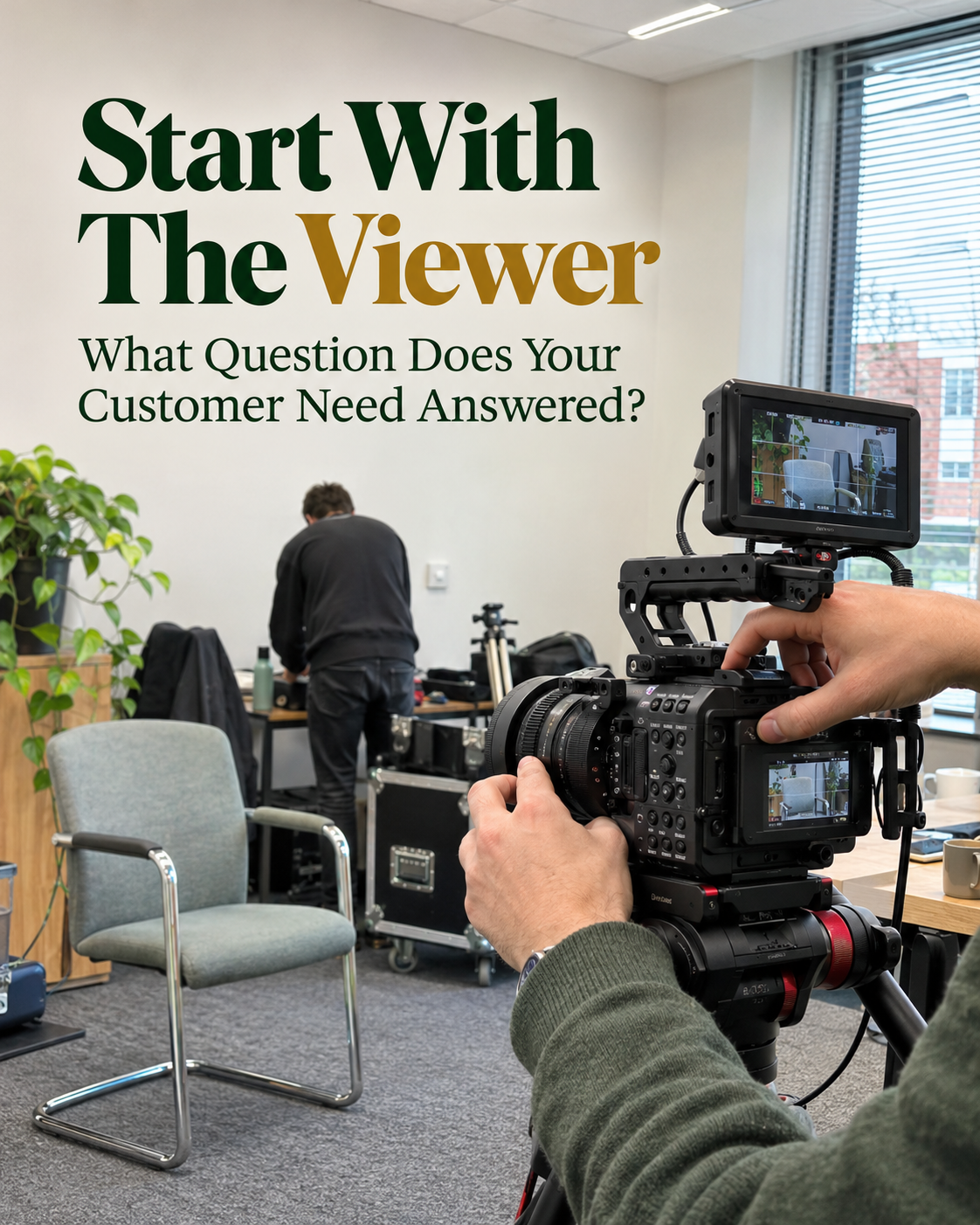
Choose a question your customers ask regularly. Think about the conversations you have before someone decides to work with you: what are they trying to understand?
For example, “What happens when I first get in touch?” lets you explain an early step from the customer’s perspective. It is easier to follow than a video that tries to introduce every service at once.
4. Lesson Two: Make One Point
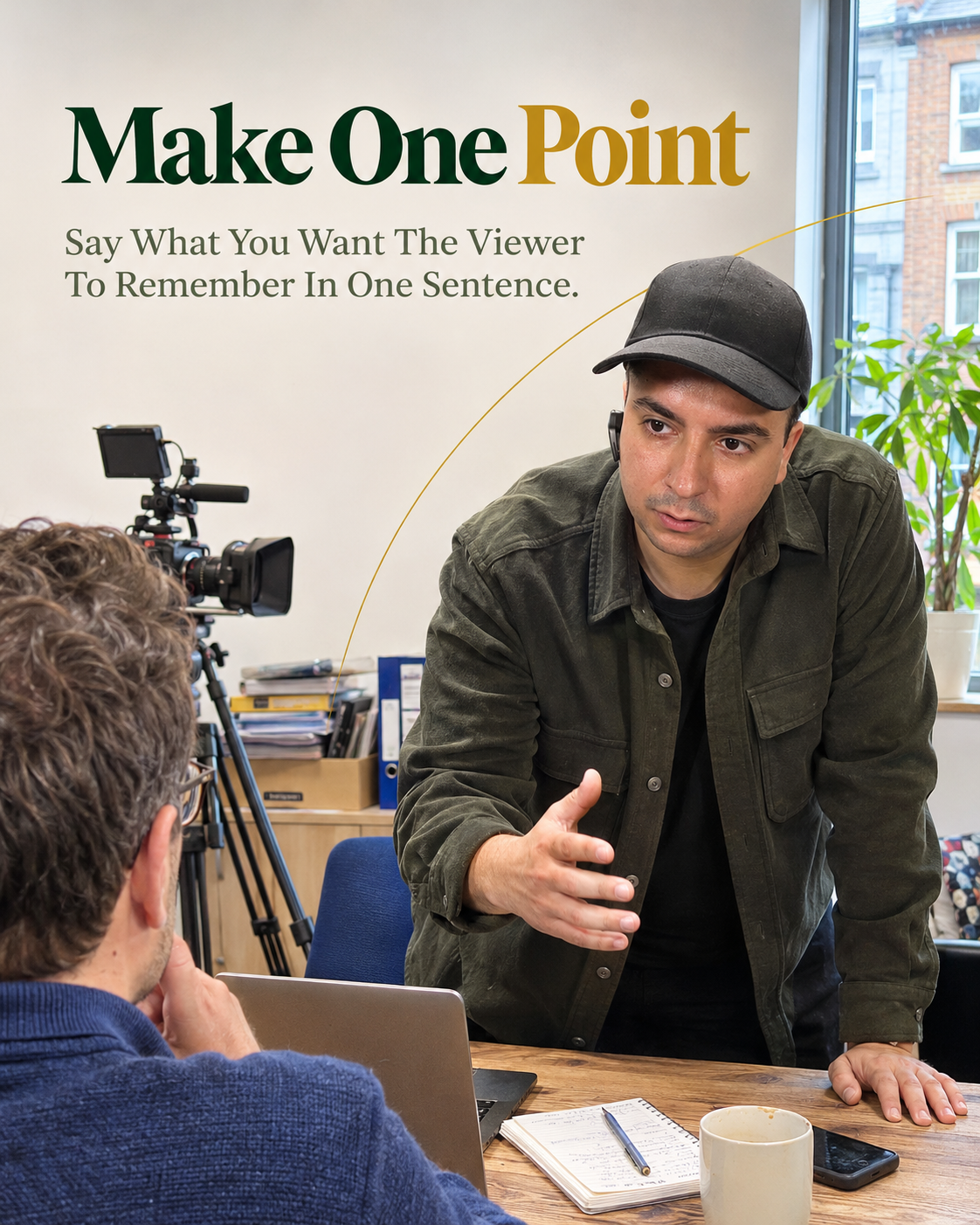
Before recording, write one sentence that captures what you want the viewer to remember. Use it to decide which details belong in the video.
If you are explaining the first step after an enquiry, include the information a customer needs to follow that step. Save other topics for another video, where they can each have the space they deserve.
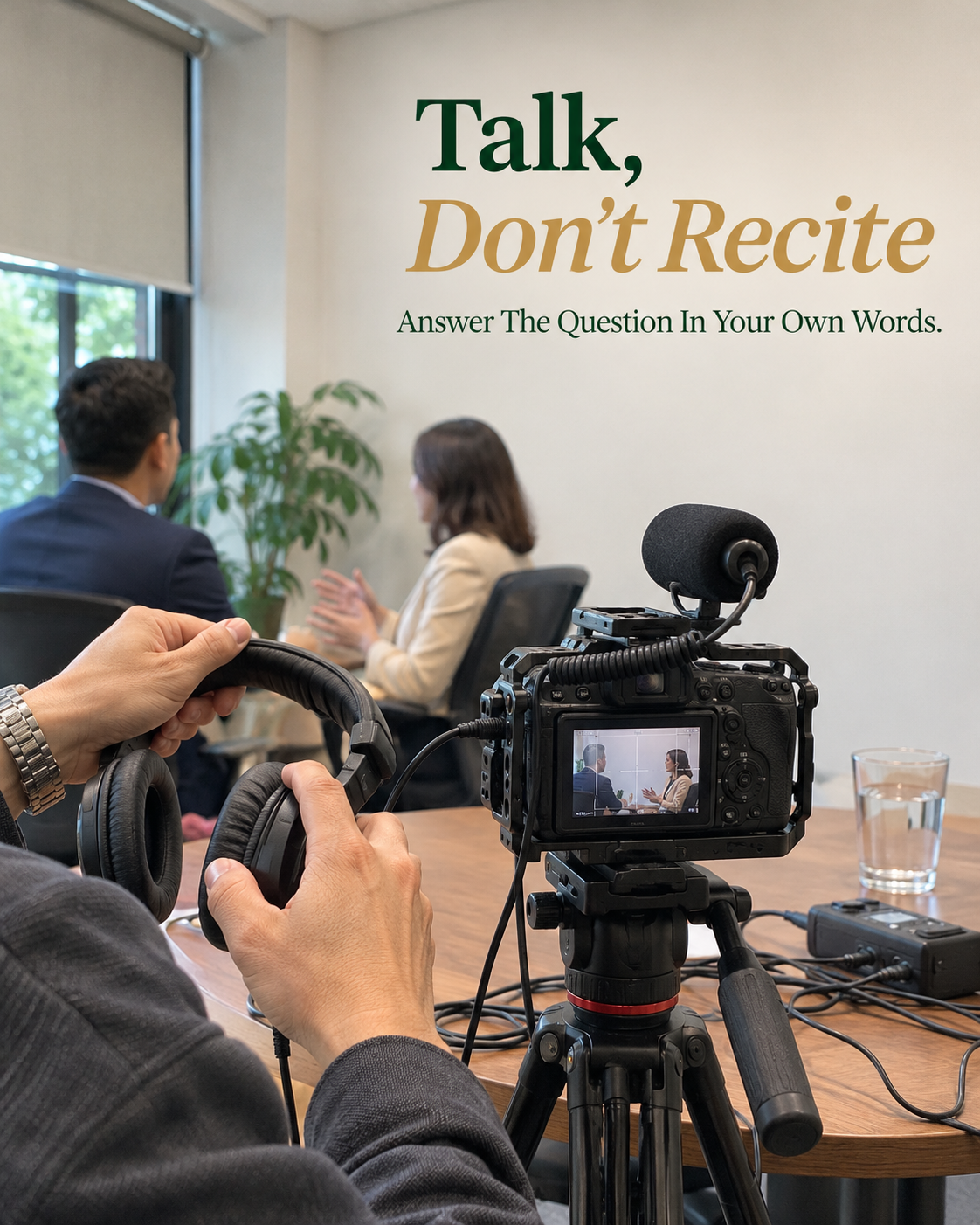
5. Lesson Three: Talk, Don’t Recite
Answer in your own words, as you would if a customer asked you the question in person. Your sentence gives you a direction; it does not need to become a script you recite.
This approach helps the video feel like a useful conversation. It also gives viewers a chance to hear how you naturally explain your work.
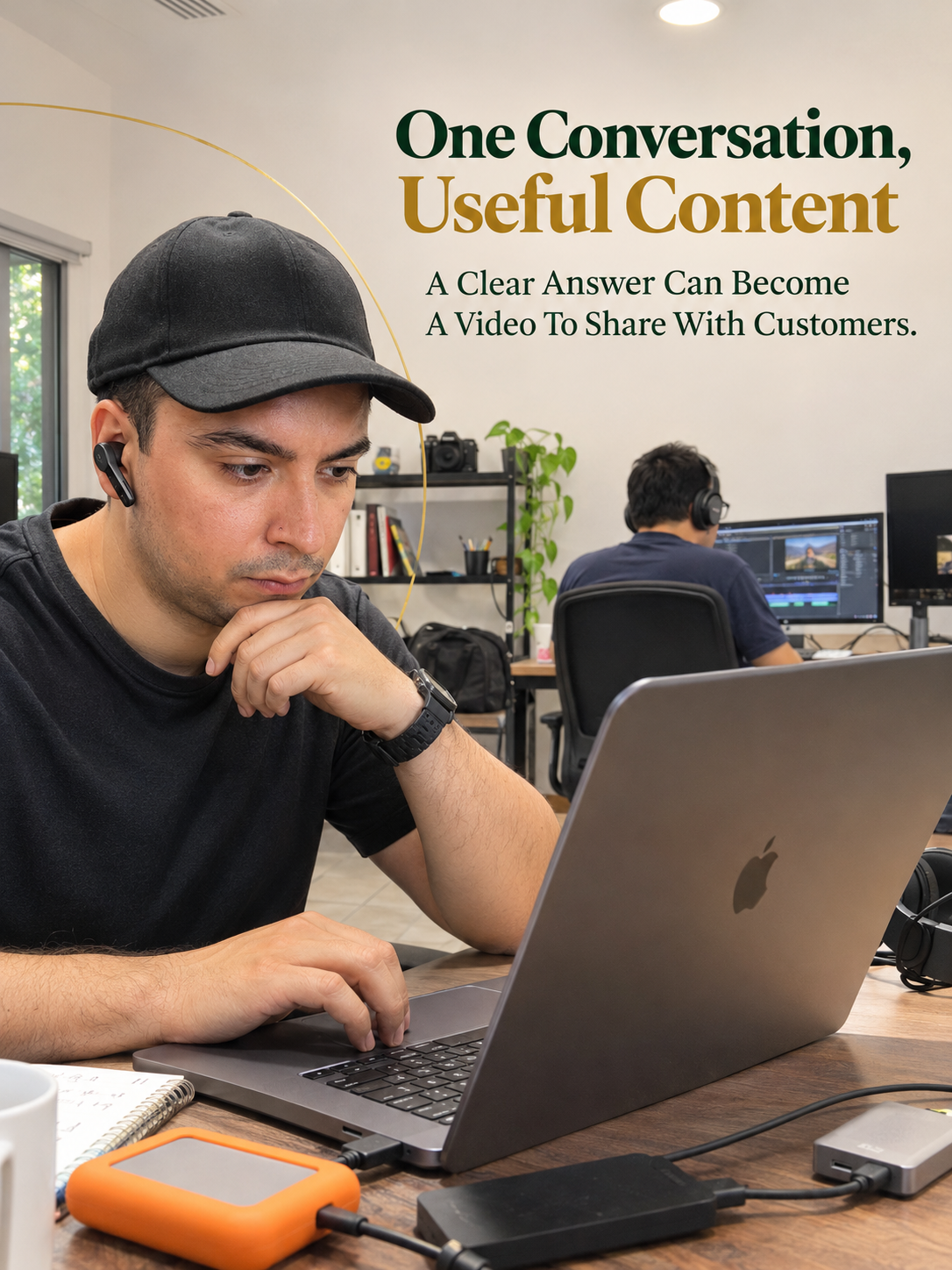
6. How Does One Conversation Become Useful Content?
Start with the customer’s question, state the answer you want them to remember, then explain it aloud. Listen back for details that help the viewer follow the answer and move unrelated points into a list for future videos.
LPV Agency uses this approach with clients who want consistent content without taking on every marketing task themselves. Clients record around two minutes of video each week, while LPV handles strategy, editing, posting and consistency as part of its social media autopilot service for UK businesses.
7. Your Next Video Starts With One Question
Look at the questions that come up in enquiries or customer conversations. Pick one you can answer clearly, then record yourself responding to it.
For a business in London, Harold Wood, Romford or elsewhere in the UK, a straightforward answer can give prospective customers a helpful introduction to how you work.
Who Is This For?
These lessons are for business owners and professionals who want to explain their services more clearly on video. They are especially useful if you know your subject well but find it difficult to decide what to say on camera.
They also apply whether you make videos yourself or work with a B2B video marketing agency in London. In either case, a real customer question gives the content a useful focus.
What Does It Cost?
You can use the three lessons to plan your next video without buying new equipment. The cost of a done-for-you service depends on the support and scope you agree with the provider; contact LPV Agency for a quote.
What Are the Risks?
A video can become confusing when it covers too many points or includes details the viewer does not need yet. It can also sound less natural if you feel pressured to repeat a script word for word.
Keep your audience’s question visible while you plan, and check that your answer addresses it before you publish.
Key Takeaways
- Start with the viewer: choose a question a customer already asks.
- Make one point: write the answer you want remembered in one sentence.
- Talk in your own words: explain the answer as you would in conversation.
- Keep the focus: save useful but unrelated details for another video.
Implementation Checklist
- Write down three questions customers often ask.
- Choose one question for your next video.
- Write one sentence describing what the viewer should understand.
- Explain the answer aloud in your own words.
- Review the recording and remove details that distract from the answer.
Common Mistakes
- Starting with what you want to say before considering what the viewer needs.
- Trying to answer several unrelated questions in one video.
- Adding detail that makes the first step harder to follow.
- Reciting a script when a conversational answer would be clearer.
Make Your Next Business Video Useful
From Alex’s first camera in 2008 to his work with LPV Agency clients today, the aim has stayed clear: give the person watching an answer they can understand.
Save this post for your next video, then choose one question your customers often ask and answer it in your own words.
FAQ: Practical Questions People Ask
What is the fastest way to apply Three Lessons for Clearer Business Videos from 15 Years Behind the Camera in a real business?
Start with one repeatable workflow, define the outcome, and automate only that part first. For example: My first camera was in 2008.
I still start with the same question: what should the viewer understand? Three lessons guide how I film business owners today: 1.
Start with the viewer. Choose a question your customer often asks.
2. Make one point.
Put what you want them to remember into one sentence. 3.
Talk in your own words. Answer as you would in a conversation, rather than reciting a script.
How does this approach improve consistency and trust?
It creates a repeatable publishing cadence with clearer messaging and fewer manual delays, which improves audience confidence over time.
Do small teams need expensive tools to implement this?
No. A lightweight stack can work if it covers recording, editing, scheduling, and analytics with a clear process and ownership.
What should be measured first to validate results?
Track output consistency, content completion time, and conversion indicators (qualified leads, booked calls, or sales conversations).
Why is LPV Agency focusing on this strategy?
Because it reduces execution friction while improving visibility and lead quality. The goal is practical growth, not vanity metrics.