
The UK-APAC tech forum gave UK businesses exploring Asia-Pacific a practical view of policy direction, market access and partnership quality. Held at techUK in London during London Tech Week, it brought government, investment and technology voices together to examine opportunities for companies looking to export, scale, invest or build lasting partnerships.
What happened at the UK-APAC tech forum?
The forum was a packed, photo-led event at techUK, 10 St Bride Street, London, EC4A 4AD, on Tuesday, 9 June. It examined the commercial opportunities, policy shifts and geopolitical currents reshaping the UK-APAC corridor.
Alex from LPV Agency attended with Russell Dalgleish, Global Connector and Business Catalyst, who is known for building ecosystems, partnerships and opportunity across technology, government and innovation.
For me, the useful part was not simply that the event happened during London Tech Week. It was the quality of the signal in the room: who is shaping change, which market shifts matter and where real commercial paths are opening.
The forum began promptly at 9:30am, with attendees asked to arrive by 9:15am. That sounds like a logistical detail, but it also says something about serious business rooms: preparation matters.
Opening speeches ran from 09:30 to 09:40 and were led by Julian David OBE, CEO of techUK. From the beginning, the forum was framed around practical commercial relevance rather than abstract international optimism.

Caption: At techUK in London for the UK-APAC Tech Forum, where the real value was the commercial signal in the room.
The event brought together government, scale-up, investment, quantum and international business voices. Hearing those perspectives together helped put the commercial questions facing UK companies into context.
That value of being present also connects with our reflections on why the real value of London Tech Week is still in the room.
Why does policy direction matter for UK-APAC growth?
Policy direction matters because governments across the UK and APAC shape the conditions for technology scale, investment and adoption as well as regulating the sector.
For UK companies looking at APAC, the hard part is rarely interest. The harder part is understanding which policy shifts, government priorities and buyer behaviours actually change the route to market.
Panel 1, Strategy and Scale: Government Approaches to Growing Tech Across the UK and APAC, ran from 09:40 to 10:30. Daniel Clarke, Senior Policy Manager, International at techUK, chaired the discussion.
The speakers were Dr Edwin Hidayat Abdullah, Director-General, Digital Ecosystem, Government of Indonesia; Jakob Edberg, President and CEO, The GR Company; and Richard Murray, Co-founder and CEO, ORCA Computing.
They were joined by Minette Navarrete, President and Managing Partner, Kickstart Ventures, and Andrew Price, Deputy Director, Industrial Strategy, Department for Science, Innovation, and Technology, UK Government.
That mix connected government strategy with venture insight, operator experience and frontier technology. It gave businesses a way to move beyond “APAC is interesting” and ask “which part of APAC is relevant, and why now?”
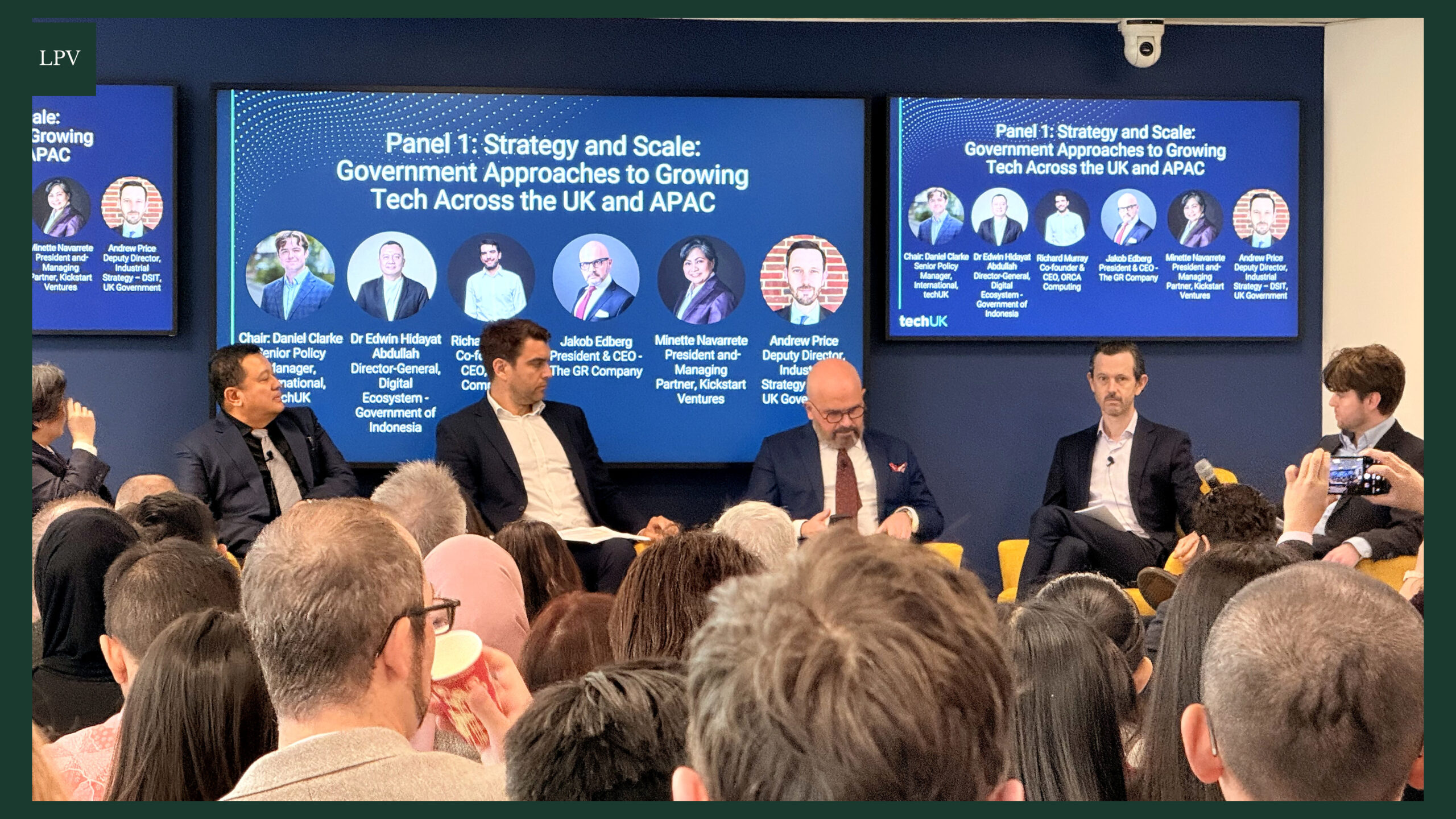
Caption: The first panel focused on strategy, scale and how government approaches affect tech growth across the UK and APAC.
Waiting until a policy shift becomes a barrier is one of the common mistakes businesses can make. Mapping the changes that could affect your sector gives you a more useful starting point for decisions about where and how to grow.
How should UK businesses approach APAC market access?
UK businesses should approach APAC market access by identifying the markets relevant to their product and deciding whether they want to export, scale, invest or build partnerships.
For many founders and business owners, expansion fails not because the product is weak, but because the path into the market is misunderstood. The forum’s description made clear that commercial opportunities, policy shifts and geopolitical currents all matter to that path.
Exporting means selling into a market without necessarily building a local presence. Scaling means expanding operations, customer base and delivery capacity across borders.
Investing means committing capital, resources or infrastructure to a market opportunity. Building partnerships means creating long-term relationships with local operators, institutions or ecosystem players.
Those routes are not the same, and each calls for different decisions. A market that looks generally attractive is not necessarily the right one for your product or the right place for the route you have chosen.

Caption: For UK businesses, market access means understanding whether the right move is to export, scale, invest or partner.
Events like the techUK forum can reduce guesswork by putting policy context, commercial reality and operator perspectives in the same room. They also make it easier to see why broad regional assumptions need testing against specific markets.
APAC is not one market. The UK-APAC corridor contains different regulatory, commercial, cultural and partnership dynamics, so treating the region as a single opportunity can obscure the detail that matters.
What makes a UK-APAC business partnership useful?
A useful UK-APAC business partnership brings relevant buyer access, an understanding of local expectations and experience that can help businesses avoid slow, expensive mistakes.
After a coffee and networking break from 10:30 to 10:40, the second panel moved from strategic direction into practical commercial experience. It focused on doing business in the UK-APAC tech corridor.
The panel ran from 10:40 to 11:30 and was chaired by Ed Bevan, Head of SME Engagement at techUK. Its speakers were Wenmiao Yu, Co-Founder and Director of Business Development, Quantum Dice, and Winnie Seow Mei, Ecosystem Development Director, APAC and MEA, Santander UK.
Jeremy Shaw, COO, Intralink, and Jeremy Wastall, CEO, GoGlobal, also spoke. Their presence reflected the forum’s interest in people already working across the corridor and the practical routes available to businesses.
The discussion gave business owners sharper questions to take away: who already has buyer access, who understands local expectations and who can help them avoid slow, expensive mistakes?
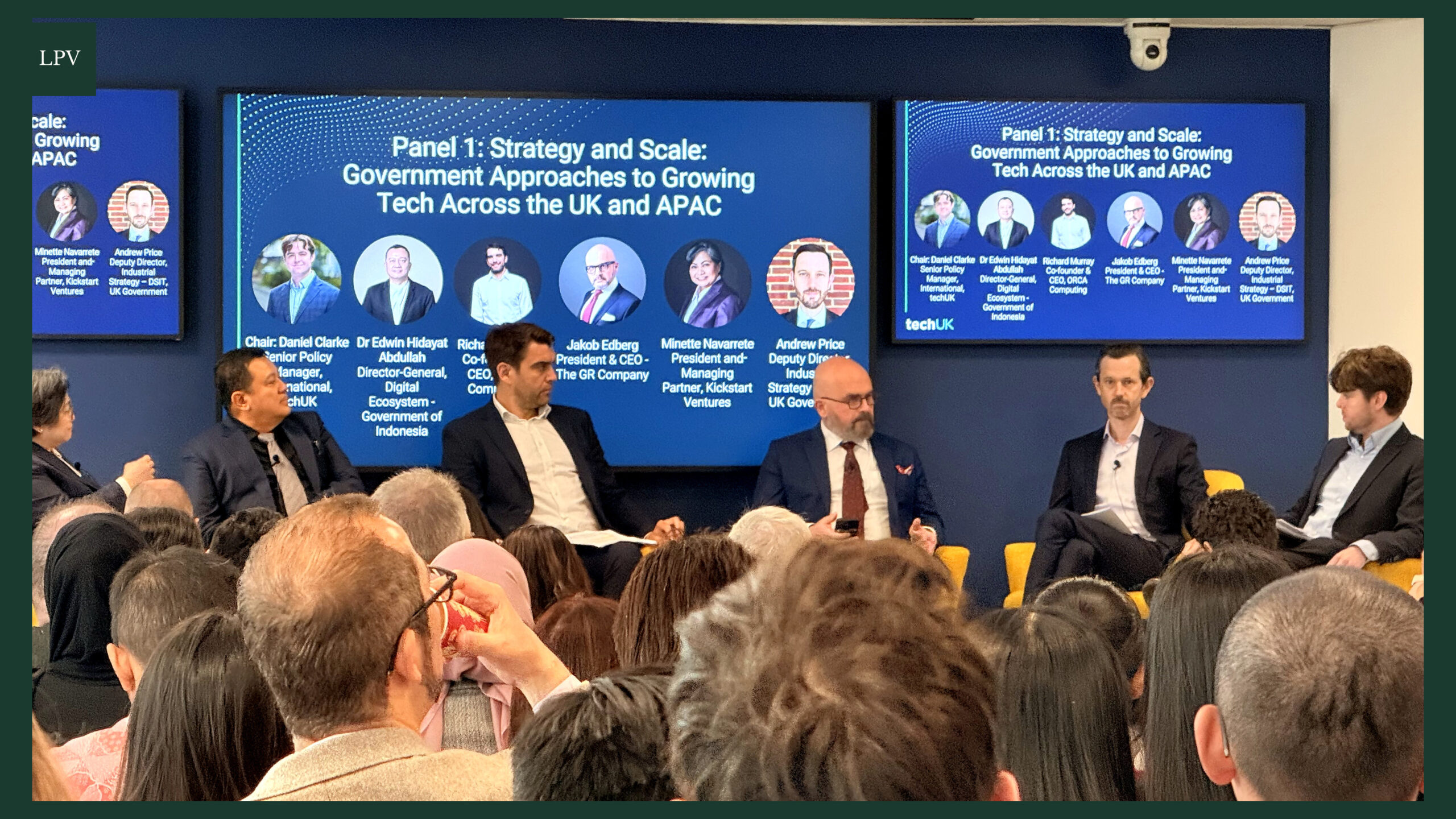
Caption: The second panel explored practical routes for doing business across the UK-APAC tech corridor.
The right local and regional relationships can reduce friction and increase speed. Collecting business cards alone is not enough, though; the value comes from defining next steps and continuing the conversations that are relevant to your goals.
That emphasis on real conversations also runs through our account of making real connections at a London business mixer.
How can businesses turn forum insights into useful marketing?
Businesses can turn forum insights into useful marketing by capturing specific commercial details and developing them into short videos, LinkedIn posts, blogs and follow-up conversations.
A forum compresses market intelligence into a live room. Attendees hear directly from people working across government, investment, technology, banking and international expansion, rather than relying on disconnected reports.
The structure helped create that blend of context and conversation: opening remarks set the policy and commercial context, the strategy and scale panel explored government approaches, and the coffee break created space for direct conversations. The UK-APAC business panel then focused on real corridor activity.
That combination can produce signals that are difficult to capture through a slide deck alone. The risk is mistaking attendance for action: a packed room is valuable only if the insight leads to sharper decisions.
This kind of event is relevant to UK companies serious about international growth, especially those exploring APAC markets for export, investment, partnerships or scale.
It is also relevant to B2B founders, technology leaders, professional service firms and male business owners who understand that marketing and market positioning matter but do not want to waste time on generic activity.
At LPV Agency, I see the same issue in content strategy. Many businesses do not need more noise; they need a simple, repeatable way to turn useful insight into visible authority.
Whether a business is entering APAC or trying to win more visibility in London, Harold Wood, Romford or across the United Kingdom, useful detail matters. A B2B video marketing agency in London should not treat every founder, sector or audience the same.
Done for you social media in London and automated video marketing services in the UK are becoming attractive to time-poor business owners because the goal is to capture useful detail and turn it into consistent market presence.
LPV Agency’s social media autopilot for UK businesses is built around that principle: clients record two minutes of video per week, and LPV handles strategy, editing, posting and consistency.
Our article on keeping your own voice with done-for-you social media explores that connection between consistent output and a recognisable voice.
To put the forum’s lessons into practice, I would start with these steps:
- Identify the APAC markets relevant to your product and map policy shifts that could affect your sector.
- Separate your route to market into export, scale, invest or partner, and look for operators already working across the UK-APAC corridor.
- Define next steps for the people you meet, then turn relevant event insights into short videos, LinkedIn posts, blogs and follow-up conversations.
- Use digital twin script testing to refine your message before publishing widely.
- Connect your content engine to CRM follow-up, including HighLevel CRM integration where appropriate.
- If you serve a local audience, combine thought leadership with local SEO digital marketing signals for Harold Wood, Romford and London.
Generic event posts can miss the actual commercial insight, just as choosing marketing volume over specificity can weaken authority building. Useful content comes from the names, context and decisions behind an event, rather than template thinking.
Key takeaways
- Look for the signal. The people and conversations in the room matter more than the date in the diary.
- Follow policy direction. Government strategy affects where opportunities open and how quickly they move.
- Be precise about market access. Exporting, scaling, investing and partnering require different decisions.
- Assess partnership quality. Relevant local and regional relationships can reduce friction and increase speed.
- Capture useful insight. Structured event content can support authority building and follow-up.
Closing thoughts
The UK-APAC tech forum was more than a London Tech Week diary entry. It offered a concentrated view of policy, market access and partnership quality across a major technology corridor.
For Alex and LPV Agency, the lesson is clear: whether you are exploring APAC expansion or building authority in the UK, the strongest content comes from real rooms, real names, real context and real commercial signals.
If your business hates marketing but understands its importance, LPV Agency can help turn two minutes of weekly video into consistent social media output, strategic positioning and stronger visibility across London, Harold Wood, Romford and the wider UK.
Speak to LPV Agency about building a simple video-led content system that captures the useful detail and keeps your business visible every week.