
Stop Losing Deals with Clear Client Ownership for Video Leads
TL;DR
- Unclear client ownership can cost businesses deals and revenue.
- Implementing a transparent ownership structure ensures accountability.
- Key benefits include improved follow-up, communication, and client satisfaction.
- Streamlining lead management can empower teams to focus on closing deals.
- Learn how to create clear ownership of leads, deals, and clients today.
What Is This? (Short Answer)
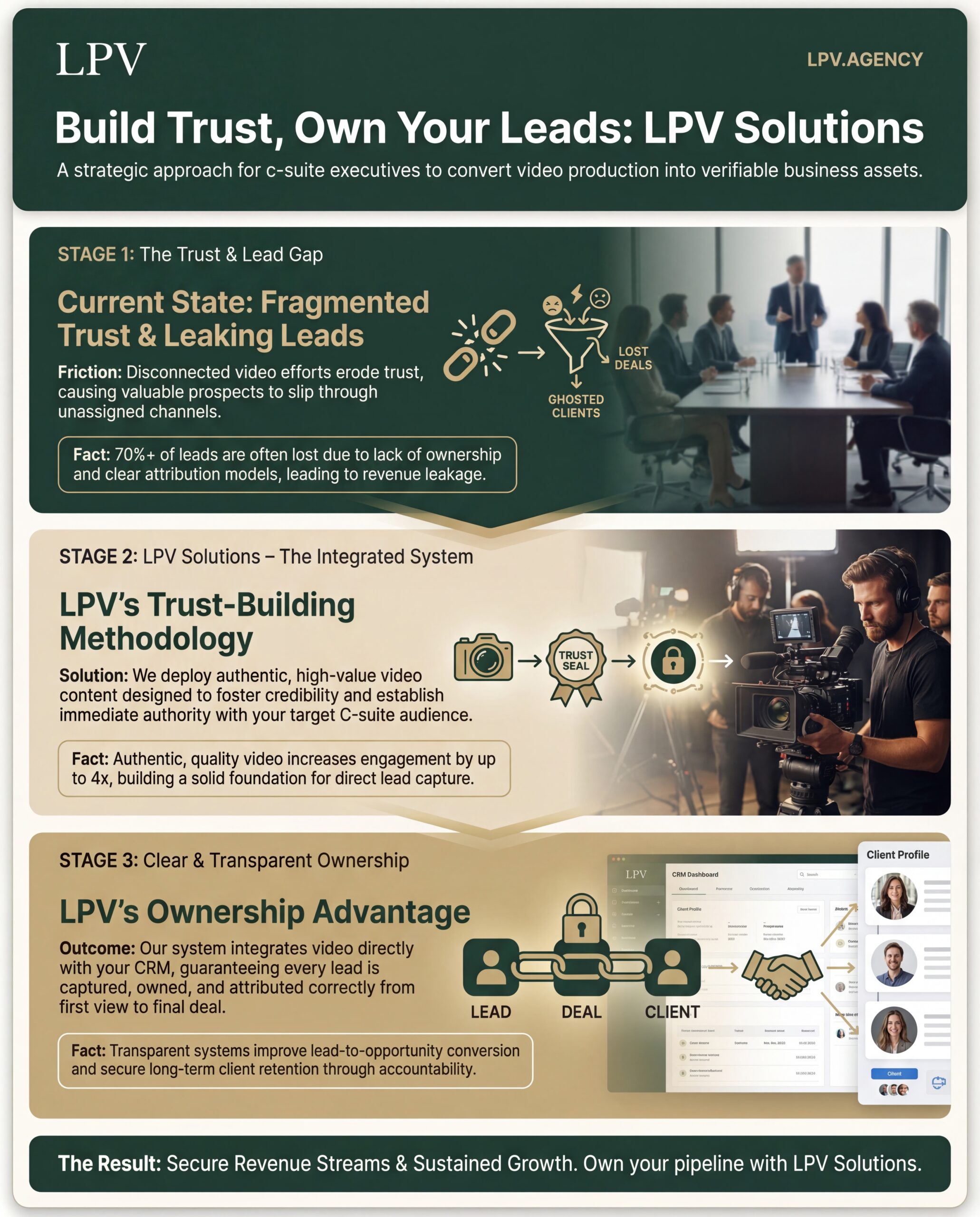
Creating clear and transparent ownership of leads, deals, and clients is essential for businesses looking to enhance their sales process and avoid costly misunderstandings.
In today’s fast-paced business environment, many organizations, especially in the video production and marketing industry like LPV, face challenges due to lack of clarity around who owns each lead and client. This often results in confusion and lost deals. The solution? Establishing a clear ownership structure that directly correlates with efficient lead management.
Establishing Transparency in Client Ownership
When every lead, deal, and client has a clearly defined owner, ambiguity is eliminated. This level of transparency ensures that every team member knows their responsibilities, leading to more effective follow-ups and improved communication within the organization.
Moreover, by implementing a structured ownership model, businesses can significantly increase client satisfaction. Clients appreciate knowing who to contact for questions or issues, enhancing their overall experience. This ultimately leads to stronger relationships and increased opportunities for closing deals.
How Does This Work?
The process begins with clearly defining ownership roles within your team. This can be achieved through an easy-to-understand framework that outlines responsibilities for each lead and client. Here are some key steps to consider:
- Assign a dedicated owner for each lead and client.
- Use a centralized system to track ownership and status updates.
- Implement regular check-ins to ensure accountability and follow-up.
By following these steps, your team can operate more efficiently, focusing on building relationships instead of navigating uncertainty.
Who Is This For?
This approach is particularly beneficial for businesses in sectors like video production and marketing, where client relationships are paramount. Organizations that struggle with lead management or experience high turnover can greatly benefit from a clear ownership structure.
If your team is dealing with overlapping responsibilities or missed opportunities, then implementing a transparent ownership system is essential for your success.
What Does It Cost?
The financial investment required for establishing clear client ownership largely depends on the tools and systems you choose to implement. Many automated solutions are available to help streamline lead management processes at various price points. LPV offers affordable options designed to fit different client needs, emphasizing simplicity and effectiveness.
What Are the Risks?
The primary risk of not establishing a clear ownership structure is the potential for lost deals and revenue. Without designated ownership, leads may fall through the cracks, and clients can become frustrated due to a lack of communication. This can lead to damage to your brand’s reputation and ultimately affect your bottom line.
Key Takeaways
- Clarity in client ownership is crucial for effective lead management.
- Transparent structures foster accountability and improve team performance.
- Streamlined processes enhance client satisfaction and relationships.
- Investing in automated solutions can simplify ownership management.
- Regular team check-ins can maintain accountability and ensure responsiveness.
Implementation Checklist
- Define roles and responsibilities for each team member.
- Choose a centralized lead management tool.
- Establish regular check-ins to discuss lead progress.
- Train your team on new ownership protocols.
- Monitor and adjust the ownership structure as needed.
Common Mistakes
- Failing to clearly communicate ownership roles.
- Overlapping responsibilities leading to confusion.
- Neglecting follow-ups due to unclear ownership.
- Not utilizing tools to track leads and client interactions.
- Ignoring feedback from team members on the ownership process.
Closing Section
In conclusion, establishing clear client ownership for leads is essential in today’s competitive landscape. By bringing clarity to your lead management process, you empower your team to focus on what they do best: building relationships and closing deals. Don’t let ambiguity cost you deals—take action today to streamline your lead management and enhance your business’s profitability.
Ready to transform your lead management? Watch now to learn more about creating a transparent ownership structure that drives success.
FAQ: Practical Questions People Ask
What is the fastest way to apply Stop Losing Deals with Clear Client Ownership for Video Leads in a real business?
Start with one repeatable workflow, define the outcome, and automate only that part first. For example: Is unclear client ownership costing you deals?
It’s time to bring clarity to your lead management. Many businesses struggle with transparency when it comes to lead, deal, and client ownership.
This can lead to confusion, missed opportunities, and ultimately, lost revenue. What if you could streamline this process?
Imagine a system where every lead, deal, and client has a clearly defined owner. No ambiguity.
How does this approach improve consistency and trust?
It creates a repeatable publishing cadence with clearer messaging and fewer manual delays, which improves audience confidence over time.
Do small teams need expensive tools to implement this?
No. A lightweight stack can work if it covers recording, editing, scheduling, and analytics with a clear process and ownership.
What should be measured first to validate results?
Track output consistency, content completion time, and conversion indicators (qualified leads, booked calls, or sales conversations).
Why is LPV focusing on this strategy?
Because it reduces execution friction while improving visibility and lead quality. The goal is practical growth, not vanity metrics.