
Stop Listing Software Features: Show the Working Day Your Product Fixes
Buyers cannot value a software feature they cannot picture using on a normal working day.
A list of functions makes them do the hard work. A focused video shows the screen, the task and the exact moment a problem disappears.
TL;DR
- Show a daily frustration before explaining your product.
- Use a simple video structure: hook, sub-hook, proof and one next step.
- Film in recognisable business settings so viewers can picture themselves using the solution.
- Keep the demo tight around saving time, avoiding mistakes or getting answers faster.
- ClientWorkSystem turns social media into a two-minute weekly task, with AI supporting creation and distribution.
What Is This? (Short Answer)
This is a practical approach to software and service video marketing: show the real job your product improves instead of reciting its features.
For a B2B video marketing agency in London, that means building each video around a familiar moment of friction, then proving how the product changes it. The viewer should not need a long tour or a sales speech to understand the value.
How does this work?
Start with the frustrating job, show what changes, then walk through the action that proves it.
The structure is simple:
- Hook: name the frustrating job.
- Sub-hook: show what changes.
- Proof: walk through the action and explain why it matters.
- Next step: give one clear action the viewer can take.
Choose only the part of the product that helps a client save time, avoid mistakes or get an answer faster. A broad feature tour usually leaves the buyer with more to process, not more confidence.
Why does context matter in a product video?
A recognisable setting helps buyers see themselves using the product.
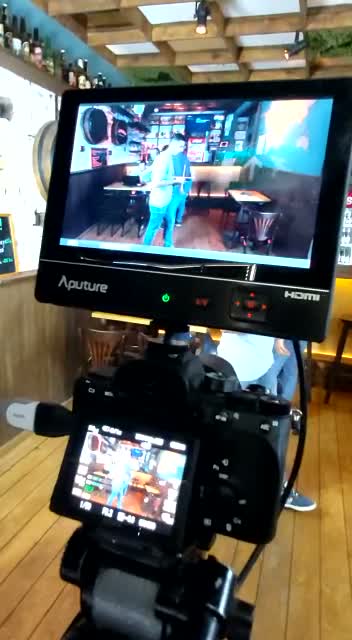
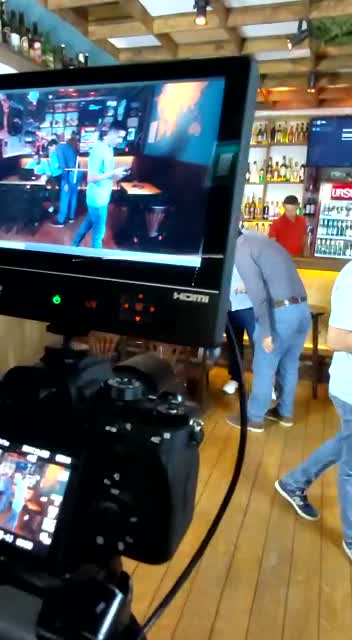
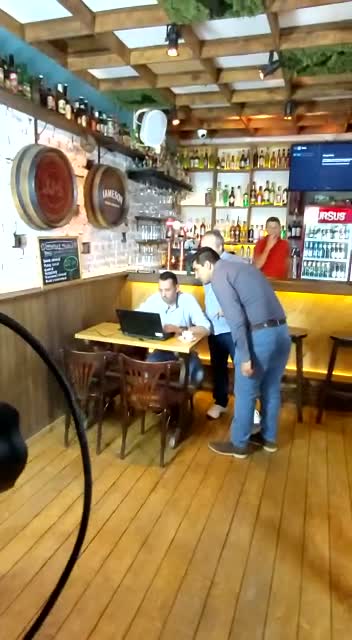
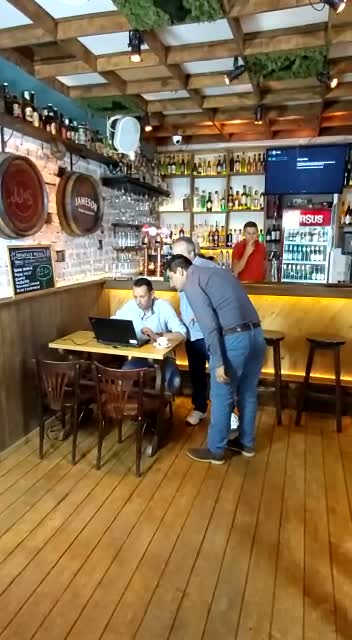
In the bar shoot, the tripod, field monitor and cables were only the visible production layer. The important work happened before recording: choosing a scene people recognise and checking the footage on a laptop before it went live.
Bar staff, busy tables and a warm setting gave the story context. Instead of asking viewers to imagine how the software or service fits into a business, the video put that business environment on camera.
Who is this for?
This is for UK business owners whose product or service solves a daily headache but is difficult to explain through a feature list.
It is especially useful for professionals, software businesses and local companies in London, Harold Wood and Romford that need authority-building video content without vague claims. If your buyer has to work out why a feature matters, the story needs a clearer real-world moment.
It also fits a male business owner who knows marketing matters but does not want social media to consume the week. ClientWorkSystem is positioned to solve social media in two minutes per week, with videos, graphics, ads and a complete system from idea through creation and distribution.
Key Takeaways
- Lead with the problem. Put the daily frustration on camera before introducing the solution.
- Make the change visible. Show the screen, task or workflow that becomes easier.
- Use proof, not broad claims. Walk through the action that demonstrates why the result matters.
- Give the story a real setting. Familiar people and places make the benefit easier to picture.
- End cleanly. One clear next step is stronger than a long product tour.
What does it cost?
The source material does not give a price for a specific video shoot or automated video marketing service.
It does state that ClientWorkSystem handles social media through videos, graphics, ads and distribution, while asking the client for two minutes per week. Ask for the current scope and price based on the content system and filming support your business needs.
What are the risks?
The biggest risk is making the buyer imagine the value for themselves.
Feature lists, vague claims and long tours can make a useful product feel harder to understand. Another risk is filming a polished scene with no recognisable business problem, because the viewer sees production effort but not a reason to care.
Keep the claim connected to what the video actually shows. If the product removes a daily headache, show that moment first and let the result make sense.
Concrete Mini-Example: The Bar Shoot
Imagine a service that helps staff deal with a repeated task more quickly.
Rather than opening with a list of features, place it in a busy bar with staff and occupied tables. Show the frustrating task, show the relevant screen or action, then explain how the service helps the team get the answer faster or avoid an error.
The warm, busy setting does not replace proof. It makes the proof feel relevant to a working day the viewer already understands.
Implementation Checklist
- Identify one daily job that frustrates your client.
- Write the opening hook in the language they would use for that problem.
- Choose one visible action that demonstrates the change.
- Film in a setting your buyer recognises.
- Check footage before publishing, including the screen and context shots.
- Explain why the action matters: time saved, mistakes avoided or answers found faster.
- Remove every feature that does not support the central story.
- Finish with one direct next step.
Common Mistakes to Avoid
- Starting with a long list of software functions.
- Making viewers guess how the product fits into their work.
- Showing a polished environment without a clear problem.
- Using vague claims instead of a visible walkthrough.
- Trying to explain every feature in one video.
- Ending without a clear next action.
Make Social Media Easier to Picture Too
Done-for-you social media in London works best when it shows business owners the workload it removes, not just the deliverables they receive.
ClientWorkSystem offers a social media autopilot for UK businesses: two minutes of client video per week, supported by AI for videos, graphics, ads, creation and distribution. The point is not to make marketing sound complicated. It is to make the saved time and consistent output easy to picture.
If your product solves a daily headache, put that moment on camera. Show the problem first, show the action next and let the result do the explaining.
FAQ: Practical Questions People Ask
What is the fastest way to apply Stop Listing Software Features: Show the Working Day Your Product Fixes in a real business?
Start with one repeatable workflow, define the outcome, and automate only that part first. For example: Buyers cannot value a software feature they cannot picture in their own working day.
A list of functions makes them work too hard. Show the screen, the task and the moment the software removes a problem instead.
That is why a proper video needs structure: – Hook: name the frustrating job. – Sub-hook: show what changes.
– Proof: walk through the action and explain why it matters. Then finish with one clear next step.
How does this approach improve consistency and trust?
It creates a repeatable publishing cadence with clearer messaging and fewer manual delays, which improves audience confidence over time.
Do small teams need expensive tools to implement this?
No. A lightweight stack can work if it covers recording, editing, scheduling, and analytics with a clear process and ownership.
What should be measured first to validate results?
Track output consistency, content completion time, and conversion indicators (qualified leads, booked calls, or sales conversations).
Why is LPV Agency focusing on this strategy?
Because it reduces execution friction while improving visibility and lead quality. The goal is practical growth, not vanity metrics.