
Live Race Timing in the Stream: The Motorsport Broadcast Lesson Behind Better Video Marketing
TL;DR
- Live race coverage only works when timing data, camera choices, and viewer clarity stay in sync.
- LPV Agency learned to read and integrate ALGE-TIMING signals in real time at national car competitions.
- Travelling to Liechtenstein, Austria, and Switzerland made the technical workflow reliable.
- The same preparation-first mindset now informs video marketing for UK businesses.
What Is This? (Short Answer)
This is the behind-the-scenes story of how LPV Agency put live race timing into motorsport streams without losing the action.
Ten years ago, Alex and the team were covering national car competitions almost every weekend, combining compact outdoor broadcast setups with accurate, real-time timing information.
At a race, being one second late changes the story. A car can cross the line, take a lead, or lose it before a commentator or viewer has time to guess what happened.
That made timing more than an extra graphic. It became part of the live editorial decision: what is happening, which camera should be live, and whether the audience can understand the result immediately.
Timing Data Had to Be as Trustworthy as the Camera Feed
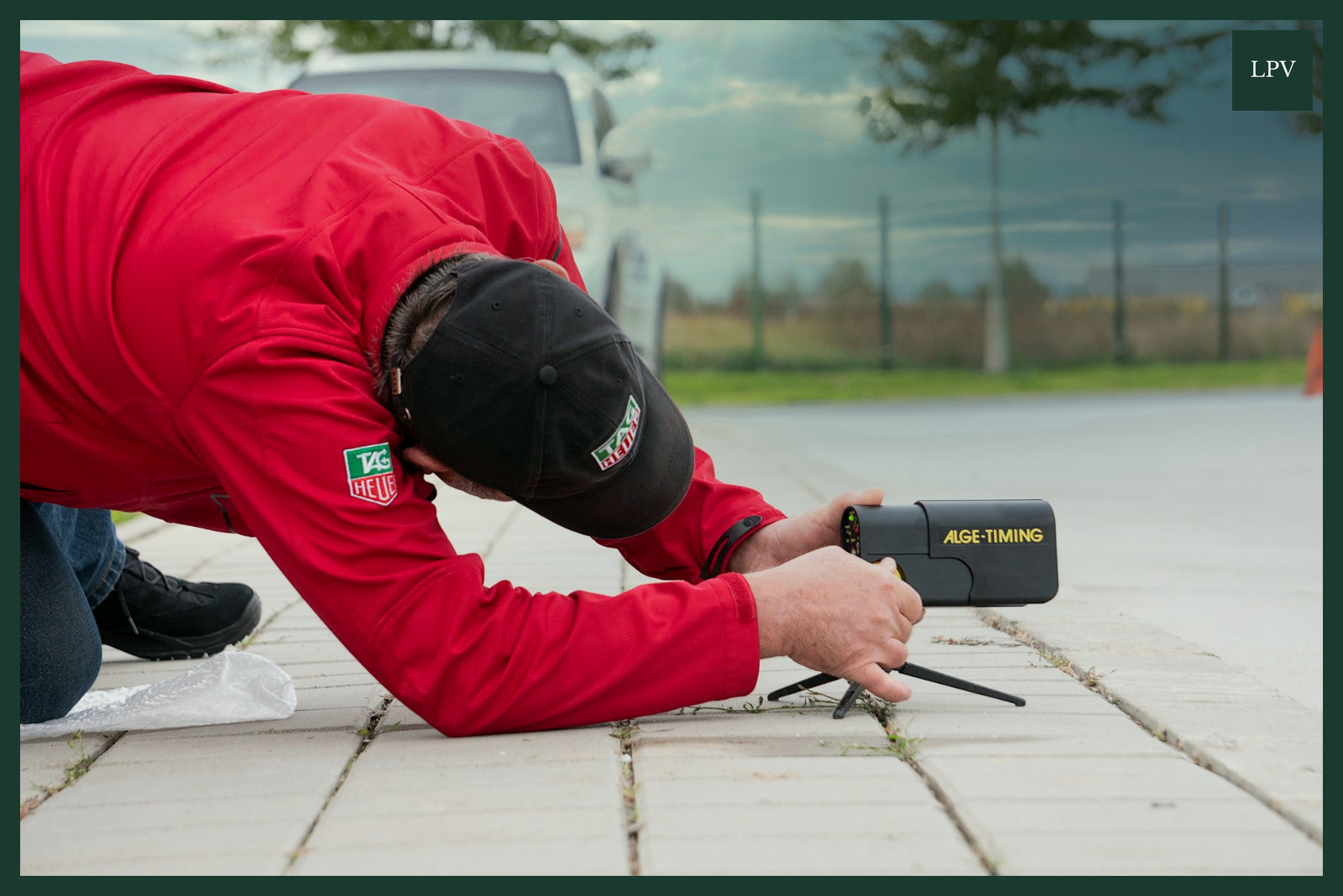
The hardest part of the workflow sat beside the track: an ALGE-TIMING unit capturing results as the competition unfolded. The challenge was learning how to extract its signal, interpret it live, and bring it into the stream accurately.
That knowledge did not arrive through guesswork. LPV travelled to Liechtenstein, Austria, and Switzerland to understand how the timing system worked properly, from the signal itself to the way a result should appear on screen.
As Alex puts it, the team learned “how we can read those signals in real time and how we can actually show those competitions as they were happening.” That is the difference between displaying numbers and telling a clear live story.
The Three Checks That Kept Every Race Understandable
Live production demanded a simple discipline. Before reacting to the next car, the team had to make sure the data was correct, the camera was useful, and the audience could follow the result.
- Is the time accurate? The ALGE-TIMING data had to match the event as it happened.
- Is the right camera live? The viewer needed the finish, the car, or the key moment—not an irrelevant angle.
- Can a viewer understand what just happened? Timing and pictures had to work together, especially when a second changed the standings.
This was a practical broadcast framework, not a theoretical one. In a fast national competition, a late switch or unclear timing update can make a dramatic result feel confusing rather than exciting.
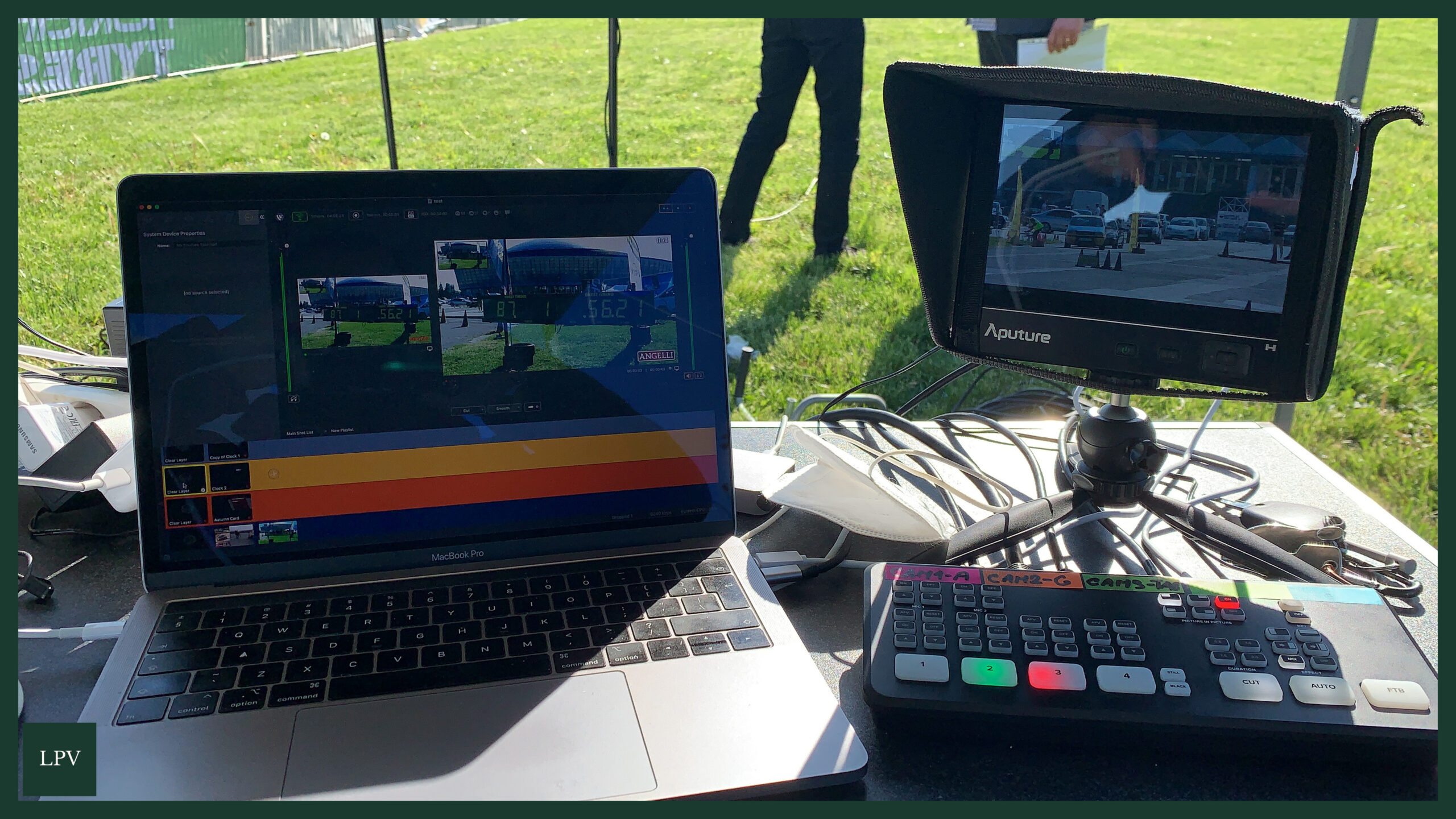
The team’s compact setup made that pressure visible: a MacBook multiview showing camera feeds and timing information, an Aputure field monitor, an ATEM switcher, cables, cones, and an outdoor venue with little room for mistakes.
How Does This Work?
The workflow connected race timing to live video production. The timing signal was extracted from the event system, read in real time, then used alongside the multiview to guide what viewers saw next.
The ATEM switcher allowed rapid camera changes, while the MacBook helped the operator keep track of the venue, timing feed, and available shots at once. It was a compact mobile control room built for decisions that could not wait.
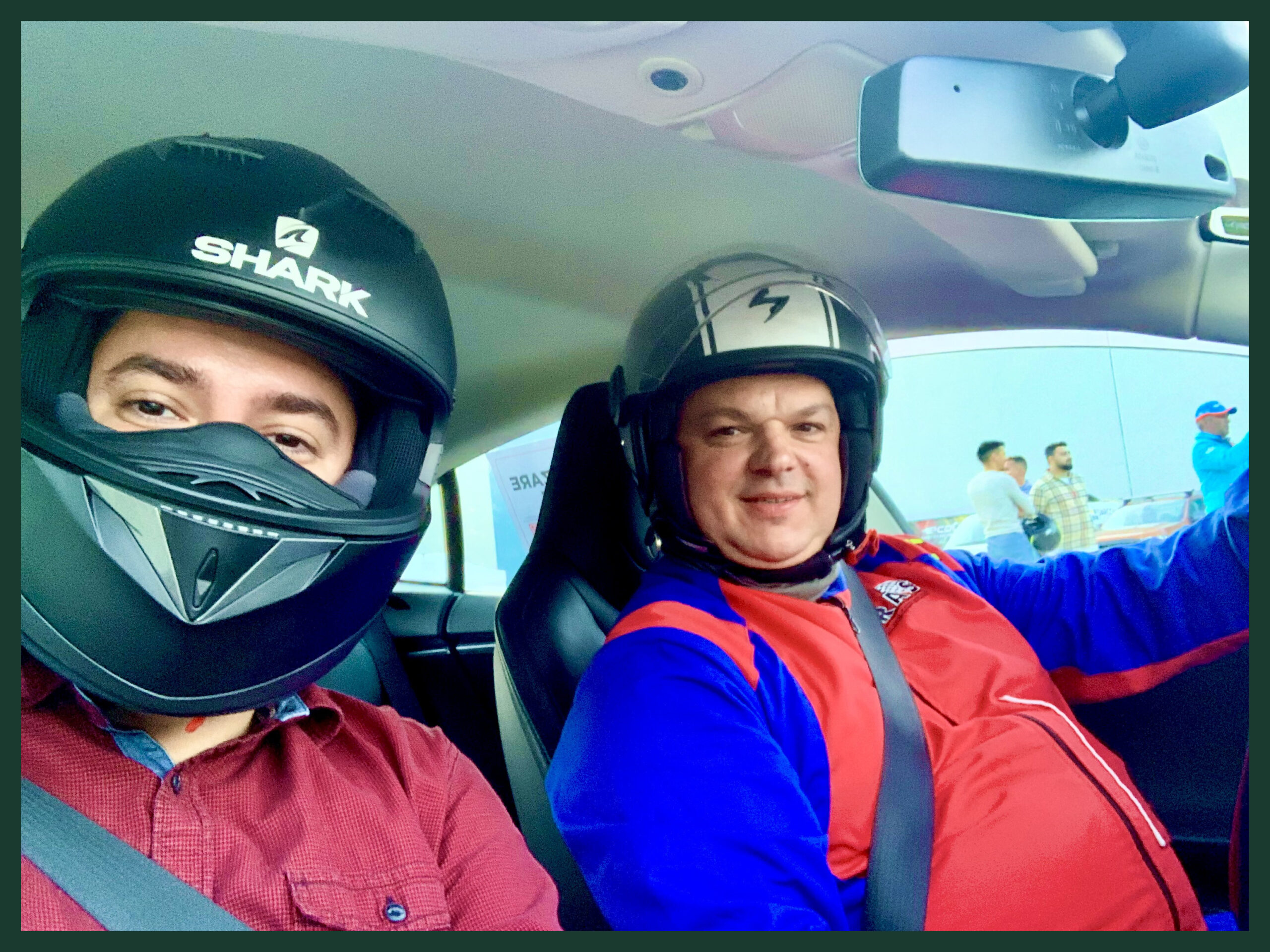
There were helmets, seat belts, fast cars, and plenty of fun. But the lasting lesson was preparation: great live coverage makes complicated information feel immediate and simple.
Who Is This For?
This approach is for organisations whose audience needs more than polished footage—they need context. That includes events, professional services, and male business owners building authority through regular video without having to become full-time marketers.
For LPV Agency, the connection to a social media autopilot for UK businesses is straightforward. A business can record two minutes of video each week, while LPV handles strategy, editing, posting, and consistency with the same care once applied to live timing and camera decisions.
What Does It Cost?
A live race stream has variable costs because equipment, travel, timing integration, crew, and event requirements all affect the production scope. The expensive part is not simply owning a switcher or monitor; it is knowing how to use the information when it matters.
For ongoing automated video marketing services in the UK, the useful question is whether a consistent done-for-you social media London service saves the business owner time while building visible authority. LPV’s model is designed around minimal recording time and managed execution.
What Are the Risks?
The biggest risk is presenting data without understanding it. You cannot explain a competition clearly if you do not understand what the timing information is saying.
The same principle applies to B2B video marketing agency London work. Content that looks polished but lacks a clear message, audience context, or consistent delivery will not create the authority the business wants.
Key Takeaways
- Accuracy matters most when the story changes quickly.
- Technical systems need to be understood before they are shown to an audience.
- Good live production is a sequence of prepared decisions, not improvised button presses.
- Video marketing for UK businesses works best when experts supply the insight and a trusted team handles the production system.
Implementation Checklist
- Identify the information your audience needs to understand immediately.
- Confirm who owns, checks, and explains that information.
- Plan the visuals that support each key message.
- Record a short weekly video with one useful insight or answer.
- Use a consistent publishing workflow, including local SEO digital marketing for Harold Wood, Romford, London, and wider UK audiences where relevant.
Common Mistakes
- Showing results or claims without explaining their meaning.
- Using the wrong camera angle at the important moment.
- Trying to manage filming, editing, strategy, and posting alone.
- Prioritising the “best result” while ignoring the story of how it happened.
From Race Timing to Reliable Business Visibility
Those weekends at national car competitions taught LPV Agency how to make complex, fast-moving information understandable. The cars were memorable, but the real skill was building a workflow people could trust.
If marketing matters to your business but you hate having to keep up with it, LPV can turn a few minutes of your expertise into consistent, useful video content for your audience.
FAQ: Practical Questions People Ask
What is the fastest way to apply Live Race Timing in the Stream: The Motorsport Broadcast Lesson Behind Better Video Marketing in a real business?
Start with one repeatable workflow, define the outcome, and automate only that part first. For example: At a race, being one second late changes the story.
The cameras were only part of the job. On a laptop, we had to see the track, the timing feed, and the next shot at the same time.
Almost every weekend, we covered national car competitions from a compact outdoor setup: MacBook multiview, Aputure monitor, ATEM switcher, cables, cones, and no room for guesswork. The hard part sat beside the track.
How does this approach improve consistency and trust?
It creates a repeatable publishing cadence with clearer messaging and fewer manual delays, which improves audience confidence over time.
Do small teams need expensive tools to implement this?
No. A lightweight stack can work if it covers recording, editing, scheduling, and analytics with a clear process and ownership.
What should be measured first to validate results?
Track output consistency, content completion time, and conversion indicators (qualified leads, booked calls, or sales conversations).
Why is LPV Agency focusing on this strategy?
Because it reduces execution friction while improving visibility and lead quality. The goal is practical growth, not vanity metrics.