
How Much Should You Reinvest in Equipment Each Year?
TL;DR
- There is no single equipment budget that suits every business; start with what your work and clients need.
- Consider whether a purchase will help you offer a service, improve a process or explore a useful idea.
- Estimate how often you will use the equipment and include running costs in your decision.
- At LPV Agency, experimenting with everything from laser cutting to video streaming has created opportunities to learn.
- Review your equipment spending each year so it supports the direction of your business.
What Is This? (Short Answer)
Reinvesting in equipment means putting some of your business income back into the tools you use to create, deliver or improve your work. The right amount depends on your priorities, finances and how much value each tool is likely to bring.
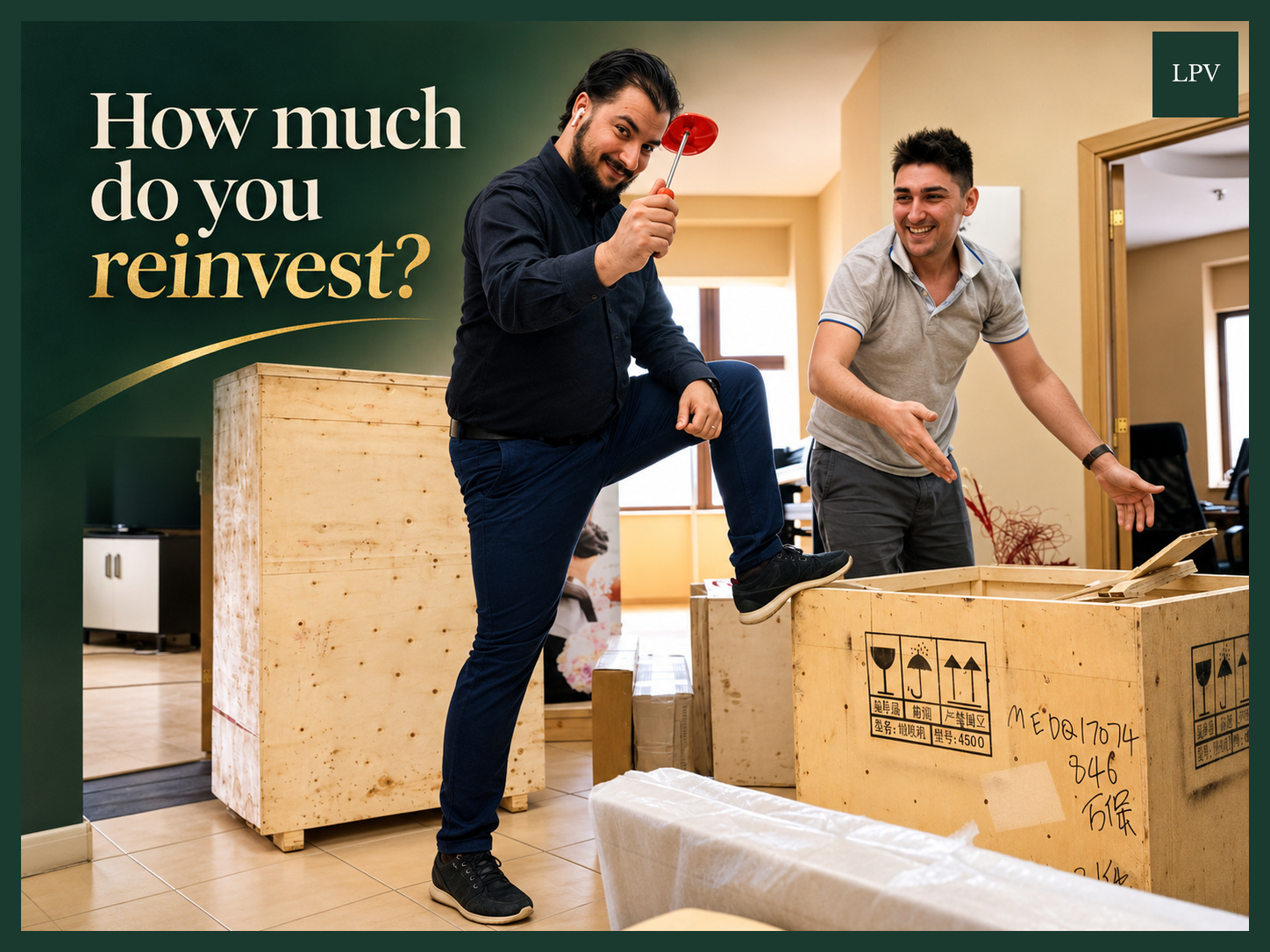
There is a particular thrill to seeing a new piece of equipment arrive. At LPV Agency, those large wooden crates bring back the excitement of unpacking new kit and wondering what we might make with it.
As Alex puts it, the feeling can become a bit of a fever: new toys mean new areas to play in. The question for business owners is how to balance that curiosity with a clear purpose.
New Equipment Can Open Up New Creative Work
Over the years, LPV Agency has tried laser cutting and laser personalisation, a 1.4-metre photo-quality printer, product photography and video streaming. Each brought a different way to experiment, learn and see what was possible.
The moment captured around the wooden crates says a lot about that excitement. There is anticipation, a little humour and the urge to get started straight away, even before the packing materials have been cleared away.
That enthusiasm can be useful. Trying a new tool may reveal a service you enjoy offering or a better way to support a client project.
Hands-On Experimentation Has Value Too
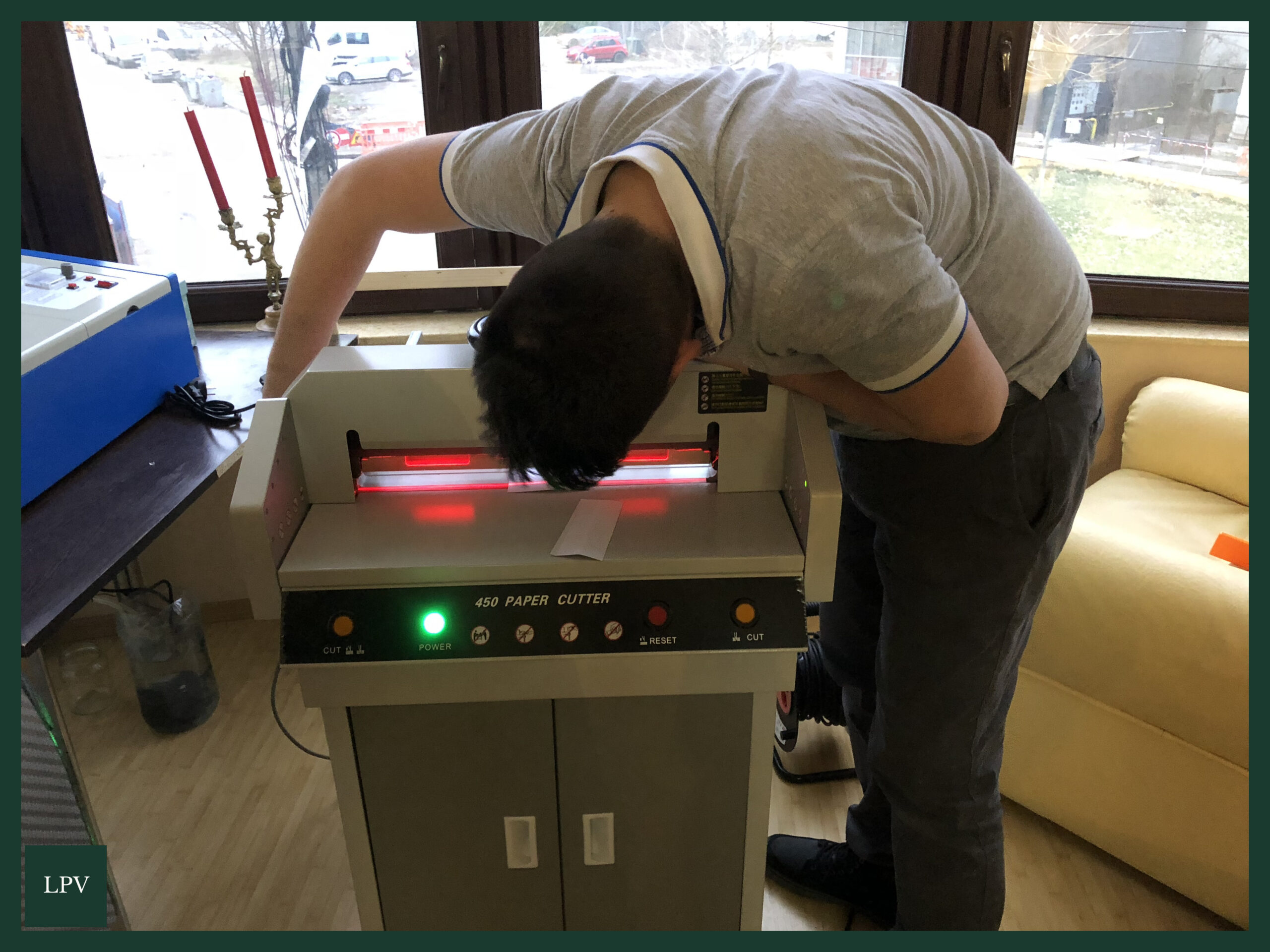
The paper cutter brings the story back to the practical side of production: getting hands-on and trying things for yourself. Learning what a tool can do often starts with making something, making adjustments and trying again.
Not every experiment needs to become a permanent service. It can still teach you about your process, your preferences and the kinds of work you want your business to pursue.
Before investing, give the tool a clear job. It might help you complete a current project, improve the quality of an existing service or create room to test a new idea.
How Does an Equipment Investment Work?
Start with the work you want to do, then assess the equipment that could help you do it. For example, a printer might support large-format projects, while video equipment could help a business create content for its audience.
Consider how often you expect to use the tool and whether buying, hiring or working with a specialist makes the most sense. A useful investment should have a place in your workflow beyond the excitement of its arrival.
Who Is This For?
This question is relevant to business owners, creative teams and professionals who rely on equipment to deliver their work. It is especially useful when you are considering a new service or finding that an existing process is slowing you down.
For businesses interested in video marketing for UK audiences, the decision may involve both equipment and time. LPV Agency helps clients create consistent social content from two minutes of recorded video per week, with the team handling strategy, editing and posting.
What Does It Cost?
The cost depends on the equipment and how you use it. Alongside the purchase price, consider supplies, maintenance, software, training and the space needed to operate or store it.
Set a budget that fits your business rather than choosing a fixed percentage because someone else does. Review what you spent over the past year and what that spending helped you produce.
What Are the Risks?
The main risk is buying something that sees little use or does not support the work you want to do. A promising machine can also demand more time, training or ongoing expense than expected.
That does not mean avoiding experiments. It means deciding what you want to learn and how much you are comfortable investing before you begin.
Key Takeaways
- New tools can create energy and introduce your team to different kinds of work.
- LPV’s experiments have ranged from laser personalisation and large-format printing to product photography and video streaming.
- A tool earns its place by helping you make, improve or offer something valuable.
- Frequency of use and ongoing costs matter as much as the initial price.
Equipment Investment Checklist
- Write down the project, service or problem the equipment will support.
- Estimate how often you expect to use it over the next year.
- Research the full cost, including supplies, maintenance and training.
- Compare buying with hiring or using an external specialist.
- Choose a point to review whether the investment is doing its job.
Common Mistakes to Avoid
- Buying because a tool is new without identifying a use for it.
- Counting the purchase price but overlooking running costs.
- Assuming every experiment must become a profitable service immediately.
- Leaving equipment purchases out of your annual business review.
What Will You Reinvest In?
From opening wooden crates to exploring new production techniques, equipment can make work feel full of possibility. Give that excitement a practical direction by asking what each purchase will help your business make, improve or offer.
How much do you reinvest in equipment each year to keep your business moving forward? If consistent video content is one of your priorities, talk to LPV Agency about social media autopilot for UK businesses.
FAQ: Practical Questions People Ask
What is the fastest way to apply How Much Should You Reinvest in Equipment Each Year? in a real business?
Start with one repeatable workflow, define the outcome, and automate only that part first. For example: New equipment can make you want to try a whole new kind of work.
We have tried laser cutting and personalisation, a 1.4-metre photo-quality printer, product photography and video streaming. Each one brought a new way to experiment and learn.
Those wooden crates bring back that feeling: new kit, new possibilities, and the urge to get started straight away.
How does this approach improve consistency and trust?
It creates a repeatable publishing cadence with clearer messaging and fewer manual delays, which improves audience confidence over time.
Do small teams need expensive tools to implement this?
No. A lightweight stack can work if it covers recording, editing, scheduling, and analytics with a clear process and ownership.
What should be measured first to validate results?
Track output consistency, content completion time, and conversion indicators (qualified leads, booked calls, or sales conversations).
Why is LPV Agency focusing on this strategy?
Because it reduces execution friction while improving visibility and lead quality. The goal is practical growth, not vanity metrics.