
Filming a Tesla Track Run From the Back Seat: Why Steady Camera Work Is Harder Than It Looks
Keeping a camera steady is hard when the car is trying to throw you into the door.
That is the reality behind this Tesla track shoot. From outside, the car may look calm. Inside, every steering input, burst of acceleration and change of direction turns each frame into a fight for control.
TL;DR
- This behind-the-scenes track footage was filmed from inside a moving Tesla on a cone-marked circuit.
- The camera operator used both feet braced under the seats ahead and two seatbelts for stability.
- The challenge was not simply filming a fast car. It was filming inside the force, noise and movement.
- The countdown, from five to zero, added pressure before the driver set off.
- Strong video marketing often comes from showing the real work behind the polished final shot.
What Is This? (Short Answer)
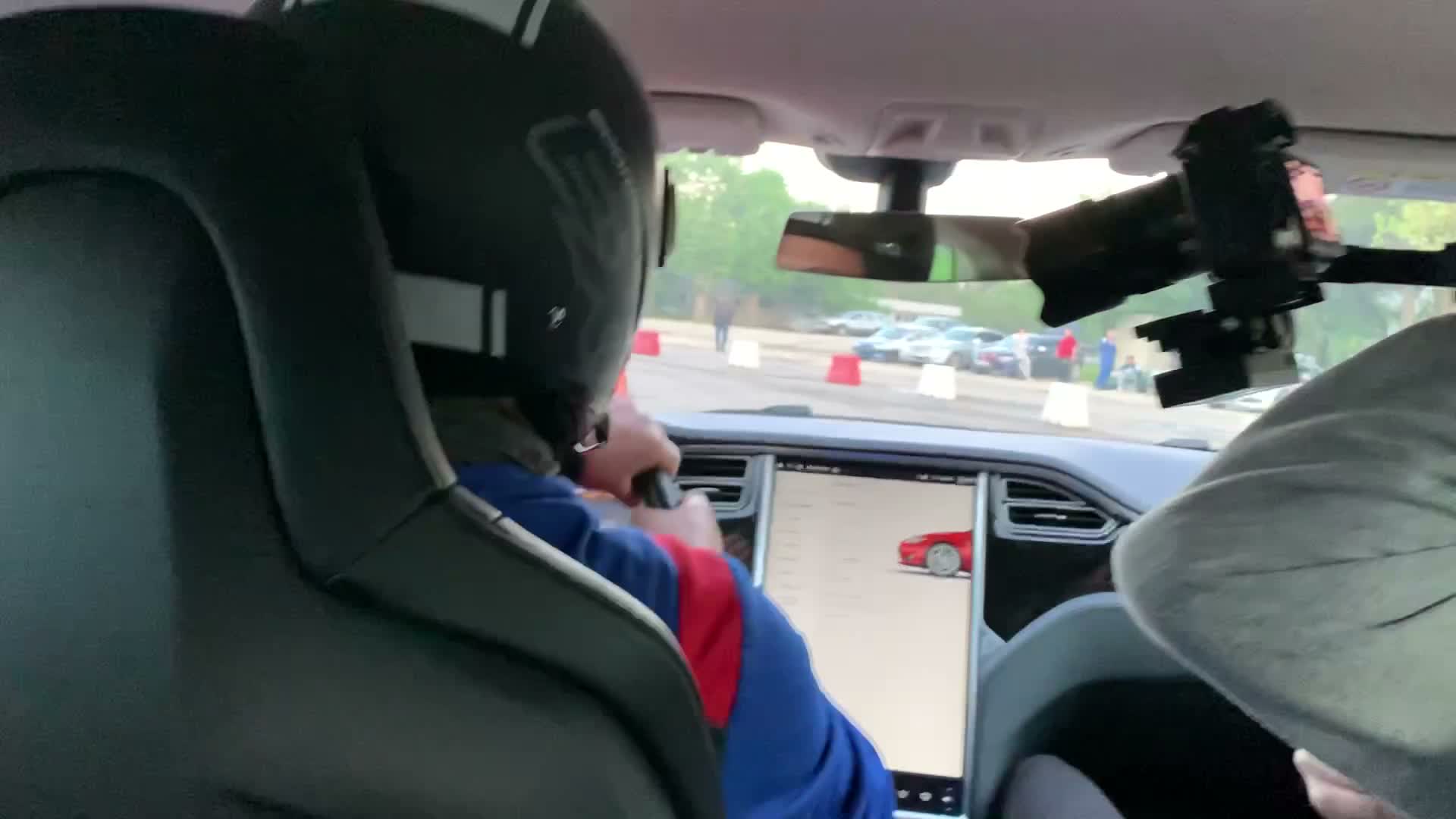
This is behind-the-scenes video footage of a Tesla being driven around a cone-marked circuit while the camera operator films from the back seat.
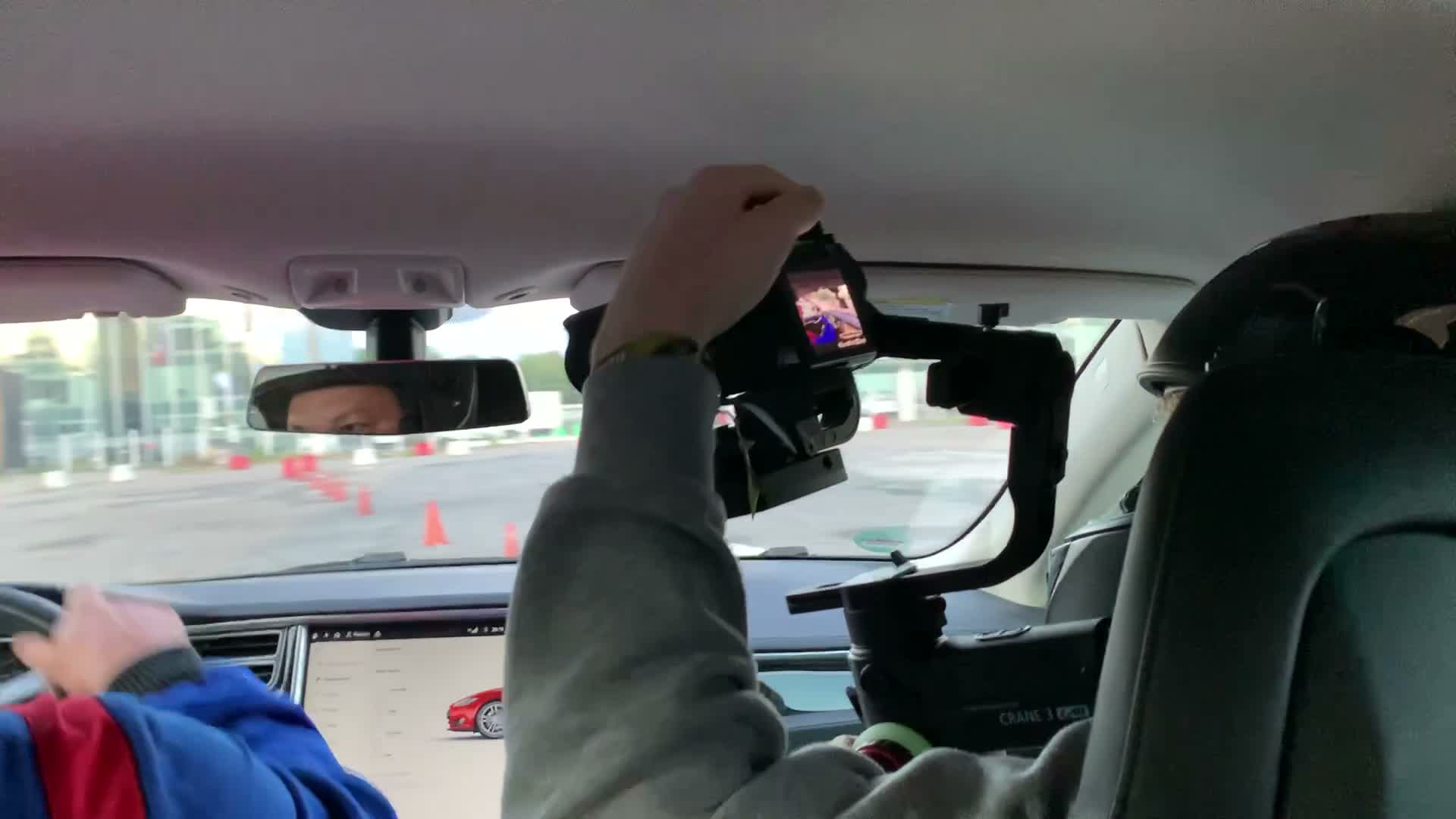
The footage captures the real setup: a racing suit, Sparco helmet, dashboard, central screen and track barriers moving quickly past the windows. It shows why a track shot is made inside the action, not by simply pointing a camera at a fast car.
How does this work?
The camera work depends on physical bracing, timing and focus while the car moves.
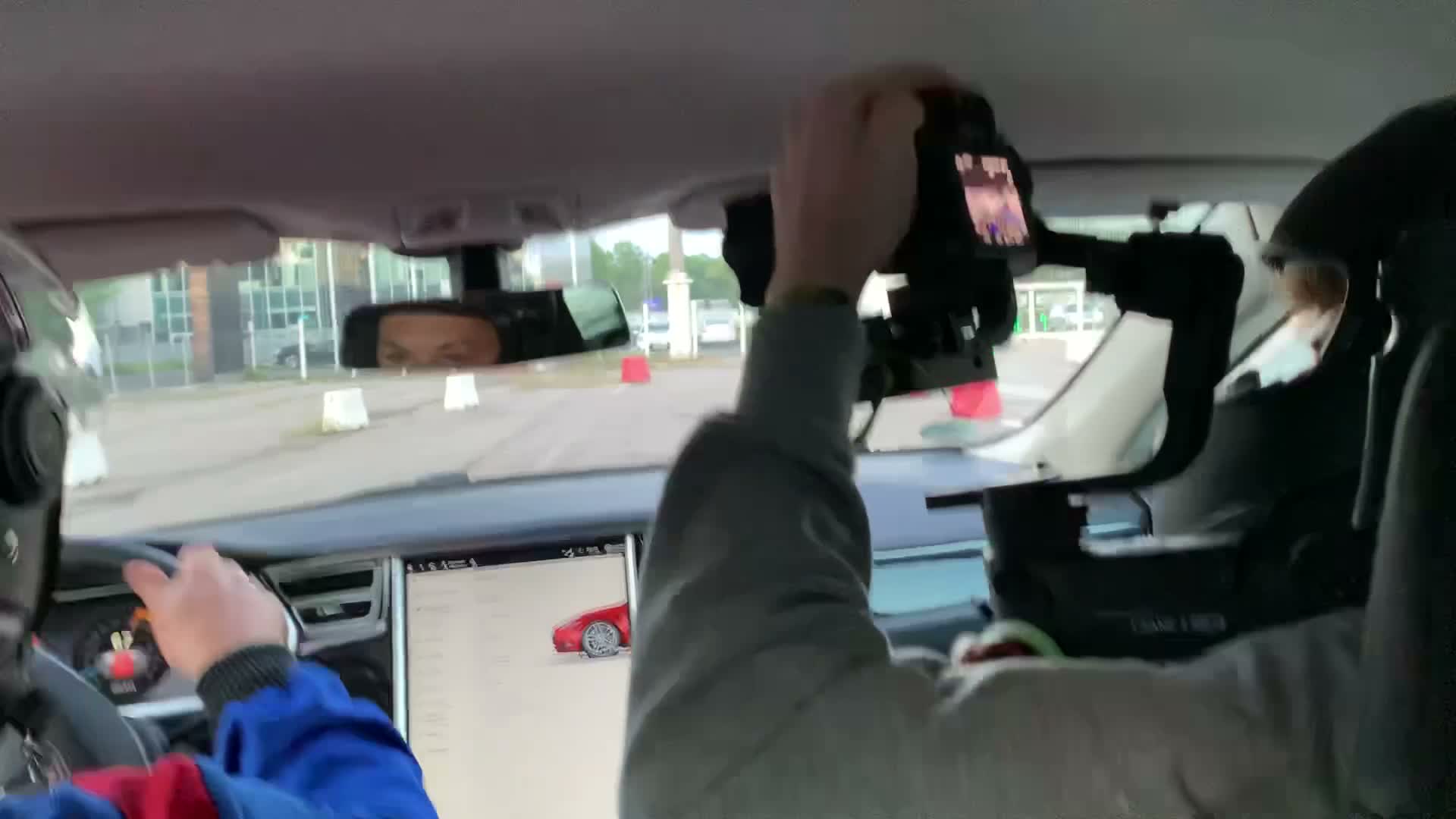
Both feet were planted under the seats ahead, while two seatbelts helped keep the operator in place. That setup matters because acceleration and direction changes can pull the camera and person off balance in a split second.
The driver works the circuit while the operator watches the frame, holds position and reacts to the motion. There is no relaxed moment once the countdown starts.
Five, four, three, two, one, zero.
Then it is all focus, timing and keeping the camera steady.
Why is filming inside the car more difficult than it looks?
The hardest part is that the movement affects the camera operator as much as it affects the car.
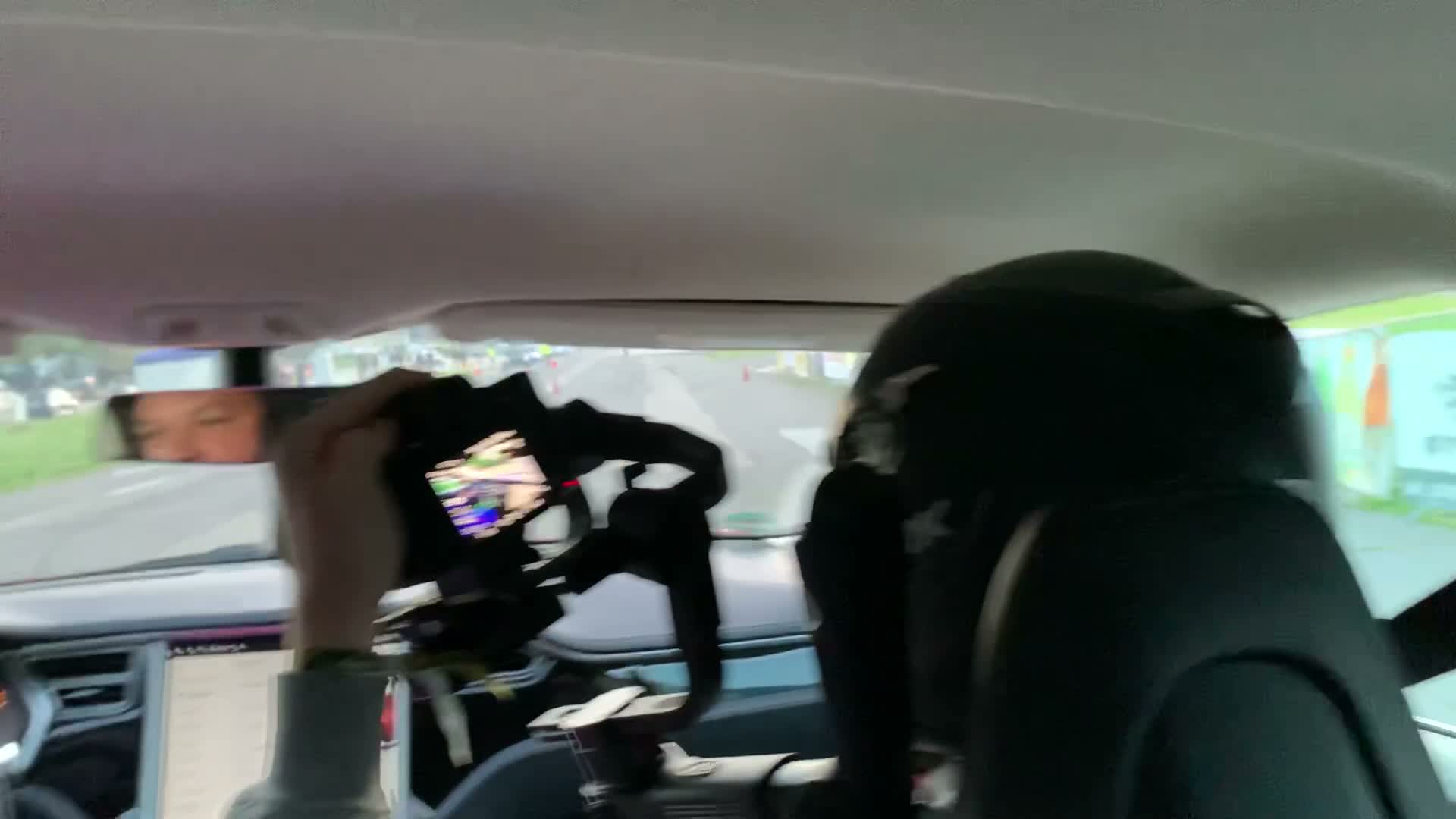
From the exterior, a Tesla can appear composed. In the back seat, the steering corrections, acceleration and changes of direction create constant pressure against the body and the camera.
A clean track shot needs more than a camera pointed in the right direction. It needs control while the environment is actively working against that control.
Key Takeaways
- Behind-the-scenes footage makes the effort visible. The helmet, racing suit, dashboard and barriers show the conditions behind the finished shot.
- Stability needs a deliberate setup. Bracing with both feet and using two seatbelts helped create a more controlled filming position.
- Movement creates the story. The force, noise and fast decisions are what make the inside perspective compelling.
- Pressure can improve the footage. The countdown creates a clear before-and-after moment: preparation ends and full concentration begins.
- Real process is useful content. Showing what it takes to capture a shot can be as engaging as the final shot itself.
Who is this for?
This kind of footage is for businesses, creators and production teams that want to show the real conditions behind a visual result.
It is especially relevant when the experience is part of the story. A fast car, a demanding location and a camera operator trying to hold a frame all create a perspective that a simple exterior shot cannot provide.
For video marketing for UK businesses, the wider lesson is straightforward: show the work, not only the outcome. The moments that look difficult often give viewers the clearest sense of what happened.
What does it cost?
The source material does not give a price for filming a track sequence.
What it does make clear is that the value is in the preparation and control required to capture footage safely and clearly while the car is in motion.
What are the risks?
The immediate risk is losing physical stability and losing the shot at the same time.
Inside a fast-moving car, force from acceleration and steering can move the operator toward the door or disrupt the camera frame. That is why stable footing, seatbelt support and sustained attention were part of the setup.
There is also a storytelling risk. If the footage only shows the finished car shot, viewers may miss the pressure, timing and practical effort that made it possible.
A concrete example from the shoot
One small detail explains the whole challenge: both feet were placed under the seats ahead while two seatbelts held the operator in place.
That was not an extra flourish for the camera. It was the practical response to a Tesla changing direction on a circuit while the person in the back tried to keep every frame controlled.
Implementation Checklist
- Show the setup before the action begins, including the equipment and filming position.
- Capture a countdown or another clear moment that signals the start of the pressure.
- Film details that prove the environment is real, such as the dashboard, central screen and barriers outside.
- Plan stability before recording, especially where acceleration or sharp direction changes are involved.
- Use behind-the-scenes clips to explain why a finished shot took skill and concentration.
- Keep the story grounded in what actually happened rather than making the action look easier than it was.
Common Mistakes to Avoid
- Assuming a fast-car shot only needs a camera pointed at the vehicle.
- Ignoring how vehicle movement affects the person holding the camera.
- Leaving out the preparation that makes the footage understandable.
- Trying to relax once the car starts moving.
- Only sharing polished final footage and hiding the behind-the-scenes reality.
Why do behind-the-scenes moments matter?
The best behind-the-scenes moments often reveal the part that was hardest to control.
In this case, that means the camera work happening inside the movement: helmet on, feet braced, seatbelts holding firm and barriers rushing past the windows. It gives the final track footage context that an exterior angle cannot.
If you want a more consistent way to turn real working moments into content, ClientWorkSystem is built to solve social media in two minutes per week. It covers videos, graphics, ads and a complete system from idea to creation and distribution.
FAQ: Practical Questions People Ask
What is the fastest way to apply Filming a Tesla Track Run From the Back Seat: Why Steady Camera Work Is Harder Than It Looks in a real business?
Start with one repeatable workflow, define the outcome, and automate only that part first. For example: Keeping a camera steady is hard when the car is trying to throw you into the door.
The driver is working the cone-marked circuit. I am in the back, helmet on, so you can see the behind the scenes.
The Tesla may look calm from outside. Inside, the steering inputs, acceleration and changes of direction make every frame a fight for control.
How does this approach improve consistency and trust?
It creates a repeatable publishing cadence with clearer messaging and fewer manual delays, which improves audience confidence over time.
Do small teams need expensive tools to implement this?
No. A lightweight stack can work if it covers recording, editing, scheduling, and analytics with a clear process and ownership.
What should be measured first to validate results?
Track output consistency, content completion time, and conversion indicators (qualified leads, booked calls, or sales conversations).
Why is LPV Agency focusing on this strategy?
Because it reduces execution friction while improving visibility and lead quality. The goal is practical growth, not vanity metrics.