How to Choose LinkedIn Connections That Build a Stronger Business Network
TL;DR
- Review LinkedIn’s suggested connections at the weekend and prioritise people whose work is relevant to your business.
- Look for shared contacts who know your work and may be able to provide context or an introduction.
- Use mutual connections and a clear profile photo as useful signals, not rigid rules.
- Pay attention to who accepts your requests and refine your approach over time.
- Keep posting useful content so new connections can learn what you do.
What Is This? (Short Answer)
Thoughtful LinkedIn networking means choosing relevant people to connect with, rather than sending invitations solely to increase your connection count. A regular review of suggestions can help business owners find people connected to clients, colleagues and others who know their work.
Alex from LPV Agency sets aside time on Saturdays and Sundays to review LinkedIn suggestions. His approach starts with a simple question: who is relevant to the business, and who might already have useful context through a shared contact?
Start with People Connected to Your Existing Network
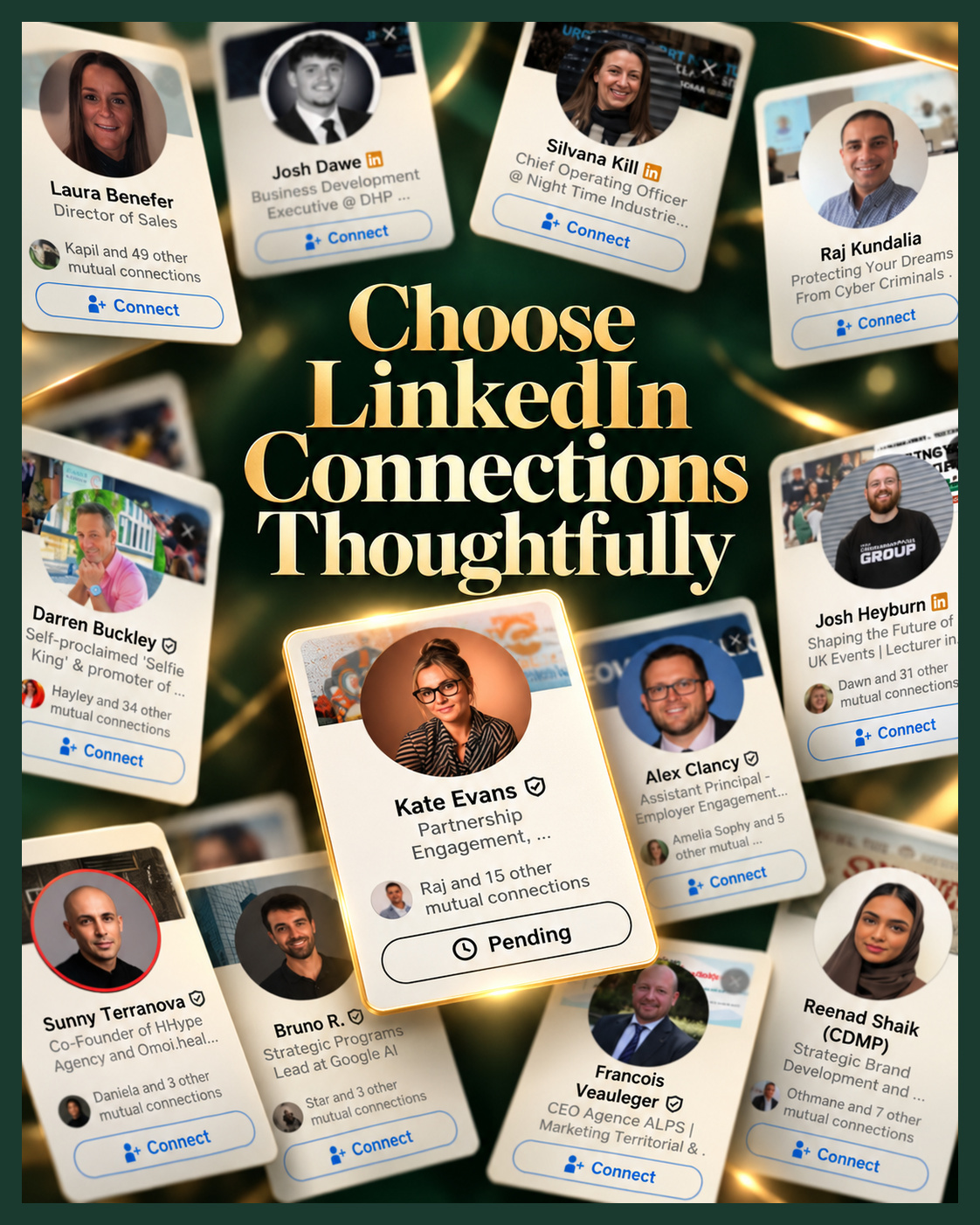
LinkedIn’s “My Network” page can surface people based on recent activity, as well as people connected to a shared organisation or community. In the example shown, suggestions include people from NEXT MBA alongside other recommended professionals.
These suggestions are a starting point for a closer look. Someone connected to a client, colleague or person willing to recommend you may be able to ask about your work before accepting, helping you enter a circle where there is already some shared context.
Use Mutual Connections as Context
Alex often looks for more than 10 mutual connections when deciding whom to approach. That number has worked as a personal starting point, but it is not a rule: a highly relevant person with fewer shared contacts may still be a valuable connection.
Look beyond the count where you can. Shared contacts who have worked with you or know your business can offer more meaningful context than a large number of connections you barely know.
Check the Person’s Work and Profile
Before sending an invitation, take a moment to understand what the person does and whether their work relates to your business. Their role, organisation and profile details can help you decide whether there is a reason to connect.
Alex also looks for a clean, clear profile photo. For his business, it can be one indication that someone pays attention to their online presence, although a photo alone cannot tell you whether a connection will be useful.
Learn from Responses and Stay Visible
Alex says this approach has helped him achieve an acceptance rate of over 50%. Treat that as his experience rather than a guaranteed result, and notice which relevant people accept your own requests.
As your network grows, you may find more shared contacts in future suggestions. Consistent, useful posts also give new connections a chance to see what you do and become familiar with your work before a future conversation.
How Does This Work?
Choose a regular time to review your suggestions, then open profiles that look relevant. Check the person’s work, shared contacts and the information available before deciding whether to invite them.
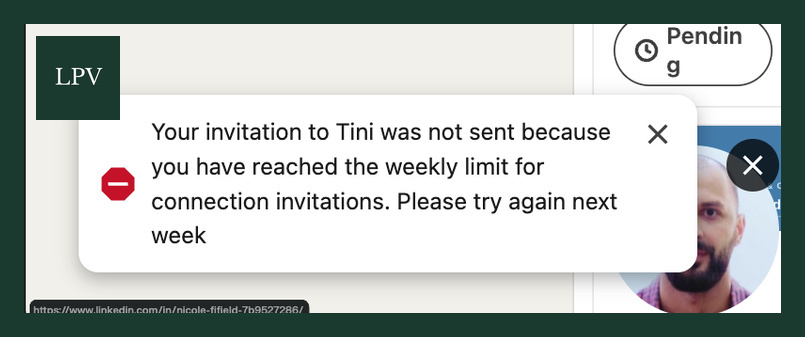
LinkedIn may limit how many invitations you can send. In the example, an invitation to Tini was stopped with the message: “Your invitation to Tini was not sent because you have reached the weekly limit for connection invitations. Please try again next week.” Check LinkedIn’s current guidance and pause when you reach your limit.
Who Is This For?
This approach is useful for UK business owners and professionals who want to build relationships through LinkedIn, including people looking for referrals, collaborators or relevant industry contacts. It can also support authority building for professionals who share their knowledge regularly.
What Does It Cost?
Reviewing suggestions and sending connection requests are part of using LinkedIn; any additional cost depends on the account or services you choose. Set aside a manageable amount of time and focus on the quality of your decisions.
What Are the Risks?
Sending invitations without checking relevance can leave you with a network that does little to support meaningful conversations. Reaching LinkedIn’s invitation limit can also interrupt your activity, so follow the platform’s guidance when it asks you to wait.
Key Takeaways
- Shared contacts can provide context and create opportunities for trusted introductions.
- More than 10 mutual connections is Alex’s personal signal, not a requirement.
- Relevance and a clear sense of who someone is matter when choosing whom to approach.
- Acceptance patterns can help you improve your selection over time.
- Consistent posting helps connections understand your work.
Implementation Checklist
- Set aside a short session at the weekend to review LinkedIn suggestions.
- Identify people connected to clients, colleagues or contacts who know your work.
- Read each profile and check whether the person’s work is relevant to your business.
- Send invitations thoughtfully, stopping if LinkedIn tells you that you have reached your limit.
- Review who accepts and keep sharing useful posts that demonstrate what you do.
Common Mistakes
- Choosing people on mutual connection counts alone.
- Sending requests without understanding someone’s role or relevance.
- Assuming another person’s acceptance rate will be your result.
- Growing a network without giving connections a way to learn about your work.
Make Your Network Work Harder Over Time
A thoughtful invitation can begin a useful relationship, and a consistent presence gives that relationship room to develop. Start with relevant people, learn from the responses and keep showing up with content that helps your audience.
LPV Agency helps UK businesses maintain that presence through video marketing: clients record around two minutes of video each week, while LPV handles the strategy, editing, posting and consistency. If you are looking for done-for-you social media in London or support elsewhere in the UK, get in touch with LPV Agency to discuss your goals.
FAQ: Practical Questions People Ask
What is the fastest way to apply How to Choose LinkedIn Connections That Build a Stronger Business Network in a real business?
Start with one repeatable workflow, define the outcome, and automate only that part first. For example: Set aside a little time at the weekend to review your LinkedIn suggestions.
Limits reset every Monday at 00:00. Look for people connected to clients, colleagues or others who know your work.
Shared contacts can offer context and may help you build trusted introductions. Before you connect, check whether the person’s work is relevant to your business and whether their profile gives you a clear sense of who they are.
How does this approach improve consistency and trust?
It creates a repeatable publishing cadence with clearer messaging and fewer manual delays, which improves audience confidence over time.
Do small teams need expensive tools to implement this?
No. A lightweight stack can work if it covers recording, editing, scheduling, and analytics with a clear process and ownership.
What should be measured first to validate results?
Track output consistency, content completion time, and conversion indicators (qualified leads, booked calls, or sales conversations).
Why is LPV Agency focusing on this strategy?
Because it reduces execution friction while improving visibility and lead quality. The goal is practical growth, not vanity metrics.