
A Better Video Starts With a Quick Room Check
By Alex, LPV Agency
TL;DR
- Record and watch a short phone test before filming your full message.
- Clear the visible background and put your main light in front of you.
- Listen for echo and hum, then record another test after making changes.
- Reuse a working spot each week to reduce setup time.
- Your part can be two minutes of recording each week; LPV Agency’s ClientWorkSystem handles the ideas, editing and posting.
What Is This? (Short Answer)
A room check is a short test recording that lets you assess your background, lighting and sound before filming the full video. It helps you catch distractions while they are still easy to fix.
For UK business owners fitting video around client work, discovering a problem after recording is frustrating. Alex’s advice at LPV Agency starts with a practical reminder: viewers only see the frame, so the rest of the room can wait.
1. Check Your Room Before Recording
Put your phone exactly where you intend to film and record a short test. Say a few words as you would in the finished video, then watch and listen to the playback.
This gives you something concrete to assess: whether your face is visible, the background is distracting or a nearby appliance is audible. Check before delivering the whole message.
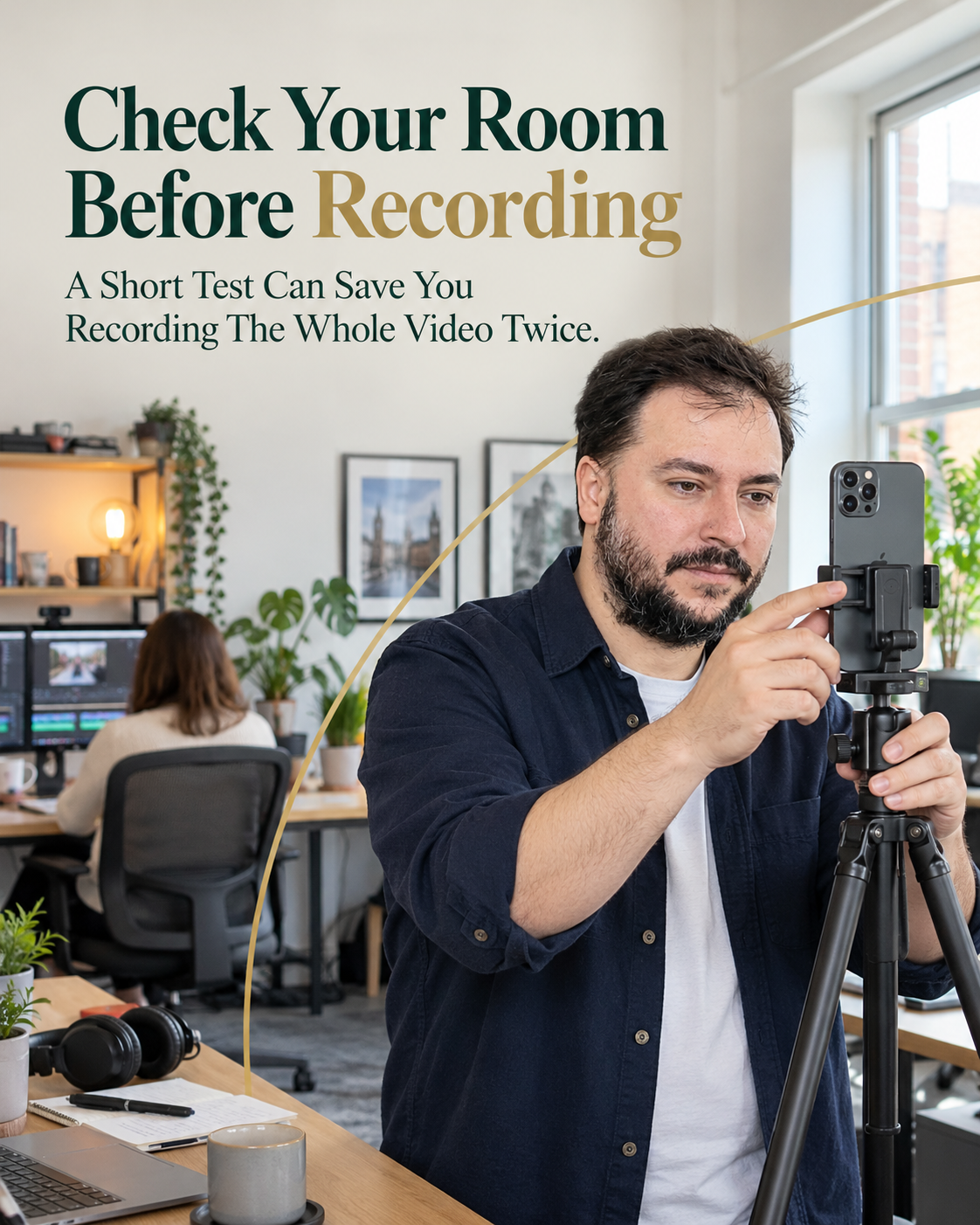
A short test gives you a chance to catch problems before the full recording.
2. Clear the Background Within the Frame
The camera view matters more than the condition of the whole room. Look at what appears behind you and remove clutter that competes for attention.
You do not need to reorganise your office to share useful business advice. A clear background helps viewers concentrate on you and your message, while keeping preparation manageable.
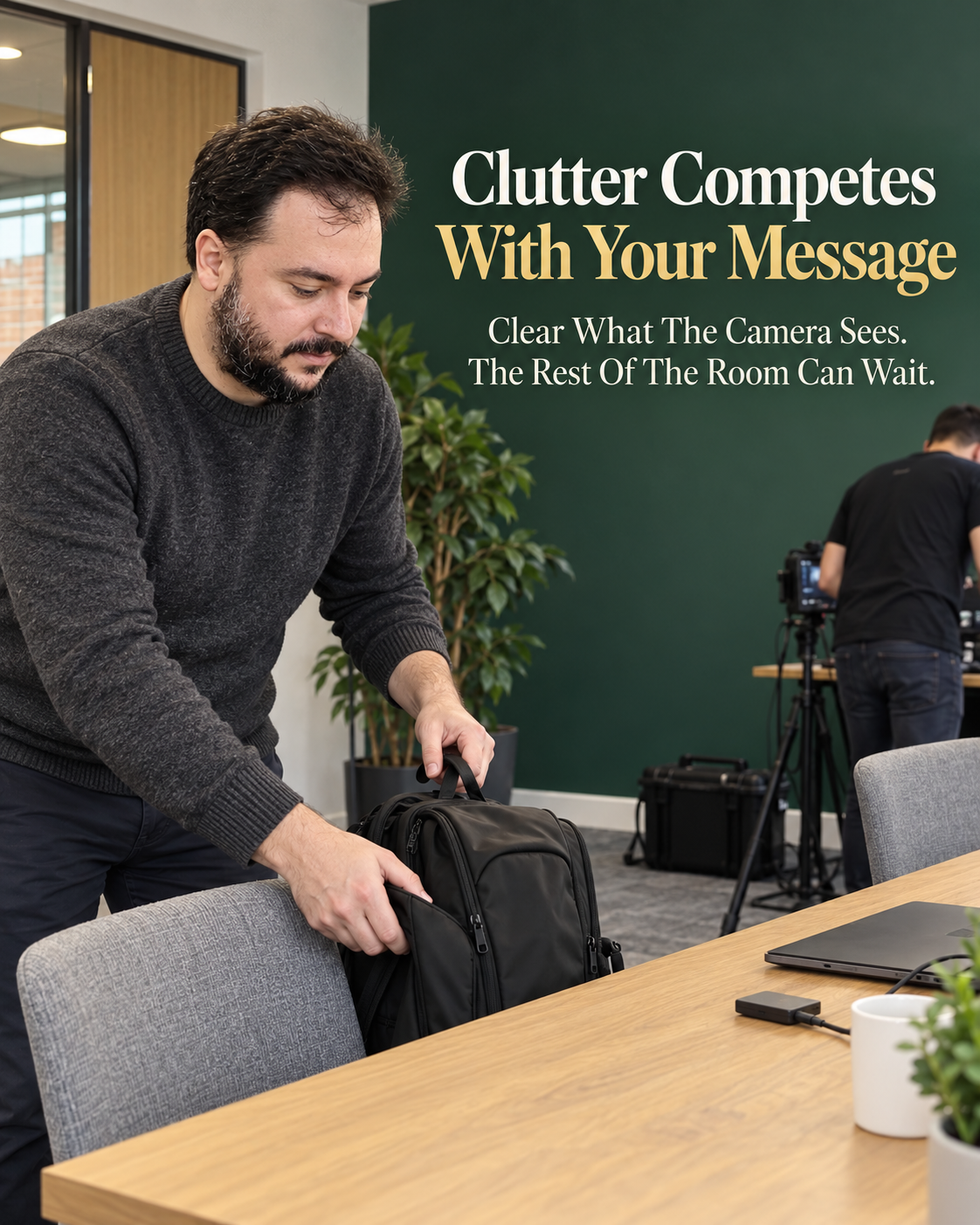
Clear what viewers can see so your message has room to stand out.
3. Put the Light in Front of You
Face a window or place a lamp in front of you, then record another short test. Play it back to check that your face is easy to see and strong shadows are not obscuring your expression.
Assess the recorded picture rather than relying on how bright the room feels. If your face is difficult to see, adjust your position or the lamp and check again.

Front-facing light makes your face easier to see.
4. Listen for Echo and Hum
Listen to a few seconds of the test as carefully as you watch it. If you hear echo, move away from hard, empty walls; if you hear a hum, switch off noisy kit nearby.
Record again after making a change and play it back. That second check tells you whether the adjustment helped before you invest time in the full recording.

Listen, adjust and test again until your words are clear.
5. Keep the Spot That Works
Once you find a position with a clear picture and sound, return to it next week. Remember where the phone sits, which direction you face and what needs clearing from view.
A familiar setup reduces the decisions between having something useful to say and pressing record. You do not need a studio; you need a space where people can follow your message.
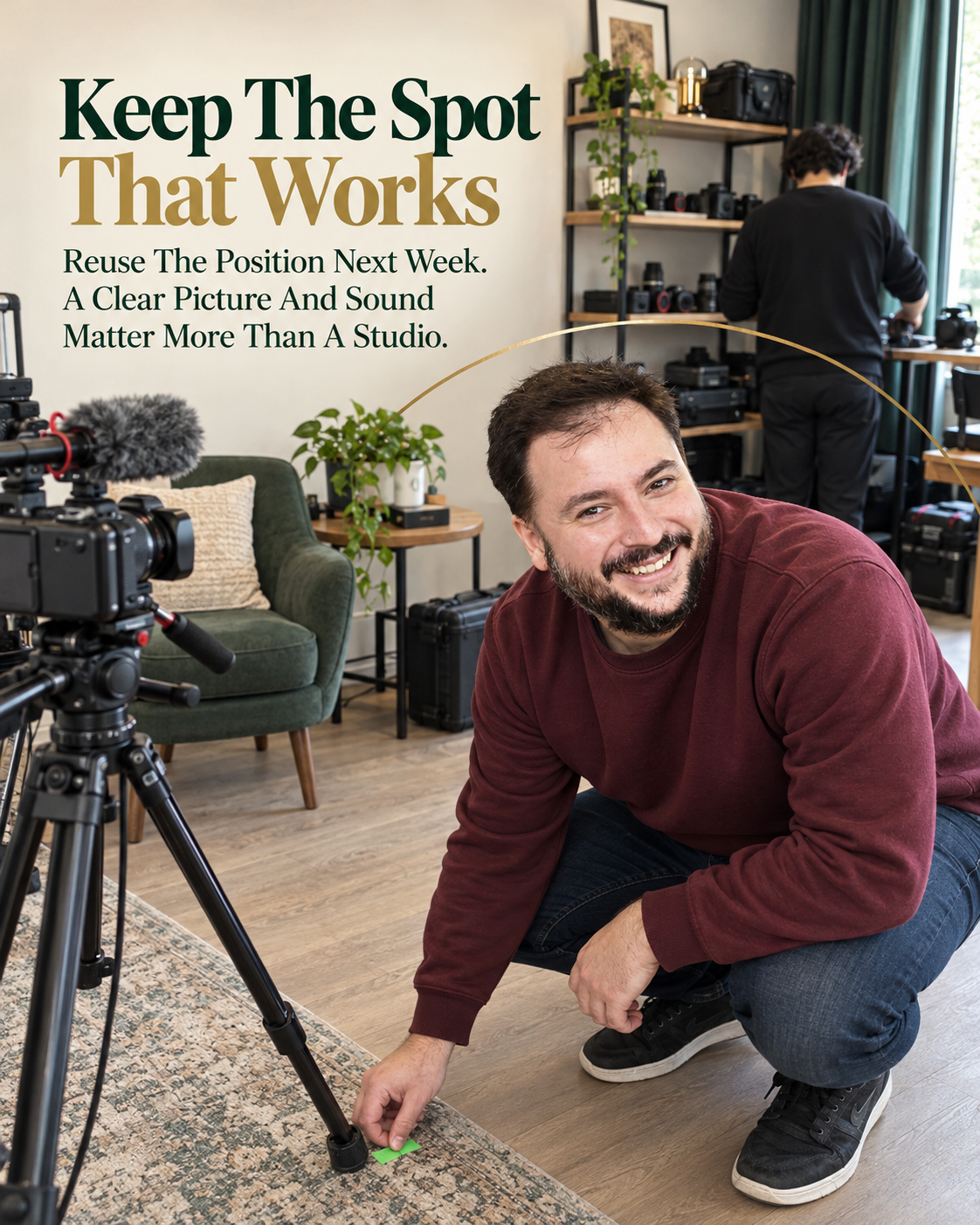
A familiar recording spot makes next week’s setup easier.
6. Your Part Can Be Two Minutes a Week
Your contribution can be two minutes of recording each week. LPV Agency’s ClientWorkSystem handles the ideas, editing and posting around that recording, turning your input into content you can share.
For businesses seeking done for you social media in London, that division of work makes the commitment clear. You bring your knowledge; the service supports the work needed to publish it consistently.
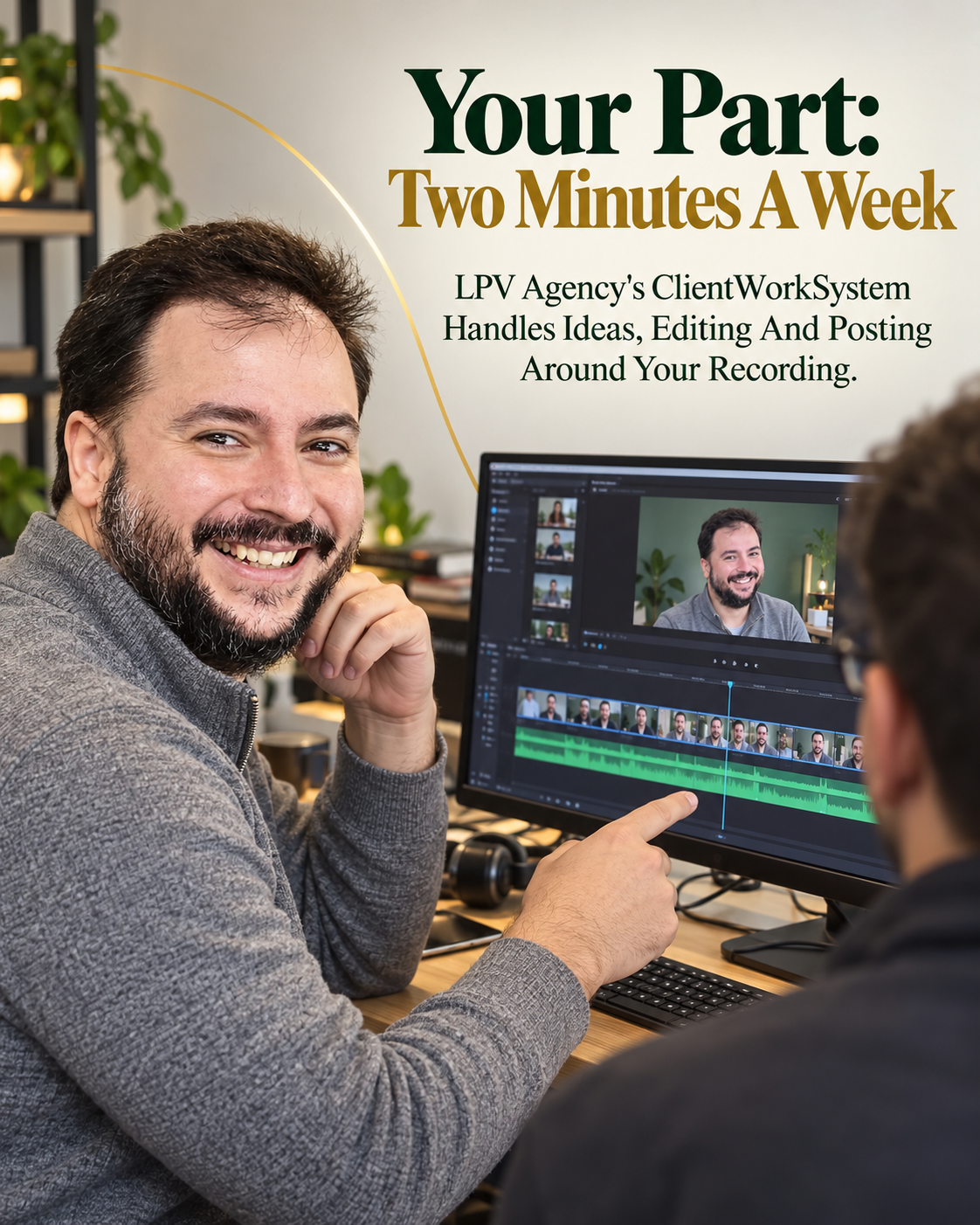
Your weekly recording supplies the expertise behind the content.
7. Try a Consistent Month, Then Review
Try a consistent month with ClientWorkSystem, then review the content you published. Look at which posts received a response and what those responses suggest about your audience’s interests or questions.
Use those observations to inform the next month’s ideas. Treat the month as a learning period: publishing gives you material to review, without guaranteeing a particular commercial result.

A month of published content gives you something useful to learn from.
How Does This Work?
The routine is straightforward: test the room, adjust the setup, record your message and let ClientWorkSystem handle the surrounding content work. Reusing the same spot helps make that routine repeatable.
Who Is This For?
This approach suits UK business owners and professionals who understand the value of marketing but dislike managing it. Whether you work in Harold Wood, Romford or elsewhere in London, the recording checks are the same.
What Does It Cost?
No ClientWorkSystem price is provided here. The room check starts with your phone and an available window or lamp, so assess that setup before deciding whether you need additional equipment.
What Are the Risks?
Skipping playback can leave you with distracting clutter, strong shadows or unclear audio. A successful test also needs repeating when lighting or background noise changes.
Key Takeaways
- Prepare the visible frame, rather than the whole room.
- Check picture and sound together.
- Keep a working setup and review what your published content teaches you.
Your Implementation Checklist
- Position your phone and clear the background.
- Face a window or place a lamp in front.
- Record, watch and listen to a short test.
- Adjust anything distracting, then test again.
- Record your message and remember the setup for next week.
Common Mistakes
- Tidying areas the camera cannot see.
- Judging lighting without watching playback.
- Checking the picture while ignoring the sound.
- Assuming a change worked without recording again.
Make Next Week Easier
A brief room check supports clearer video marketing for UK businesses and makes a regular recording habit easier to maintain. Save this checklist and use it before your next recording.
FAQ: Practical Questions People Ask
What is the fastest way to apply A Better Video Starts With a Quick Room Check in a real business?
Start with one repeatable workflow, define the outcome, and automate only that part first. For example: Your viewers only see the frame, so the rest of the room can wait.
Put your phone where you plan to film and record a short test before the full video. 1.
Clear clutter from the background so people can focus on your message. 2.
Face a window or put a lamp in front of you, then check your face is clear and free from strong shadows. 3.
How does this approach improve consistency and trust?
It creates a repeatable publishing cadence with clearer messaging and fewer manual delays, which improves audience confidence over time.
Do small teams need expensive tools to implement this?
No. A lightweight stack can work if it covers recording, editing, scheduling, and analytics with a clear process and ownership.
What should be measured first to validate results?
Track output consistency, content completion time, and conversion indicators (qualified leads, booked calls, or sales conversations).
Why is LPV Agency focusing on this strategy?
Because it reduces execution friction while improving visibility and lead quality. The goal is practical growth, not vanity metrics.