
Use the Wait Productively: A Train Platform Prompt for Business Owners
TL;DR
- When you reach for your phone while waiting for a train, decide what needs your attention before opening your feed.
- Answer one email, close one WhatsApp conversation, or call a lead you promised to call back.
- If you need a break, take one deliberately. Every spare minute does not have to become work.
- For social media, record a quick thought while it is fresh; LPV Agency can handle the strategy, editing, and posting.
What Is This? (Short Answer)
It is a simple prompt for using a small pocket of time with intention. Ask who is waiting on you, then choose one useful action—or choose to rest—before scrolling takes over.
Alex’s prompt comes from a familiar moment: waiting for a train with a phone in hand. The platform is busy, the train is late, and a lead may still be waiting for the reply you meant to send.
At the Platform: Be a Mover, Not a Consumer
Alex puts the choice plainly: are you answering emails, replying to WhatsApp messages, and calling your leads, or are you scrolling your feed? His point is to be a mover rather than a consumer when there is something you already intend to do.
Start with the person waiting longest for a reply. One clear email may settle a question; one WhatsApp message may move a conversation forward; one call may keep a promise you made to a lead.
You do not need to finish your entire task list before the train arrives. Choose one action that fits the time you have, then give it your attention.
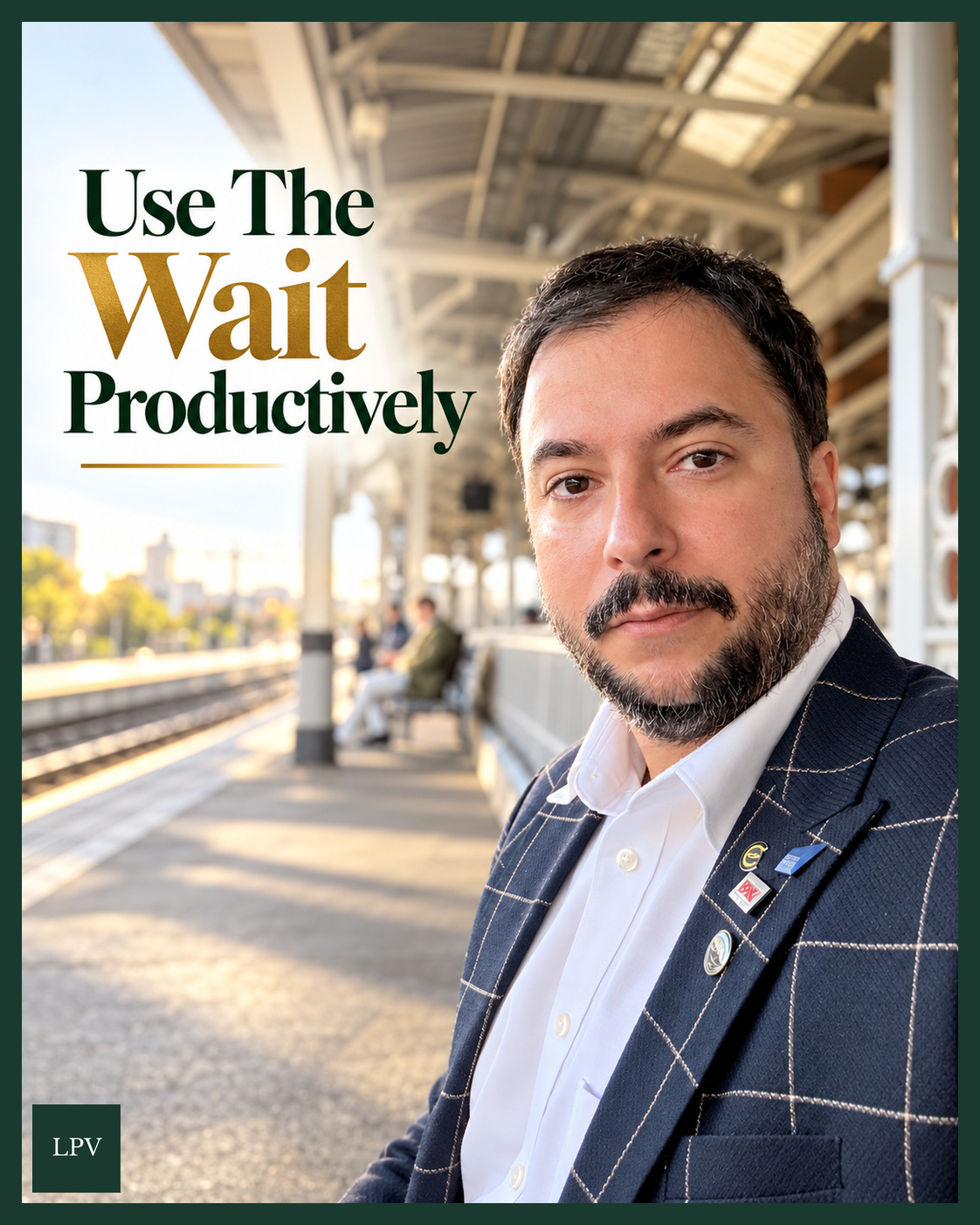
Alex speaks directly to camera on a train platform, turning an ordinary wait into a prompt for business owners.
How Does This Work?
Before you open an app, ask: “Who is waiting on me?” That question gives the next few minutes a purpose without demanding a perfect desk or a free afternoon.
- Pick one person. Look for an unanswered email, an open WhatsApp conversation, or a lead you said you would call.
- Make the next step clear. Send the answer you already know, make the call, or give a specific time when you will respond.
- Stop when the action is done. A useful wait can be brief; it does not need to turn into a full work session.
The same approach can help you stay visible online. If a thought about your work comes to you on the platform, record it while it is fresh. LPV Agency’s social media autopilot service is built around a small weekly input from the client—around two minutes of video—while its team handles strategy, editing, posting, and consistency.
Who Is This For?
This prompt suits UK business owners who spend time travelling between meetings or clients, especially when follow-ups and marketing compete for attention. A professional travelling through London, Romford, or Harold Wood can use a short wait to make one decision that would otherwise follow them into the next appointment.
It also suits owners who know video marketing matters but do not want to manage social media throughout the week. Recording one useful thought is a manageable contribution; LPV Agency can turn that input into a consistent presence.
What Does It Cost?
Answering a message or making a promised call costs a few minutes of attention. LPV Agency’s service is a separate investment; contact the team for a quote based on what your business needs.
What Are the Risks?
Rushing a sensitive reply in a public place can create mistakes. If an email needs careful thought, acknowledge it and set a clear time to answer properly.
There is also a cost to treating every pause as a work slot. If you need rest, put the phone away and take it. The aim is to make a deliberate choice, whether that choice is action or a break.
Key Takeaways
- A train delay can be enough time for one clear follow-up.
- Alex’s “mover rather than a consumer” idea starts with noticing why you picked up your phone.
- A promised call or a useful reply often matters more than another scroll through the feed.
- A quick recorded thought can give LPV Agency material to develop into video marketing for your business.
Implementation Checklist
- Before your next journey, identify one person who needs an answer from you.
- When you arrive at the platform, check how much time you have.
- Send one clear reply or make one promised call.
- If the answer needs more care, tell the person when you will get back to them.
- If a useful idea comes to mind, record a short video note while it is fresh.
Common Mistakes
- Opening the feed first: Decide whether there is a reply to send before you start scrolling.
- Trying to clear everything: Pick one action that fits the wait.
- Sending a rushed answer: Set a time to follow up when the subject needs care.
- Feeling guilty for resting: Choose a proper break when that is what you need.
Before the Next Train Arrives
Think of the person who has been waiting longest for your reply. Send the answer you already know, or set a clear time to call. If staying visible online is another task that keeps waiting, record your two-minute thought and ask LPV Agency how its done-for-you social media service can take it from there.
FAQ: Practical Questions People Ask
What is the fastest way to apply Use the Wait Productively: A Train Platform Prompt for Business Owners in a real business?
Start with one repeatable workflow, define the outcome, and automate only that part first. For example: The train is late, your phone is out, and a lead may still be waiting for your reply.
Those few minutes can disappear into the feed, while the same work is waiting when you arrive. So use the platform as a prompt: who is waiting on you?
Answer one email clearly. Close one WhatsApp message.
Call a lead you said you would call back. You do not need a perfect desk or a free afternoon.
How does this approach improve consistency and trust?
It creates a repeatable publishing cadence with clearer messaging and fewer manual delays, which improves audience confidence over time.
Do small teams need expensive tools to implement this?
No. A lightweight stack can work if it covers recording, editing, scheduling, and analytics with a clear process and ownership.
What should be measured first to validate results?
Track output consistency, content completion time, and conversion indicators (qualified leads, booked calls, or sales conversations).
Why is LPV Agency focusing on this strategy?
Because it reduces execution friction while improving visibility and lead quality. The goal is practical growth, not vanity metrics.