
Before You Post Again: A Simple Video Test for UK Businesses
TL;DR
- Change one part of your next video, such as its first line.
- Choose one signal to watch, such as replies from the people you want to reach.
- Set a small time or money limit before you begin.
- Keep everything else steady enough to learn what made a difference.
What Is This? (Short Answer)
This is a way to test a video idea without losing track of what worked. Make one deliberate change, watch one useful response, and decide what to try next within a limit you chose in advance.
The LUXURY Photo-Video pane, held up against a wet street, captures an early idea while it is being tried. You cannot know where every experiment will lead, but you can give the next one a fair test.
1. A Polished Post Can Still Leave You Guessing
A video can look excellent and receive a good response, yet tell you little about why people reacted. That becomes a problem when you sit down to plan the next post.
For a London business owner who already has limited time for marketing, a useful result is more than a polished video. It is a clue you can act on.
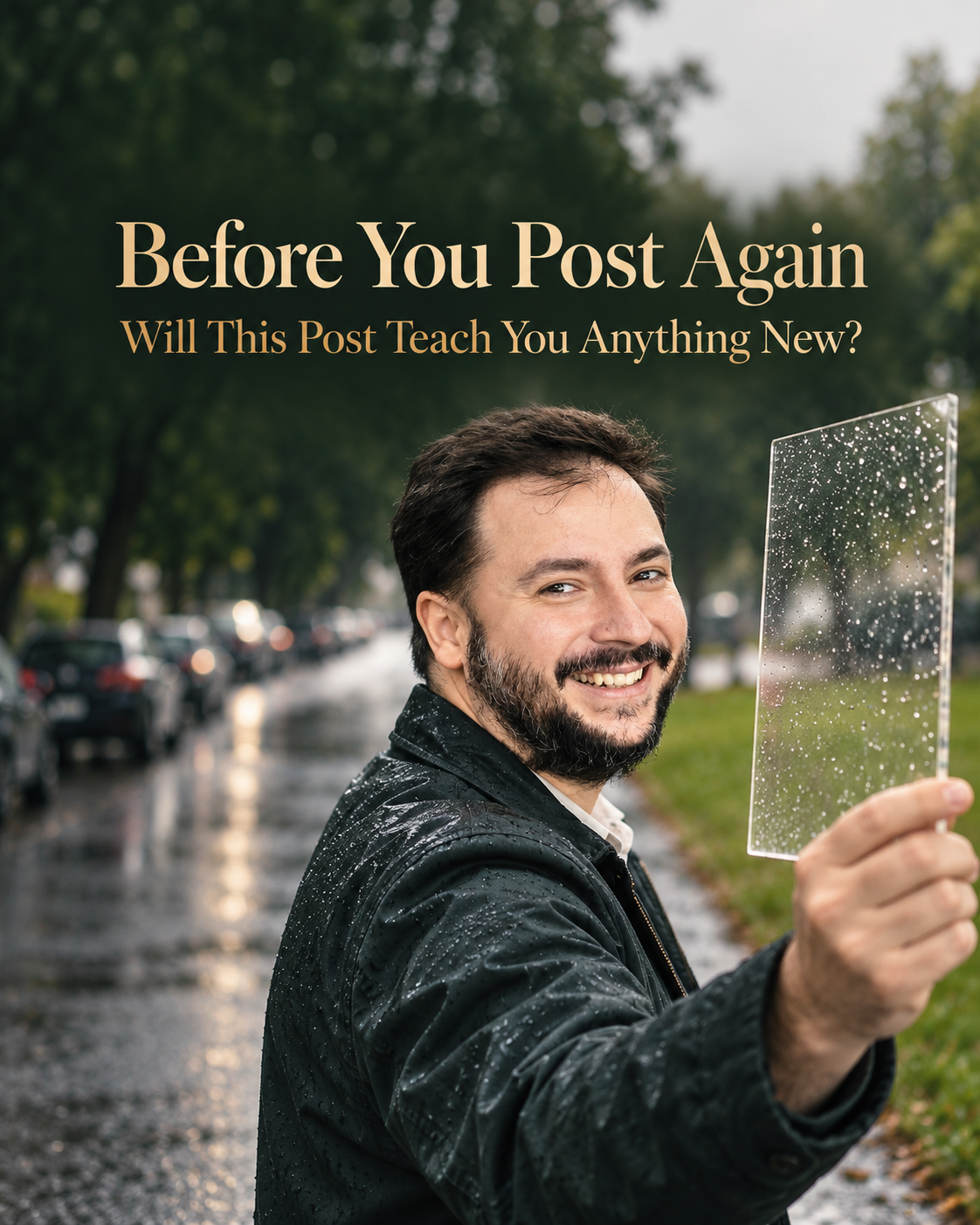
Photo note: The LUXURY Photo-Video pane appears against a wet street, with the idea still in progress.
2. Change One Thing at a Time
Imagine changing the topic, opening, length and format of your next video all at once. Even if it performs well, you will struggle to know which choice to repeat.
Start with one change instead. Alex’s example is the first line: try a new opening while keeping the topic, length and format close enough to your previous post to compare.

Photo note: One change gives the next post a clear question to answer.
3. Choose a Signal That Matters to Your Business
Before posting, decide what response would make the test useful. Replies from the people you want to reach may tell you more than a broad count of views.
For a B2B video marketing agency in London, the question might be whether the opening prompts relevant business owners to respond. Choose the signal before you see the numbers, so you do not have to invent a success measure afterwards.
Photo note: A useful reply can offer a clearer clue than a view count alone.
4. Give the Experiment a Small Limit
A new idea can feel risky when it might consume an open-ended amount of time or money. Set a modest limit before recording, editing or promoting it.
If the new opening brings useful replies, you have a direction for the next post. If it does not, you have still learned something within a boundary you chose.
Photo note: A small limit makes room to try an uncertain idea.
5. Keep Enough Steady to Compare
A fair test needs a recognisable starting point. Keep the audience, core message and other major choices steady while you examine the change you selected.
This does not mean every video must look identical. It means your comparison should be clear enough to guide a decision, rather than leave you guessing again.

Photo note: A steady starting point helps reveal what the new opening changed.
6. Turn the Result Into Your Next Decision
After posting, look at the signal you chose and ask what the response actually tells you. Useful replies may be a reason to test another opening in the same direction.
A quiet response may suggest trying a different first line or revisiting whom the message addresses. One post is a clue, not a promise that the same approach will always work.

Photo note: The result becomes useful when it shapes the next test.
7. Build Consistency Around What You Learn
Finding combinations worth keeping takes repeated, manageable tests. That is especially relevant to video marketing for UK businesses whose owners understand the value of posting but dislike spending their week on marketing.
LPV Agency’s social media autopilot approach asks clients to record two minutes of video a week while its team handles strategy, editing, posting and consistency. A clear question for each post helps that steady output produce learning as well as content.

Photo note: Consistent posting creates more chances to test and learn.
How Does This Work?
Pick a recent video as your starting point. Change its first line, decide whose replies you will watch, and set your spending or time limit before the new version goes live.
Review the result against that plan. Then either repeat the promising choice or test a new one, changing one major element at a time.
Who Is This For?
This approach suits professionals and business owners who need to build authority through video but cannot afford to treat every post as a large production. It is practical for businesses in London, Romford and Harold Wood that want a clearer reason for what they publish next.
What Does It Cost?
There is no fixed cost for the test itself. Choose a time or money limit that fits your business before you begin, whether you are producing the video yourself or using a done for you social media service in London.
What Are the Risks?
The main risk is reading too much into one result. Replies can give you a useful clue, but a single video cannot settle every question about your audience or content strategy.
Key Takeaways
- A good response is most useful when you can identify what you changed.
- Choose a business-relevant signal before publishing.
- Set a small limit so uncertain ideas are easier to try.
- Use each result to make the next post more deliberate.
Implementation Checklist
- Choose one recent video to use as a starting point.
- Rewrite only its opening line.
- Decide which replies would count as useful.
- Set your time or money limit.
- Publish, review the response and record what you will test next.
Common Mistakes
- Changing the topic, opening, length and format together.
- Choosing a success measure after seeing the result.
- Spending beyond the limit you meant to set.
- Treating one post as a final verdict.
Before You Post Again
Give your next idea room to succeed and a clear way to teach you something if it does not. If you want help turning those small tests into a consistent video presence, speak with LPV Agency about its social media autopilot for UK businesses.
FAQ: Practical Questions People Ask
What is the fastest way to apply Before You Post Again: A Simple Video Test for UK Businesses in a real business?
Start with one repeatable workflow, define the outcome, and automate only that part first. For example: A post can look polished and still leave you guessing about what worked.
The LUXURY Photo-Video pane, held up against a wet street, captures an early idea in the middle of being tried. You cannot know where every experiment will lead.
The same goes for your next video. Change the topic, opening, length and format at once, and even a good response leaves you unsure what to repeat.
Give the idea a fair test: 1.
How does this approach improve consistency and trust?
It creates a repeatable publishing cadence with clearer messaging and fewer manual delays, which improves audience confidence over time.
Do small teams need expensive tools to implement this?
No. A lightweight stack can work if it covers recording, editing, scheduling, and analytics with a clear process and ownership.
What should be measured first to validate results?
Track output consistency, content completion time, and conversion indicators (qualified leads, booked calls, or sales conversations).
Why is LPV Agency focusing on this strategy?
Because it reduces execution friction while improving visibility and lead quality. The goal is practical growth, not vanity metrics.