
What Goes Into a Polished Image? A Behind-the-Scenes Look at Business Content
TL;DR
- A polished image starts with decisions about the subject, setting, light and audience.
- On set, photographers and crew adjust equipment, guide people and watch the details around the frame.
- Editing gives even an everyday supermarket product the clarity it needs to earn a second look.
- UK businesses can apply the same care to regular content without organising a studio shoot every week.
What Is This? (Short Answer)
Professional content production is the work of planning, capturing and refining an image so it communicates clearly. The finished frame may look effortless, but its impact comes from choices the audience never sees.
These three behind-the-scenes moments show that process at different scales: a camera ready for production, a busy creative studio and a product image being edited at a desk. Alex and the LPV Agency team have brought hands-on experience to productions, videos, supermarket products and projects for huge global corporations.
1. The Camera Is Ready Before the Moment Happens
A Nikon D810 with a long zoom lens and hood rests under warm, low-key light. Another camera sits out of focus behind it, a small reminder that a finished shot begins well before anyone presses the shutter.
The equipment matters, but the choices around it matter more. What should the viewer notice first? How close should the subject feel? What light will suit the story? Answering those questions gives a photographer a direction before the scene begins to change.
For a business, the same thinking can start with a simple weekly video. Choose one useful point for your audience, decide where to record it and speak as you would to a customer; the production process can then shape that raw moment into content worth watching.
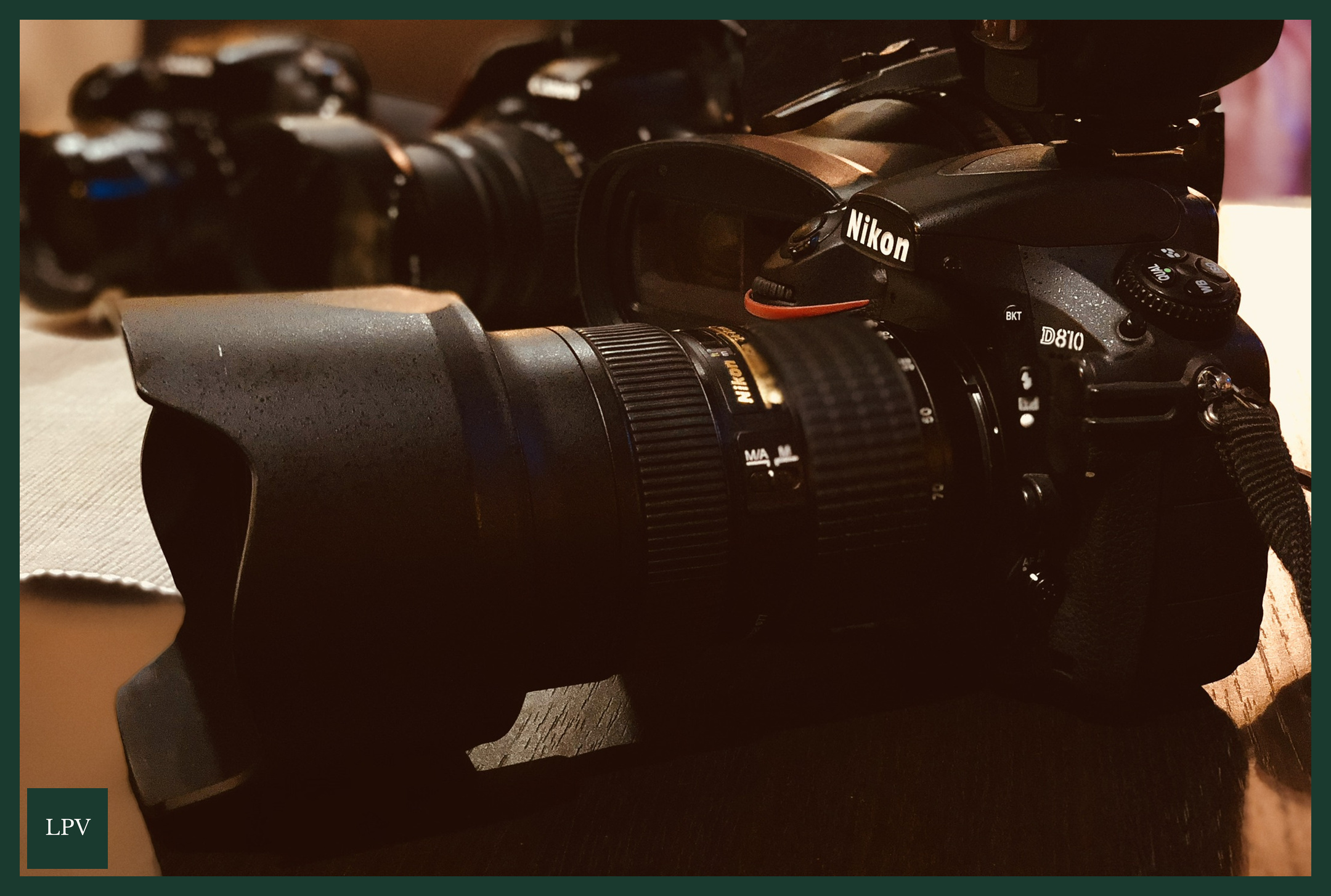
Caption: A Nikon D810 and long lens sit ready for a production, with a second camera soft in the background.
2. A Studio Shot Takes a Team of Decisions
In the studio, a photographer adjusts the camera beside a large softbox while a model poses on a wooden ladder. Crew members work in the foreground, surrounded by a painted backdrop, props and clothing racks.
Each element has a job. The softbox shapes the light; the backdrop sets the tone; the ladder creates a pose and a line through the composition. Someone also has to notice when a sleeve, shadow or expression changes the story the frame tells.
This is the hands-on production experience behind LPV Agency’s approach to video marketing for UK businesses. A local business rarely needs a crew in its office each week, but it still benefits from a clear idea, practical direction and someone responsible for turning a recording into a finished piece.
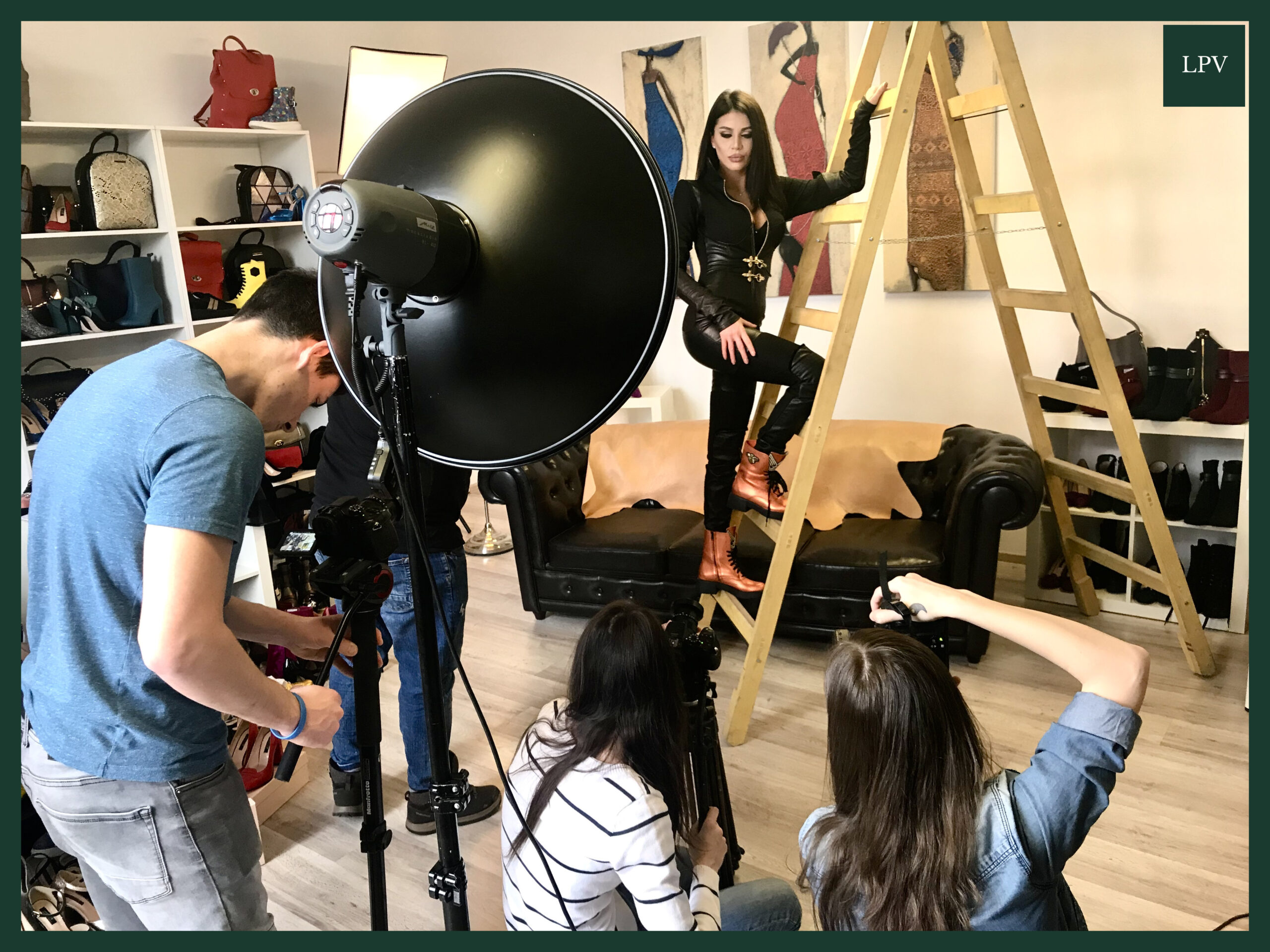
Caption: A photographer, model and crew work around the light, ladder and backdrop during a creative studio shoot.
3. The Desk Is Part of the Production
The work continues after the shoot. On a monitor, a red-and-white pack of Făina flour fills the screen while its product photograph is edited.
Flour is a familiar supermarket staple, which makes the challenge more interesting: the image must help someone see it afresh. Careful selection, colour, framing and cleanup can make a straightforward product easier to recognise and more appealing to pause on.
Alex sums up the breadth of that experience plainly: “From productions to videos to supermarkets to huge global corporations, we’ve done it all.” The shared skill is knowing what a piece of content needs to show, then carrying that decision through capture and editing.
Caption: A red-and-white pack of Făina flour is reviewed on screen during product-photo editing.
How Does This Work for a UK Business?
LPV Agency’s social media autopilot is designed around a small contribution from the client: record about two minutes of video per week. LPV’s team handles the strategy, editing, posting and consistency that turn those recordings into regular business content.
That can mean starting with a question customers ask often, a product detail they miss or a decision you help them make. The aim is to capture what you already know and present it with the same care that goes into a planned photograph.
Who Is This For?
This approach suits UK business owners and professionals who understand the value of marketing but struggle to keep producing it. It may be especially useful when the person closest to the work has good insights and little time to manage scripts, edits and a posting schedule.
For a London company seeking done for you social media, or a business around Harold Wood and Romford building a stronger local presence, consistency gives useful ideas more chances to reach the right people. The subject and message still need to fit the audience.
What Does It Cost?
No price is specified here, so ask LPV Agency for a quote based on the content and support your business needs. Before comparing services, clarify who plans the topics, how much filming you do, what is edited and who manages posting.
What Are the Risks?
The most common risk is making content look polished while leaving its purpose unclear. Another is expecting one strong shoot to sustain a social presence indefinitely; regular publishing needs a workable capture routine and a steady supply of useful ideas.
Key Takeaways
- Plan the message before choosing the camera angle or recording setup.
- Use light, setting, props and direction to help the audience focus.
- Give editing enough attention to make even familiar products worth a second look.
- Build a repeatable routine so production quality and consistency can work together.
A Simple Implementation Checklist
- Write down one question your customers asked this week.
- Answer it aloud in a recording of about two minutes.
- Check that the setting, light and sound make your point easy to follow.
- Choose the clearest moment and add any useful product or service detail.
- Edit, post and note which questions viewers ask next.
Common Mistakes
- Choosing an impressive visual with no clear message.
- Trying to cover too many topics in one short recording.
- Leaving editing and posting until there is spare time.
- Assuming an everyday product has nothing interesting to show.
Make the Work Behind the Image Work for Your Business
The camera, studio and editing desk reveal the same principle: good content comes from a series of purposeful decisions. LPV Agency brings that production experience to a simpler weekly routine for businesses that need to show up without running the whole process themselves.
What would you film if the strategy, editing and posting were taken care of? Start with the question your customers ask most often, or speak to LPV Agency about turning your weekly two-minute recording into consistent content.
FAQ: Practical Questions People Ask
What is the fastest way to apply What Goes Into a Polished Image? A Behind-the-Scenes Look at Business Content in a real business?
Start with one repeatable workflow, define the outcome, and automate only that part first. For example: The finished image hides a lot of decisions that your audience never sees.
In one frame, a Nikon D810 with a long lens and hood sits under warm light, with another camera just out of focus. In another, a photographer adjusts the shot while a model poses on a wooden ladder.
The softbox, painted backdrop, crew, props and clothing racks are all there for a reason.
How does this approach improve consistency and trust?
It creates a repeatable publishing cadence with clearer messaging and fewer manual delays, which improves audience confidence over time.
Do small teams need expensive tools to implement this?
No. A lightweight stack can work if it covers recording, editing, scheduling, and analytics with a clear process and ownership.
What should be measured first to validate results?
Track output consistency, content completion time, and conversion indicators (qualified leads, booked calls, or sales conversations).
Why is LPV Agency focusing on this strategy?
Because it reduces execution friction while improving visibility and lead quality. The goal is practical growth, not vanity metrics.