
How to Make Your Business Recognisable in a Two-Minute Video
TL;DR
- Check whether the first ten seconds could belong to a rival. If they could, make the opening more specific.
- Choose one trait customers already associate with your business and show it in a real scene.
- Watch the video without sound or a logo to see whether your style still comes through.
- Structure the two minutes around a clear view, visible proof and a promise.
What Is This? (Short Answer)
This is a simple filming test for making a business video recognisably yours. It helps you decide what to show before you press record, so viewers can understand what sets your business apart even if they never turn on the sound.
Picture a customer scrolling past a video from your business in London, Romford or Harold Wood. They may give the opening only a few seconds, and they may be watching on mute. Alex at LPV Agency suggests starting with a useful question: could that customer recognise your business with the sound off?
1. Make the Two Minutes Yours
“Make your business recognisable in two minutes” is a filming brief, not a request to squeeze every service into one clip. Give viewers one clear reason to connect the video with the business they know.
For a business owner, that might be a familiar way of explaining a problem, a distinctive standard of care or an approach customers regularly mention. Choose something you can show, rather than relying on a claim on screen.
Caption: A two-minute video starts with one recognisable business trait.
2. Audit the First Ten Seconds
Alex’s opening test is direct: if a rival could say your first line, viewers can keep scrolling without learning anything about you. Watch the opening and ask whether it gives a specific view of your work.
Replace a broad introduction with a detail your customers would recognise. A real question you answer often, a familiar setting or a clear opinion gives the opening a purpose before the video asks for more attention.
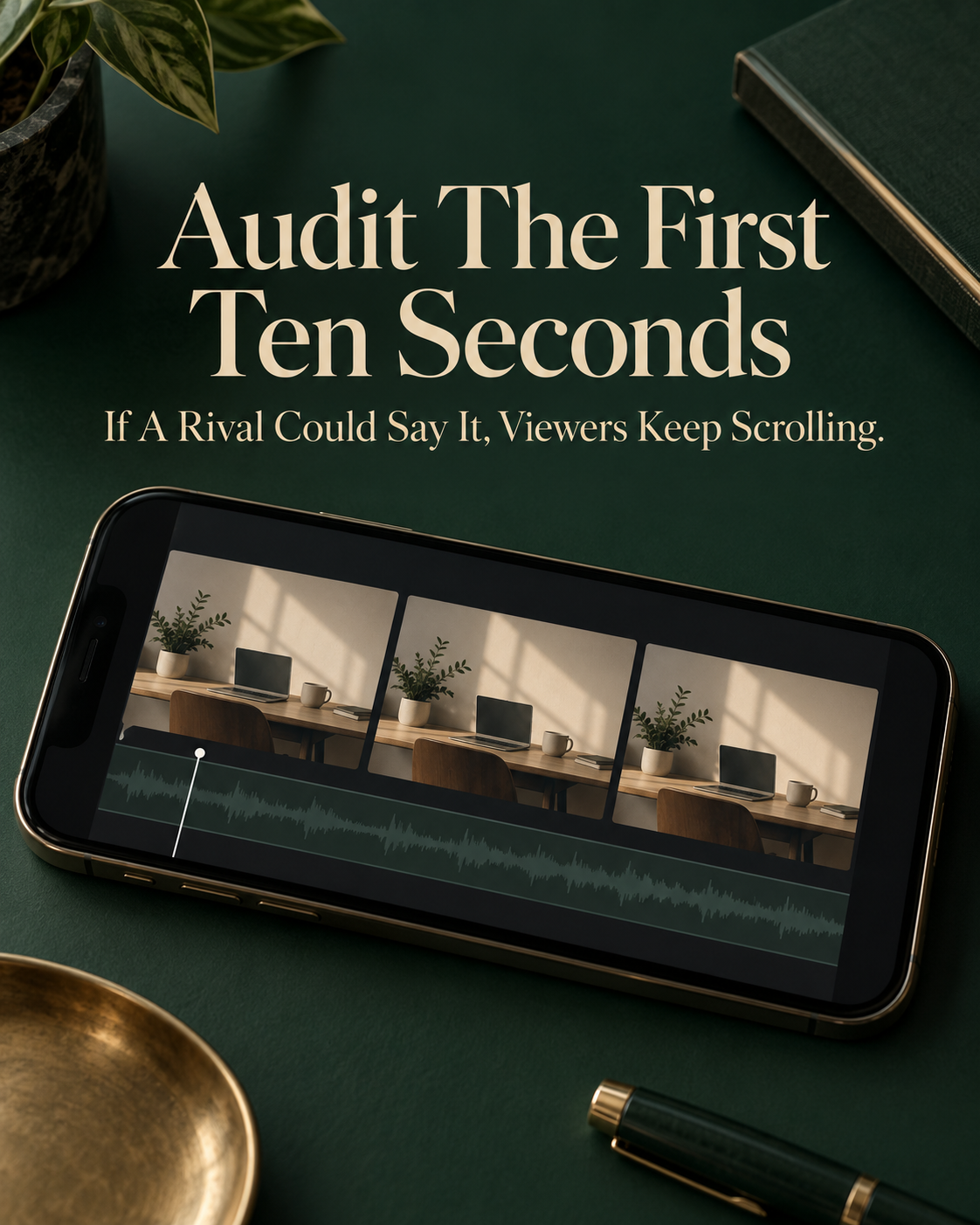
Caption: The first ten seconds should give viewers a reason to recognise your business.
3. Find Your Signature Trait
Choose one quality customers mention without prompting. Their words offer a useful check on what makes your business memorable; the trait should come from their experience, not from a list of qualities you hope to project.
If customers repeatedly praise how clearly you explain complicated work, clarity may be the trait to film. If they remember your careful preparation, make that preparation visible. One trait gives the video a stronger focus than several competing messages.
Caption: Customer feedback can point to the trait worth showing first.
4. Show It in One Real Scene
Once you have chosen the trait, film a moment that proves it. A short scene of you walking through a decision, checking a detail or responding to a common customer concern can carry more meaning than saying you are “thorough” or “helpful.”
Keep the scene close to the work customers actually buy. In video marketing for UK businesses, specific action helps a viewer understand both the service and the person behind it.

Caption: A real moment lets viewers see the chosen trait in action.
5. Try the Mute Test
Watch the draft without sound or a logo. Can someone still spot your style through the scene, your actions and what appears on screen? If the video depends entirely on spoken explanation, the visual story needs another pass.
The mute test also checks whether your chosen trait is genuinely visible. Ask someone who knows the business what they noticed before telling them what you intended to show.
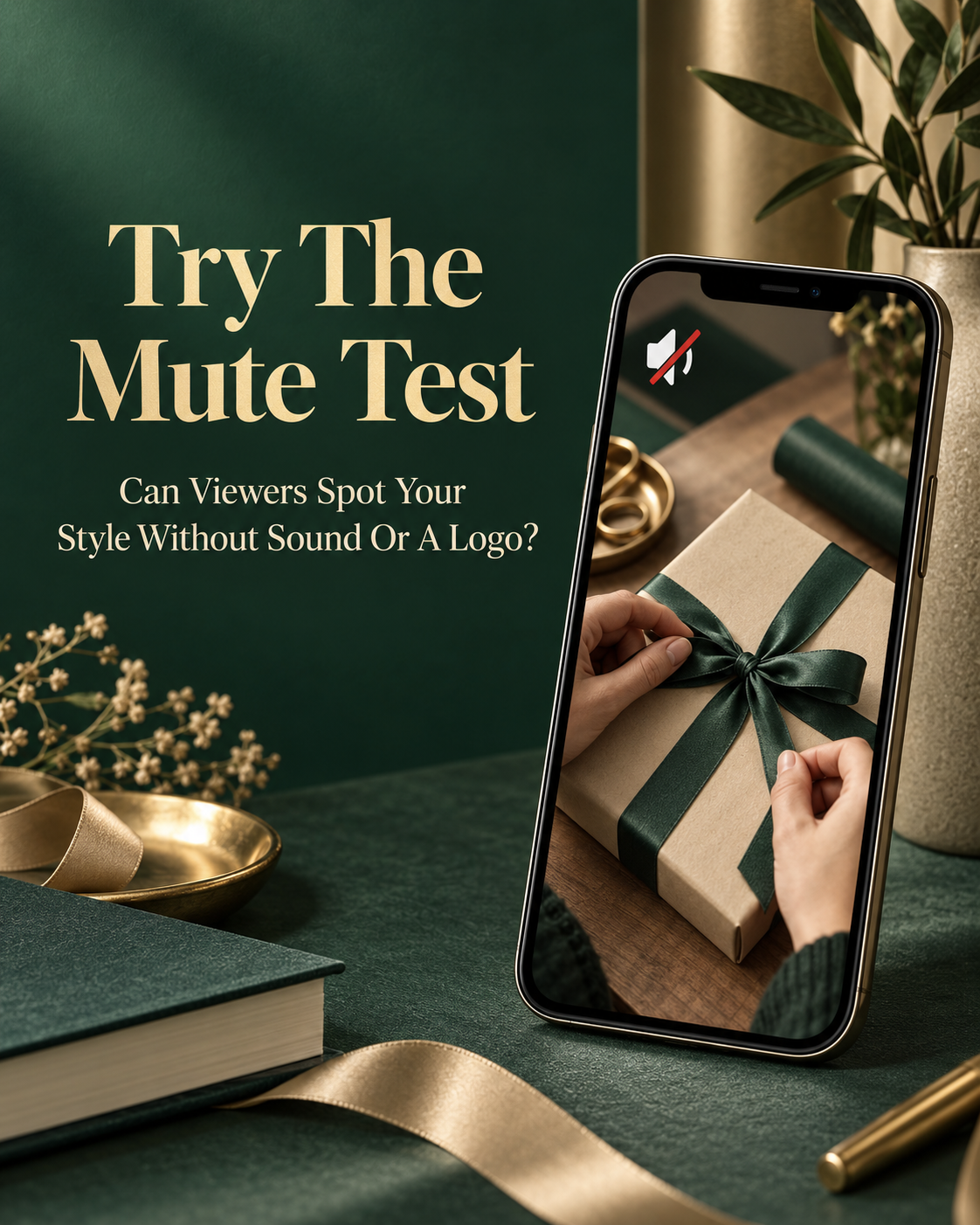
Caption: Watching on mute reveals what the video communicates visually.
6. Build the Video Around View, Proof and Promise
Give the two minutes a simple sequence: open with a view, show the proof and end with a promise. The view tells viewers what you believe or notice; the proof is the real scene; the promise explains what customers can expect from working with you.
For example, a professional who values clear advice could open with a common source of confusion, demonstrate how they explain a choice, then close with the standard of clarity clients can expect. Each part supports the same signature trait.

Caption: View, proof and promise give a short business video a clear shape.
7. Save This Before You Film
Keep the preparation brief: test the opening, show one trait, then watch the result muted. These three checks are useful when you have only a small recording window and need the video to work beyond a single post.
LPV Agency’s social media autopilot for UK businesses is built around clients recording two minutes of video per week while its agents handle strategy, editing, posting and consistency. A recognisable recording gives that process stronger material to work with.

Caption: A short pre-filming check can make each weekly recording more distinctive.
How Does This Work in Practice?
Write down the trait, choose one moment that demonstrates it and decide what viewers should understand by the end. Then record with the view, proof and promise sequence in mind. You can check the opening and run the mute test before the video is posted.
Who Is This For?
This approach suits UK business owners and professionals who need to build familiarity without spending hours filming. It is especially useful when you want customers to recognise your approach across a steady series of short videos.
Key Takeaways
- A recognisable video starts with a trait customers already associate with you.
- The opening ten seconds should say or show something specific to your business.
- One real scene can provide the proof behind your message.
- The mute test shows whether the video works visually.
- View, proof and promise provide a practical structure for two minutes.
Implementation Checklist
- Read recent customer feedback and select one repeatedly mentioned trait.
- Write an opening that a rival could not comfortably use.
- Choose a real work moment that shows the trait.
- Record a clear view, the proof and a relevant promise.
- Watch the draft with sound off and the logo hidden.
Common Mistakes
- Opening with a broad claim that could describe any competitor.
- Trying to demonstrate too many qualities in one video.
- Describing a trait without showing it happen.
- Assuming narration will carry a scene that says little on mute.
Which Trait Would You Show First?
Before your next two-minute recording, choose the quality your customers already recognise and find one scene that proves it. Save this checklist, test your opening and watch the result on mute. If you want help turning those weekly recordings into a consistent presence, speak to Alex at LPV Agency about done for you social media in London and across the UK.
FAQ: Practical Questions People Ask
What is the fastest way to apply How to Make Your Business Recognisable in a Two-Minute Video in a real business?
Start with one repeatable workflow, define the outcome, and automate only that part first. For example: Could a customer recognise your business with the sound off?
Before you film your next two-minute video: • Audit the opening ten seconds. • Pick one trait your customers already recognise.
• Show that trait in a real scene. • Try watching it without sound or a logo.
• Build the video around a clear view, proof and promise. Save this before you film.
Which trait would you show first?
How does this approach improve consistency and trust?
It creates a repeatable publishing cadence with clearer messaging and fewer manual delays, which improves audience confidence over time.
Do small teams need expensive tools to implement this?
No. A lightweight stack can work if it covers recording, editing, scheduling, and analytics with a clear process and ownership.
What should be measured first to validate results?
Track output consistency, content completion time, and conversion indicators (qualified leads, booked calls, or sales conversations).
Why is LPV Agency focusing on this strategy?
Because it reduces execution friction while improving visibility and lead quality. The goal is practical growth, not vanity metrics.