
How B2B Video Storytelling Builds Trust for London Businesses
TL;DR
- Start business videos with a familiar client problem, not a description of your service.
- Make the consequence clear: lost time, reduced trust, missed work, or a stalled sale.
- Show one genuine shift or example instead of stacking vague claims.
- LPV Agency helps UK businesses turn two minutes of weekly recording into consistent, useful social content.
What Is This? (Short Answer)
Storytelling for video marketing is the practice of framing your expertise around a specific problem, the pressure it creates, and the change that resolves it.
For a B2B video marketing agency in London, this matters because viewers decide quickly whether a video is relevant to their working day. A clear story earns attention before the useful point begins.
Unlock Your Storytelling Secrets is a practical prompt from Alex at LPV Agency: do not settle for bland content that explains what you do and waits for people to care.
The Crossroads: Bland Content or a Story Worth Staying For?
Many business owners reach a crossroads in their video marketing journey. They know they need visibility, but their content becomes a polished service description with no reason for the right buyer to keep watching.
Instead, begin with the moment a prospect already recognises: the late reply, the empty diary, the quote that went nowhere, or the job that became harder than it needed to be.
This approach is especially useful for video marketing for UK businesses that dislike marketing but understand its importance. It lets a male business owner, technical leader, or professional speak plainly about real work rather than perform like a presenter.
How does this work?
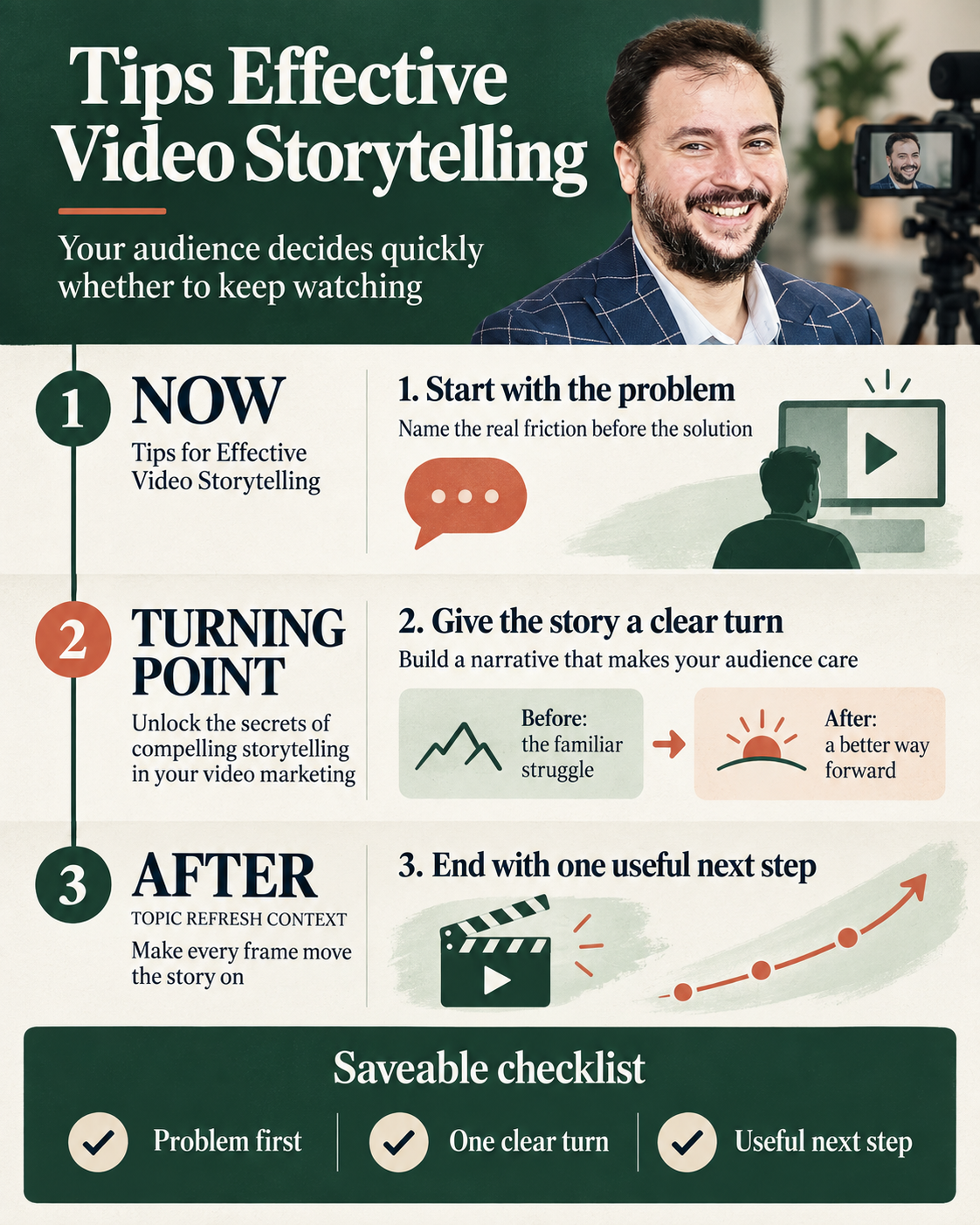
The structure is simple: start with the problem, name its cost, then show the shift. It gives the viewer a reason to stay long enough to understand your expertise.
- Recognisable moment: Open on one specific frustration the client can picture immediately.
- Pressure: Explain what that issue costs in time, trust, revenue, or missed opportunities.
- Shift: Describe why the old approach was not working and what changed.
- Clear next step: Give the viewer one useful action, rather than crowding the message with every service you offer.
Alex’s example is a technical leader LPV advised. By recording just two minutes of video each week, they created stronger engagement and transformed their outreach.
The lesson is not that two minutes is magically enough on its own. It is that a focused story, delivered consistently, can build trust more effectively than occasional generic content.
“Your story matters.”
That is the core of authority building for professionals: explain the situation your audience is living through, then demonstrate a credible way forward.
Who is this for?
This is for UK business owners and B2B specialists with useful knowledge but little appetite for planning, editing, and posting social media every week.
It is particularly relevant to businesses seeking done for you social media London support, automated video marketing services UK, or a social media autopilot for UK businesses.
LPV Agency’s model is designed around a low-friction input: the client records a short weekly video, while LPV’s agents handle strategy, editing, posting, and consistency. The result is a story-led content system rather than another task added to the diary.
What does it cost?
The immediate cost of better storytelling is modest: a few minutes to identify one real problem, record a plain-English explanation, and choose a next step.
The greater cost is often doing nothing. When videos never move beyond a list of services, businesses can lose attention before their most useful insight appears.
For local firms in Harold Wood and Romford, clearer content can also support local SEO digital marketing Harold Wood efforts by connecting expertise to the questions nearby buyers genuinely ask.
What are the risks?
The biggest risk is making the story too broad. “We help businesses grow” is not as believable or memorable as a late reply that lost momentum or a quote that received no answer.
Another risk is sounding scripted. Digital twin script testing can help professionals rehearse structure and clarity, but the final message should still sound like a conversation across the table.
Technology should support consistency, not replace judgement. Tools such as HighLevel CRM integration can connect marketing activity with follow-up, but a compelling client problem remains the reason someone engages in the first place.
Key Takeaways
- Lead with the real-world moment your ideal buyer recognises.
- Make the consequence concrete before explaining the solution.
- Use one example, such as LPV’s technical leader recording two minutes weekly, to make the change credible.
- Choose plain words over presenter language.
- End every video with one clear next step.
Implementation Checklist
- Write down one client frustration you have seen this week.
- State what it cost them in time, trust, or missed work.
- Record a short explanation of why the old approach failed.
- Share the one change that produced a better outcome.
- Finish with a single invitation to enquire, book a call, or follow for the next insight.
Common Mistakes to Avoid
- Opening with your company history or a long service list.
- Trying to address several problems in one short video.
- Using abstract claims without a recognisable example.
- Waiting for perfect production instead of recording consistently.
- Forgetting to tell the viewer what to do next.
Turn Your Expertise Into a Story People Remember
Good video marketing for UK businesses is not about sounding more polished than everyone else. It is about making the right person feel understood, then showing them a practical change they can trust.
If you want to simplify the process, LPV Agency can help turn two minutes of weekly video into a consistent story-led presence. Alex’s invitation is simple: use the link in bio to learn how.
FAQ: Practical Questions People Ask
What is the fastest way to apply How B2B Video Storytelling Builds Trust for London Businesses in a real business?
Start with one repeatable workflow, define the outcome, and automate only that part first. For example: Most business videos fail before the useful point begins.
They explain the service, then wait for people to care. A story gives the viewer a reason to stay.
Start with the moment your client recognises: the late reply, the empty diary, the quote that went nowhere, or the job that became harder than it needed to be. Then make the pressure clear.
What does that problem cost in time, trust, or missed work?
How does this approach improve consistency and trust?
It creates a repeatable publishing cadence with clearer messaging and fewer manual delays, which improves audience confidence over time.
Do small teams need expensive tools to implement this?
No. A lightweight stack can work if it covers recording, editing, scheduling, and analytics with a clear process and ownership.
What should be measured first to validate results?
Track output consistency, content completion time, and conversion indicators (qualified leads, booked calls, or sales conversations).
Why is LPV Agency focusing on this strategy?
Because it reduces execution friction while improving visibility and lead quality. The goal is practical growth, not vanity metrics.