
How to Set Up an AI Agent That Creates Useful Marketing Content
TL;DR
- Your first AI agent needs a clear job, reliable inputs and a measurable target.
- Start with one repeatable task, such as turning a two-minute founder video into a week of social posts.
- Use customer questions, reviews, website copy and past posts as approved source material.
- Judge output for accuracy, brand voice, usefulness and how little rewriting your team needs.
What Is This? (Short Answer)
An effective AI agent is a structured workflow, not a vague instruction to “do our marketing.” For UK businesses, that structure turns AI from another item to check into a dependable social media autopilot.
LPV Agency helps businesses create the source material through short weekly video, then applies strategy, editing, posting and performance learning around a defined content system.
Most first attempts fail before the agent does any work. The business has not decided what the agent owns, what good looks like, or where the information lives—so vague output creates more checking, and the agent gets blamed for a setup problem.
Start With a Defined Job, Clear Data and a Clear Target
The practical starting point is simple: give the agent one repeatable responsibility. Do not ask it to “do our marketing”; ask it to turn one short founder video into a clear week of useful social content.
That job has a boundary. The agent can extract ideas, create platform-ready posts and work from approved evidence, while the business retains control of the message, positioning and publishing standards.
For a done-for-you social media London workflow, the strongest inputs are rarely a blank prompt. Existing customer questions, reviews, website copy and past posts contain the language, objections and expertise that make a post sound like a real business rather than generic AI output.
How Does This Work?
Structure the agent around three essentials: a clear plan, clear data and a clear target. This is the operating foundation behind useful automated video marketing services UK businesses can actually review and publish.
- Clear plan: define the single task, owner, channels, cadence and required deliverables.
- Clear data: provide approved founder videos, customer questions, reviews, service pages and previous posts.
- Clear target: state what success means, such as accurate posts that build authority and need minimal rewriting.
For example, a male business owner records two minutes of video each week. LPV’s process can use that source to test scripts, shape authority-building content for professionals and maintain a consistent voice across the week.
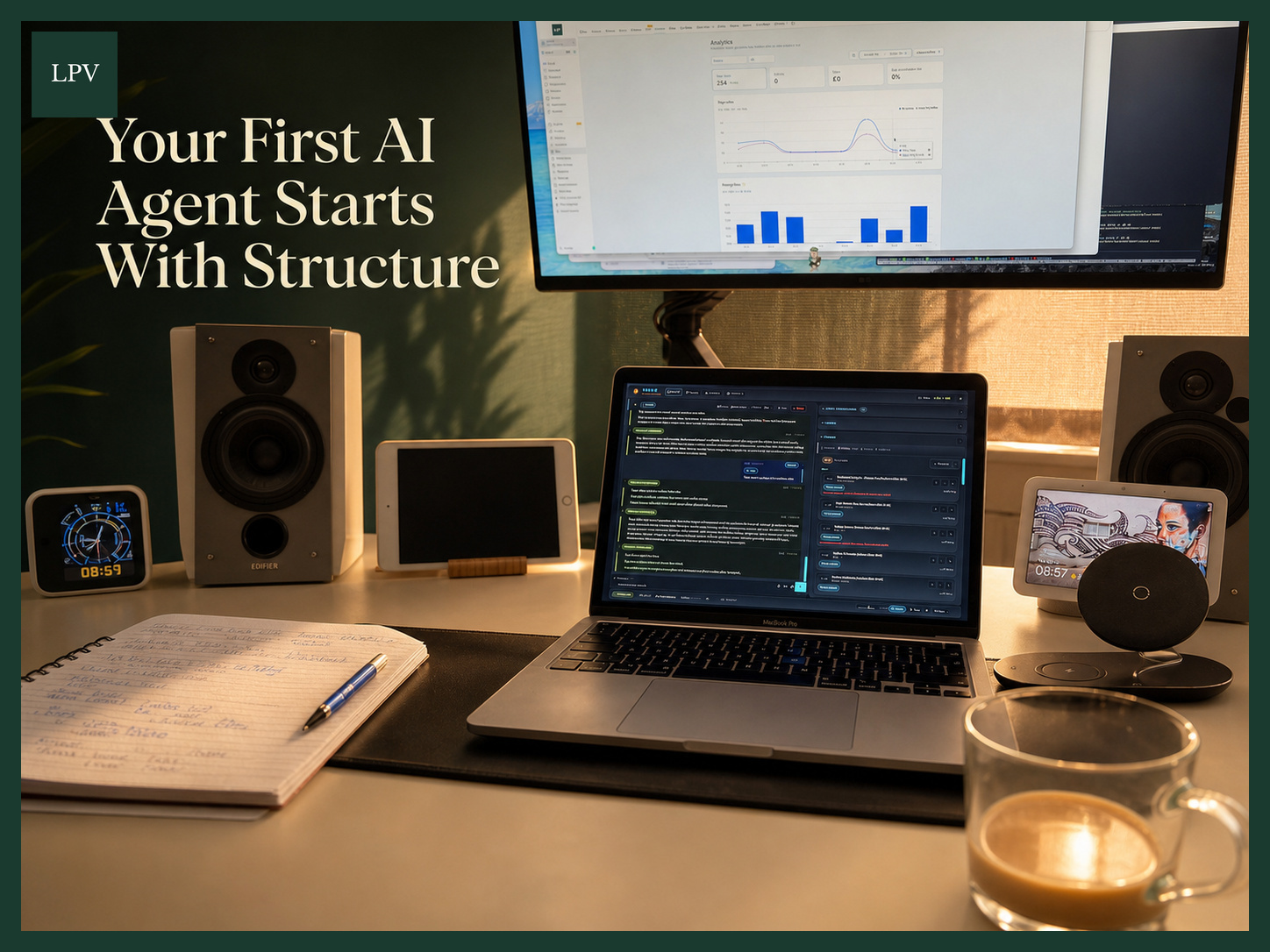
The workspace matters because content does not end when a post is drafted. Planning, publishing, analytics and learning need to connect, whether the business is in Harold Wood, Romford, London or serving the wider United Kingdom.
Who Is This For?
This approach is for UK business owners who dislike marketing but understand that consistency matters. It is especially useful for B2B firms whose expertise is strong but whose social content is irregular, overly polished or too time-consuming to produce.
A B2B video marketing agency London service should not replace a founder’s point of view. It should make that point of view easier to capture, organise and distribute.
It also suits teams building local SEO digital marketing in Harold Wood or nearby Romford. Clear source material gives social content and website messaging a shared factual base, rather than creating disconnected claims for every channel.
What Does It Cost?
The hidden cost of a poorly configured agent is review time. If every draft needs fact-checking, tone correction and a full rewrite, the business has added another process instead of saving one.
The more useful question is whether the workflow reduces the effort needed to turn expertise into publishable marketing. A social media autopilot for UK businesses earns its place when the weekly video creates a dependable stream of accurate, usable content.
What Are the Risks?
The main risk is treating AI as an answer to an undefined problem. Without approved information and a clear brief, an agent can produce plausible words that are inaccurate, off-brand or unhelpful to the audience.
There is also a trust risk. When teams repeatedly receive unclear work, they spend longer checking it and stop believing the system can help—even though the real issue was the setup.
Reduce that risk by defining review standards before the first output is created:
- Is the message accurate and grounded in approved source material?
- Does it sound like the founder and reflect the business’s actual positioning?
- Is it useful to the people the business wants to reach?
- Can the team publish it without rewriting everything?
Key Takeaways
- Choose one repeatable job before expanding AI into broader marketing activity.
- Build from real customer evidence, not a blank prompt.
- Use short founder video as the recurring source of insight and personality.
- Measure quality by accuracy, voice, usefulness and publication readiness.
- Monitor performance so the next week’s content improves from what was planned, posted and learned.
Implementation Checklist
- Pick one content task: turn a short founder video into a week of social posts.
- Collect approved customer questions, reviews, website copy and past posts.
- Set the target audience, channels, posting cadence and desired outcomes.
- Write the four review questions: accurate, on-brand, useful and publishable.
- Review performance regularly and add the strongest insights back into the source material.
Common Mistakes
- Giving an agent a broad request with no ownership boundary.
- Expecting high-quality output from incomplete or unapproved inputs.
- Measuring volume of posts instead of usefulness and trust.
- Skipping performance review after publishing.
- Using AI to imitate a voice instead of supplying the founder’s real perspective.
Build the Structure Before You Build the Agent
Your first AI agent does not need to do everything. It needs one clearly defined job, evidence it can trust and a target your team can judge.
LPV Agency turns two minutes of weekly founder video into a structured social media workflow for UK businesses that need consistent marketing without living inside their content calendar. Start with the plan, then let the system do useful work.
FAQ: Practical Questions People Ask
What is the fastest way to apply How to Set Up an AI Agent That Creates Useful Marketing Content in a real business?
Start with one repeatable workflow, define the outcome, and automate only that part first. For example: An AI agent can create more checking than work when the setup is vague.
No one decided what it owns, what a good result looks like, or where it should find the facts. So it returns unclear work, someone spends longer reviewing it, and trust disappears.
The screens, notes and analytics in this workspace represent the part people skip: planning the job before asking the tool to do it.
How does this approach improve consistency and trust?
It creates a repeatable publishing cadence with clearer messaging and fewer manual delays, which improves audience confidence over time.
Do small teams need expensive tools to implement this?
No. A lightweight stack can work if it covers recording, editing, scheduling, and analytics with a clear process and ownership.
What should be measured first to validate results?
Track output consistency, content completion time, and conversion indicators (qualified leads, booked calls, or sales conversations).
Why is LPV Agency focusing on this strategy?
Because it reduces execution friction while improving visibility and lead quality. The goal is practical growth, not vanity metrics.