
Franchise Food Content That Builds Trust Before the Pizza Reaches the Box
A menu photo can show what customers can buy. It rarely shows why they should trust the order.
The strongest franchise content starts earlier: at the counter, while the pizza is being made.
TL;DR
- Film ingredients, hands at work, and recognisable packaging.
- Close-up preparation footage makes food content feel believable.
- Staff do not need to perform for the camera to make the kitchen feel real.
- A familiar branded box turns the process into instant customer recognition.
What Is This? (Short Answer)
This is a simple food-content framework for franchises: show the ingredients, show the making, then end with packaging customers recognise.
It is a useful approach for video marketing for UK businesses because it captures a moment customers rarely see while making the final order feel more trustworthy.
How does this work?
It works by replacing polished-but-generic food imagery with visible proof of care.
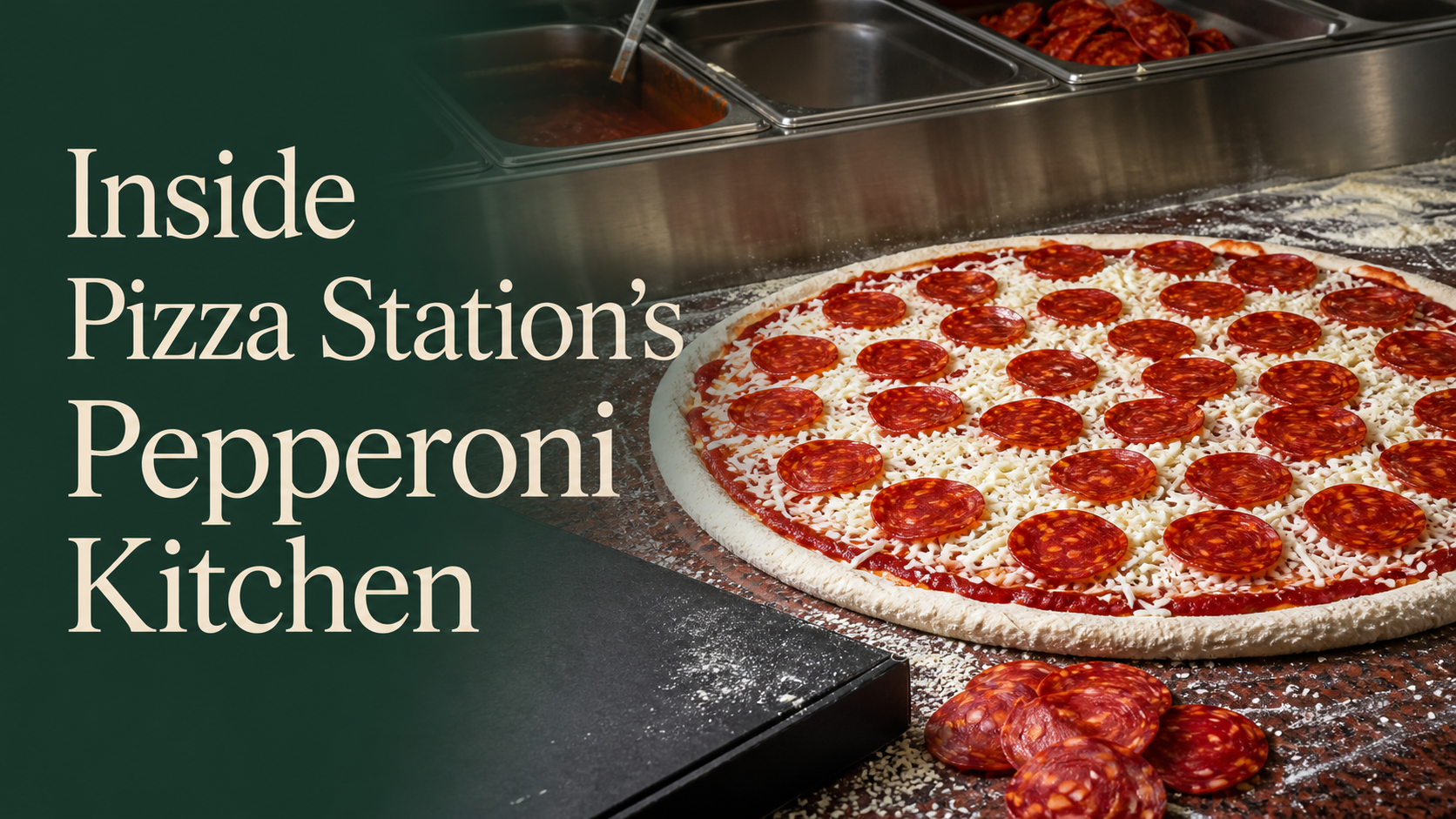
At the Pizza Station counter, a close-up of a large pepperoni pizza being built does the work. Loose slices on the prep surface and topping trays beside it make the order feel active, fresh, and specific.
Then show the hands and process. A side-on shot of a staff member working makes the kitchen feel real without asking them to become a presenter.
Finally, land on the recognition point. The black Pizza Station box, with yellow circular branding and the Coca-Cola mark, gives customers something they can place instantly.
Key Takeaways
- Show what happens before the finished product. The build is often more compelling than a static final shot.
- Make ingredients easy to see. Topping trays, pepperoni slices, and the pizza close-up create appetite through detail.
- Use real people naturally. A working staff member adds credibility without needing a forced performance.
- Use packaging as the ending. Recognisable branding connects the behind-the-scenes moment to the customer’s expected order.
- Keep the story simple. Ingredients, process, packaging is enough to create a clear franchise-content sequence.
Who is this for?
This is for franchise operators and local food businesses that want social content to feel more credible than a menu graphic.
It also suits teams using done for you social media London services or automated video marketing services UK, especially when staff have limited time and do not want to spend hours planning content.
The footage does not need a big performance. It needs a real working moment, clear food detail, and a branded finish.
What does it cost?
The source example focuses on the content approach, not a production budget.
The practical cost is mainly the time to capture a short real moment at the counter. LPV Agency positions ClientWorkSystem as a social media autopilot service where clients spend two minutes per week providing input while the system handles content from idea through creation and distribution.
What are the risks?
The main risk is filming food in a way that feels staged, unclear, or disconnected from the brand customers know.
- Do not hide the ingredients behind wide shots or clutter.
- Do not force staff to act for the camera when a natural working angle is stronger.
- Do not end without a recognisable brand cue.
- Do not make the content only about price when care and process are visible proof.
Implementation Checklist
- Film a close-up of one order being made.
- Keep topping trays or ingredients visible in the frame.
- Capture hands assembling, preparing, or finishing the food.
- Use a side-on staff shot while they work naturally.
- End with the branded box, bag, label, or packaging.
- Keep the sequence focused on one clear order and one recognisable finish.
- Reuse the three-check format across locations for consistent franchise content.
Common Mistakes to Avoid
- Starting with the finished food and skipping the making process.
- Using only menu photos when real preparation footage is available.
- Trying to make every staff member speak to camera.
- Leaving branded packaging out of the final shot.
- Adding so many shots that the simple food story gets lost.
Why does packaging matter in franchise food video?
Packaging gives the preparation footage a familiar destination.
Customers see a pizza being built, then see the Pizza Station box with its yellow circular branding and Coca-Cola mark. That shift turns a kitchen moment into an order they recognise.
Can this support local SEO digital marketing in Harold Wood and Romford?
Yes, when the content stays rooted in the real food, process, and local franchise experience.
For businesses serving Harold Wood, Romford, London, and the wider United Kingdom, regular short videos can give customers a believable view of the care behind an order instead of relying only on a menu image.
The Simple Content Rule
Film the moment a customer rarely sees, then let the food, process, and familiar box build appetite and trust.
If your business needs consistent social content without spending hours on marketing, ClientWorkSystem is built to handle videos, graphics, ads, and distribution from a small weekly input.
FAQ: Practical Questions People Ask
What is the fastest way to apply Franchise Food Content That Builds Trust Before the Pizza Reaches the Box in a real business?
Start with one repeatable workflow, define the outcome, and automate only that part first. For example: I was reminded that the strongest franchise content starts before the pizza reaches the box.
At the Pizza Station counter, the close-up does the work: a large pepperoni pizza being built, loose slices on the prep surface, and topping trays waiting beside it. That matters because customers do not only choose on price or a menu photo.
They want a quick, believable look at the care behind the order.
How does this approach improve consistency and trust?
It creates a repeatable publishing cadence with clearer messaging and fewer manual delays, which improves audience confidence over time.
Do small teams need expensive tools to implement this?
No. A lightweight stack can work if it covers recording, editing, scheduling, and analytics with a clear process and ownership.
What should be measured first to validate results?
Track output consistency, content completion time, and conversion indicators (qualified leads, booked calls, or sales conversations).
Why is LPV Agency focusing on this strategy?
Because it reduces execution friction while improving visibility and lead quality. The goal is practical growth, not vanity metrics.