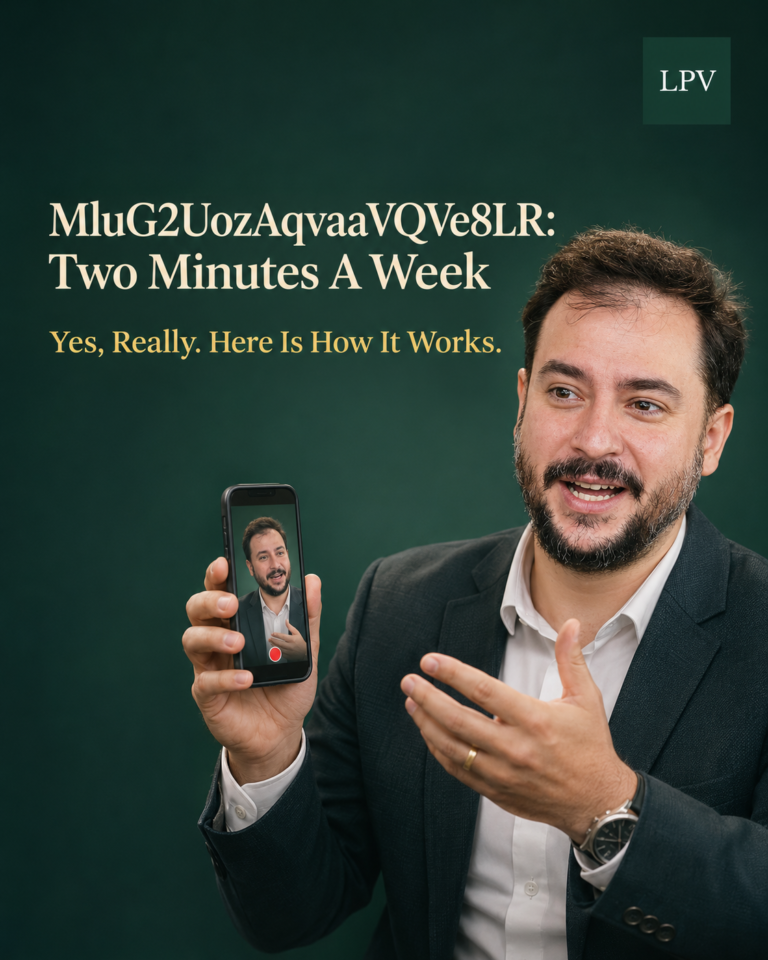
An origin story video helps buyers understand why your business exists, what problem prompted you to act and who you help now. I recommend keeping it clear and conversational: when your reason for starting feels specific, people can connect it to your offer before they decide whether to enquire.
That matters because buyers are already checking reviews, peer recommendations and third-party content before they speak to you. If your reason for starting sounds vague, people may feel that uncertainty before they trust the offer.

Why does an origin story video matter to buyers?
An origin story video matters because buyers often judge whether an offer feels believable before they understand every detail of it.
When I hear a clear reason for a business to exist, I can connect the service to a problem someone wanted to solve. The offer carries more weight because I understand what the owner noticed and why they cared enough to act.
For professionals building authority, trust usually comes before an enquiry. A short video can introduce the person behind the service and explain their point of view without requiring a long sales call first.
I would start here before posting tips, offers or case studies. The story gives future content a trust base and gives buyers context before they compare your price, process or competitors.
It also gives you material to repurpose across social posts, captions, pinned comments and follow-up content. The message starts with something real, so each use can lead people back to the reason behind your work.
That does not mean your story needs to sound polished, loud or rehearsed. You can build authority by explaining a real conviction in words a good client would recognise.
For more on making the message clear before creating content, read why many business owners have a clarity problem.

What should a business origin story include?
A business origin story should explain the problem you saw, why it bothered you enough to act and who you are trying to help now.
I think of those as three plain checks. They give the listener a reason to care about the business without asking them to work through your full career history.
Start with the problem you kept seeing in the market. Then explain why it mattered to you personally, before naming the people you focus on helping now.
That is different from saying, “We started in 2018, won this award, and now offer these services.” Dates, roles and awards can have their place, but they are less useful here than the problem that made you act.
For example, a male business owner in Harold Wood or Romford might explain that he kept seeing local firms waste hours on social media without creating trust, visibility or leads.
He could then say why that bothered him: good businesses were being ignored because they did not know how to show up consistently online. Finally, he could name the people he helps now: UK business owners who understand marketing matters but do not want to spend six or more hours every week managing it themselves.
That gives a done for you social media London campaign a reason to exist. The story connects the content to an identifiable problem and to the people the service is meant to help.
A weak version can sound like a company history:
“We started our agency to help businesses with marketing and have years of experience across different industries.”
A stronger version starts with the problem and speaks like a real person:
“We kept seeing UK business owners spend hours every week on social media, but the content still did not build trust, visibility, or leads. That bothered us because many of them were good businesses with no simple system for showing up consistently. So now we help them turn two minutes of weekly video into content that works across the year.”
The stronger version makes the problem, the reason it mattered and the people being helped easier to recognise. It gives the listener a clear route from what the business owner saw to what the business does now.

How do you record a founder story for social media?
Record your founder story in 30 to 120 seconds, speaking as though you are talking to one good client.
You do not need to sound like a keynote speaker or explain the full business model. I would rather hear a clear, human account of why you care than a performance that feels slick but says little.
If you are unsure where to start, use the problem, your frustration and the person you help as your outline. The three-line plan for briefing a business video is a useful way to prepare a concise message.
Use these practical points when you plan, record and share the clip:
- Write the problem first. Name the thing you kept seeing in the market, using words your intended audience will understand.
- Make the frustration specific. Explain why that problem bothered you enough to act, rather than relying on a broad statement about wanting to help.
- Name the person you help. Be clear about the business owner, professional or client type you serve now.
- Keep the recording short. Aim for 30 to 120 seconds and focus on the reason behind the business.
- Speak to one person. Imagine one good client listening, and explain the story to them naturally.
- Keep the delivery human. Clear and conversational is more useful than sounding overly rehearsed.
- Pin a follow-up comment. Tell viewers what to watch, read or do next, such as visiting a related post or booking link, depending on the platform.
- Use the clip consistently. Make it part of a wider social content plan rather than treating it as a one-off post.
You do not need to be confident on camera in the sense of giving a polished performance. A simple structure lets you concentrate on explaining the real reason behind your work to someone you want to help.
Once the video is posted, the pinned comment gives viewers a practical next step. The clip can also become a reference point for later posts, because it explains the thinking behind the advice and offers that follow.

What mistakes weaken a business founder story?
The biggest mistake is turning a founder story into a pitch, a list of credentials or a polished biography instead of making the reason for caring clear.
I would avoid opening with every career step or putting awards ahead of conviction. Proof can help, but it should not replace the reason you started or the problem you wanted to address.
Being too vague is another risk. “We wanted to help businesses grow” could come from almost any agency, consultant or service provider, so it gives a buyer little to recognise.
Compare that with: “We kept seeing UK business owners spend hours on social media without building trust, improving visibility, or creating leads.” The second statement names a specific problem and makes the reason for the service easier to understand.
I would also avoid trying to sound louder or more rehearsed than you really are. The point is to make your reason for caring obvious, not to prove how impressive you are.
Finally, do not forget what happens after someone watches. A pinned comment can guide them to the next useful piece of content, and a wider plan helps the story support consistent visibility over time.
One good video helps, but regular content gives buyers more opportunities to understand your work. Read more about how consistency builds trust and brings warm referrals.
Who can use a founder video across the UK?
Business owners and professionals across the UK can use a founder video when they need to build trust and explain their work clearly.
It is especially useful for people who know their work matters but struggle to communicate that on social media. It also suits owners who want authority without becoming full-time content creators or acting louder, slicker or more rehearsed than they are.
The approach applies across the UK, including to local and regional businesses that need trust before an enquiry. A business in London, Harold Wood or Romford can use the same structure to make its local expertise easier to understand.
In each case, I would keep the language close to the owner’s real voice. A generic marketing script can obscure the reason a particular business exists, even when the structure looks right on paper.
Local firms may also want better visibility without turning every week into a content production job. That is relevant whether they are looking for local SEO digital marketing in Harold Wood or a B2B video marketing agency in London.
For owners weighing the time involved in managing content themselves, the article on the hidden cost of DIY content explores that question further.
How can LPV Agency support an origin story video?
LPV Agency supports an origin story video by turning the owner’s real voice and market position into consistent social content, alongside the strategy and planning behind it.
I position the service as social media autopilot for UK businesses that hate marketing but understand its importance. The client records around two minutes of video per week, while LPV handles strategy, editing, posting, consistency and planning.
The service is designed for owners who want automated video marketing services in the UK without hiring a full-time social media manager. Instead of spending six or more hours a week on social media, the client records a short weekly video while LPV builds the content system around it.
Behind that simple input, LPV researches the business, tests scripts with 100 digital twin profiles, plans a 52-week content roadmap and connects the system with HighLevel CRM integration. The work uses the client’s real voice, market position and buyer objections to shape consistent content.
The secondary context places the service at £75 per month, as an alternative to hiring a full-time social media manager or a larger agency. The offer is built around removing the time burden from the business owner.
The wider service also includes HighLevel, described in the source context as a client management system used by over 2 million businesses, plus a $97 credit for clients to call and text their own clients. The source context also describes a 30-day promise: at least 20% more visibility within 30 days or a full credit.
Key takeaways
- A clear reason for starting gives buyers context before they assess your offer.
- Explain the problem you saw, why it mattered to you and who you help now.
- Aim for 30 to 120 seconds and speak as though one good client is listening.
- Use the clip as part of consistent social content, with a pinned comment guiding viewers to a next step.
- LPV Agency turns two minutes of weekly video into ongoing content, supported by research, script testing, planning and HighLevel CRM integration.
Start with the problem you saw and why you cared enough to act. Then watch on YouTube for the original video.