
Homelessness prevention technology can help services identify warning signs and act before someone loses their home. That was the central message I took from HRH Prince William’s Homewards session at London Tech Week: responsible use of data can bring people together earlier, before a situation reaches crisis point.
What is homelessness prevention technology?
Homelessness prevention technology uses information to help identify risks earlier and connect people who can act. At London Tech Week, the Homewards session moved the conversation away from shiny tools and towards responsible systems.
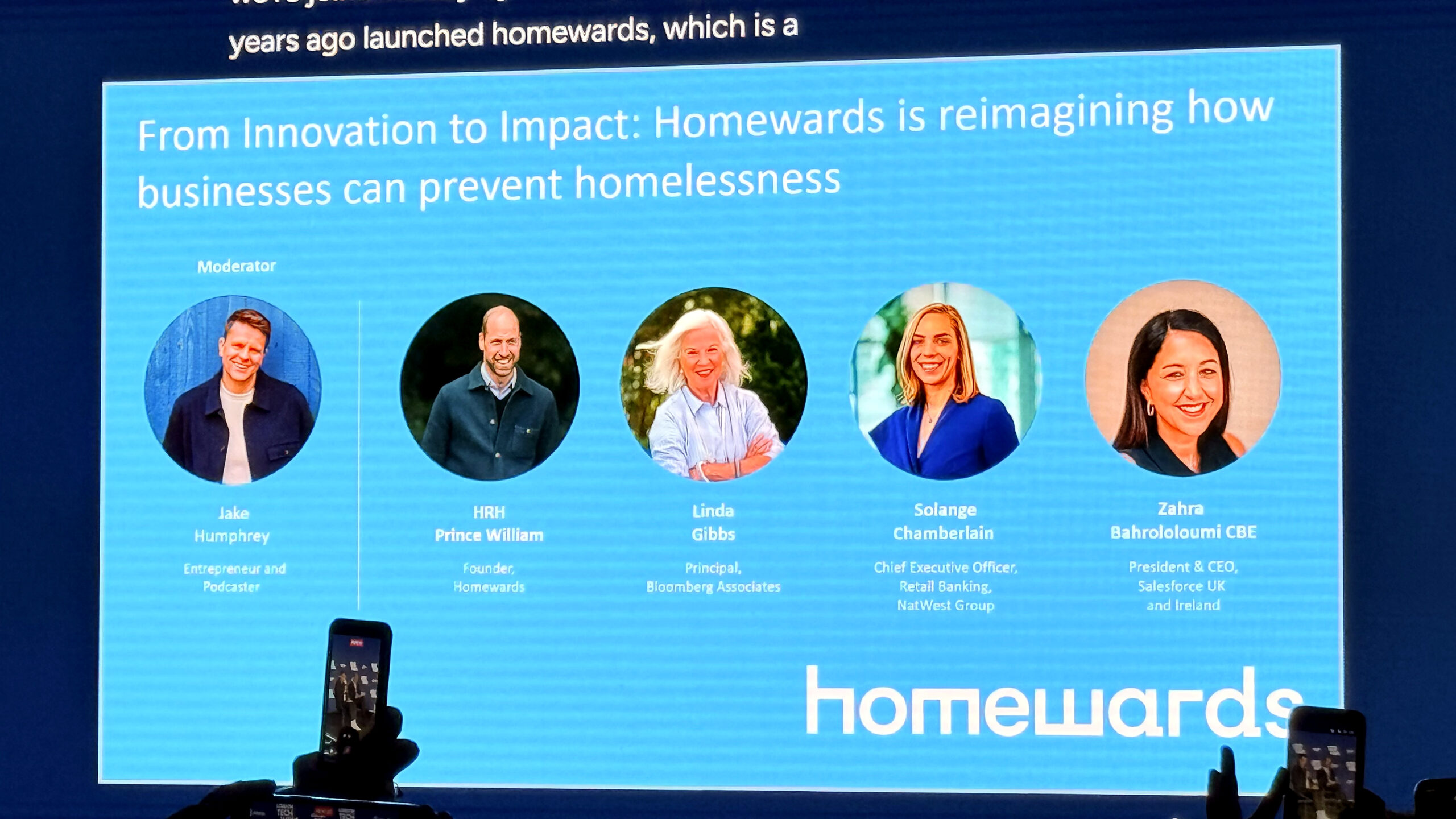
The session was titled “From Innovation to Impact: Homewards is Reimagining How Businesses can Prevent Homelessness.” Amid the event’s usual language of disruption, AI and scale, it asked how business, data and technology can prevent homelessness before it reaches crisis point.
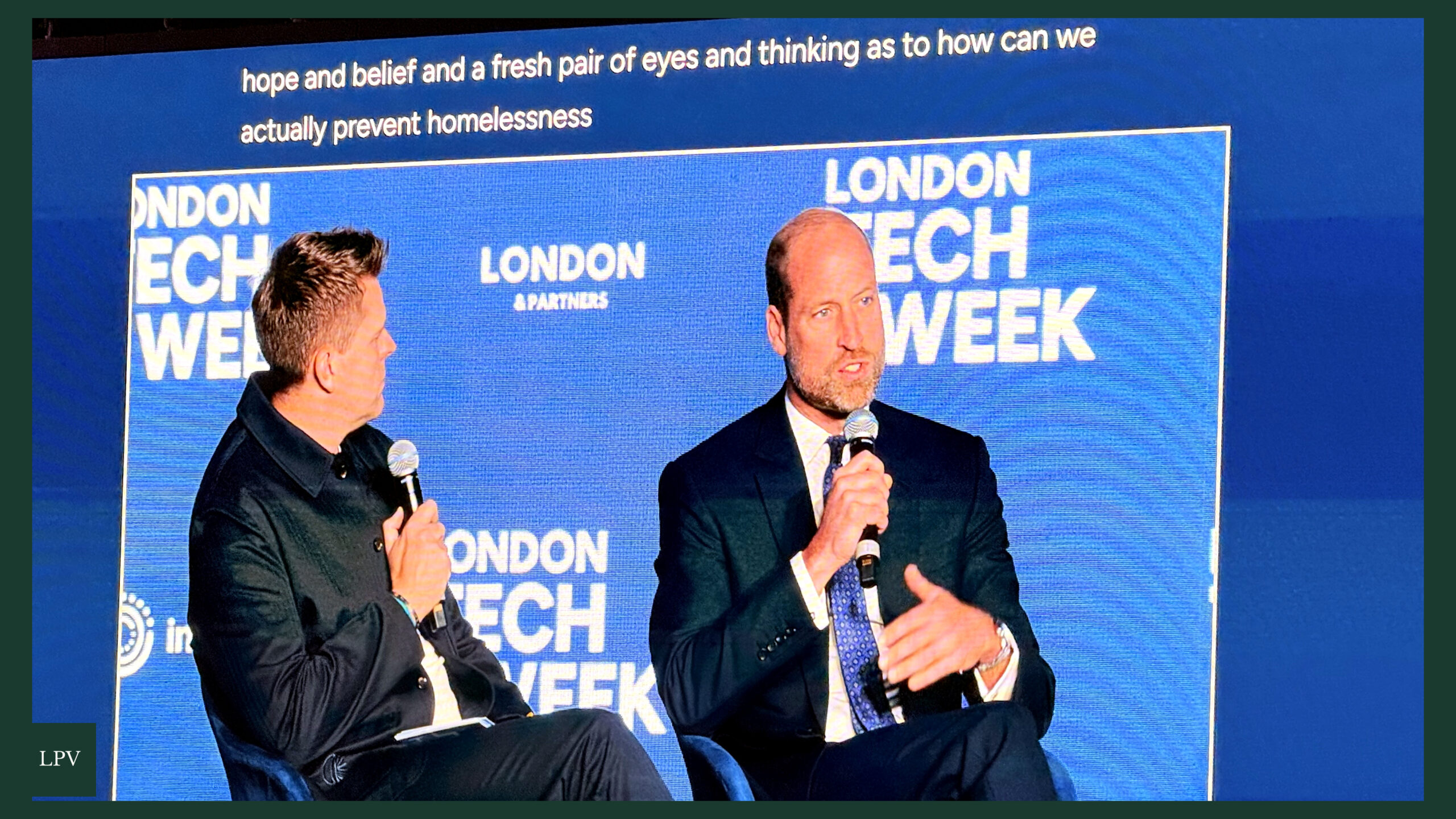
HRH Prince William attended as Founder of Homewards, the five-year programme aiming to make homelessness rare, brief and unrepeated. The session took place in the AI Arena and was moderated by Jake Humphrey.
Speakers included Solange Chamberlain from NatWest Group, Linda Gibbs from Bloomberg Associates, and Zahra Bahrololoumi CBE from Salesforce UK & Ireland. What made the session powerful for me was the shift in framing: technology can notice danger before lives collapse, as well as deliver speed, profit and automation.

Caption: HRH Prince William brought Homewards to London Tech Week with a clear message: prevention matters more than performance theatre.
What is the Homelessness Data Lab?
The Homelessness Data Lab is a national collaboration announced by Homewards with LandAid and Salesforce. It brings together business, government, local services, charities and people with lived experience.
Its aim is to use data responsibly, spot risk earlier and connect the right people at the right time, reducing harm before homelessness becomes visible. Many people show warning signs long before they lose their home.
In business, we might call this early signal detection; in real life, it can mean a family keeps their home.

Caption: The Homelessness Data Lab links data, business and frontline experience to help identify risk before crisis point.
For more from the event, read my reflection on why the real value of London Tech Week is still in the room.
What can businesses learn from prevention?
Businesses can learn to notice small signals and act before problems become expensive or damage becomes public. As one line from my reflection puts it: “The best systems do not wait for public damage.”
Whether you run a national organisation in London, a local firm in Harold Wood or a growing company in Romford, your systems reveal what you value. Do they only measure growth after attention arrives, or do they help you act earlier?
Less theatre. More responsibility. Less “look what we built.” More “who did this protect?”
Caption: The future of technology is not just faster tools; it is better stewardship and earlier action.
This principle reaches beyond housing into B2B video marketing, local SEO, CRM and authority building. My reflection on what a Formula One car at London Tech Week teaches UK businesses about better systems explores another view of how systems support outcomes.
Prevention can be cheaper than repair. Late intervention in homelessness can involve emergency housing, trauma, public services and long-term instability; late marketing can mean panic posting, rushed campaigns, weak positioning and expensive lead generation when trust has not been built.
How can businesses apply early signals to marketing?
Businesses can apply early signals to marketing by collecting useful questions and ideas, turning them into content and connecting that activity to follow-up. At LPV Agency, this prevention-first idea shapes how we think about social media autopilot for UK businesses.
Many business owners have ambition but wait until visibility has dropped, trust has gone quiet or competitors own the conversation. Done-for-you social media in London, automated video marketing services in the UK and B2B video marketing support can be early signal systems for authority, consistency and commercial trust.
For a male business owner, founder or professional who hates marketing but understands its importance, recording two minutes of video each week can create a repeatable trust engine. LPV’s agents handle strategy, editing, posting and consistency, turning raw expertise into authority-building content.
Caption: LPV Agency helps UK businesses turn small weekly video inputs into consistent authority and social visibility.
The approach is for UK business owners, founders and professional service providers who want better systems and consistent visibility without managing content every day. That includes companies in London, Harold Wood, Romford and across the United Kingdom.
It also applies to leaders who want to prevent loss of trust, poor lead flow or a silent brand. Read more about how done-for-you social media helps London businesses reclaim their week.
- Capture signals: collect client questions, objections and weekly video thoughts before there is a crisis. Look for lost enquiries, low visibility, inconsistent posting and weak follow-up.
- Interpret them: turn useful inputs into content themes, campaigns and positioning. Digital twin script testing can help professionals explore versions of a message before recording or publishing, so good ideas land more clearly.
- Distribute consistently: create a weekly two-minute video habit and use a done-for-you system to edit, schedule and repurpose content across social channels.
- Follow up: use tools such as HighLevel CRM integration to connect content and attention with enquiries and sales activity.
- Review what matters: assess which topics create trust, not just views, and use local SEO signals naturally if you serve Harold Wood or Romford. Each month, ask what problem you could spot earlier.
What are the risks of using data and automation?
The biggest risk is using data or content without responsibility, context or human judgement. Homewards’ focus on responsible data use matters particularly when people face vulnerable and sensitive life circumstances.
For businesses, automation should support human trust. Do not automate messages that need empathy, chase reach while ignoring reputation, or confuse activity with impact.
Common mistakes include making technology the hero instead of the human outcome, waiting for a crisis before building a system, posting only when sales slow down and using AI or automation without a clear trust strategy.
Ignoring local authority signals in London, Harold Wood and Romford, or measuring noise instead of meaningful action, can also weaken the approach.
Key takeaways
- Prevention is the serious story: Homewards brought homelessness prevention into the UK’s technology conversation.
- Data should protect people: better information can support earlier action through the Homelessness Data Lab.
- Business has a role: it can be part of a system that helps people act sooner, beyond placing a logo on a charity page.
- Better signals matter: technology is most useful when it helps people notice what matters earlier.
- Marketing can follow the principle: consistent video marketing for UK businesses can help prevent invisibility before it becomes a sales problem.
My lasting thought on homelessness prevention technology is that the future calls for better stewardship as well as faster tools. For homelessness prevention, that means spotting risk before someone loses their home; for businesses, it means protecting trust, visibility and reputation before damage becomes public.
Ready to make your marketing more preventative, consistent and human? Speak to LPV Agency about automated video marketing services for UK businesses and turning two minutes of weekly video into a social media autopilot system that builds authority without adding more noise.