
Vanity metrics in marketing, such as likes, shares and follower counts, can give business owners a false sense of progress when conversions are standing still. I believe the better approach is to focus on results that support your business goals, backed by market research, competitor analysis and consistent content.
Why can vanity metrics in marketing be misleading?
Vanity metrics can be misleading because popularity does not necessarily translate into meaningful business growth. Likes, shares and follower counts may look good on paper while conversion rates stagnate.
At a recent marketing seminar, a discussion focused on this problem. It reminded me how easy it is for business owners to get lost in data and treat visible activity as evidence that their marketing is working.
When entrepreneurs concentrate on popularity, they can spend time tracking superficial numbers instead of working on activities with a greater impact. They may also miss opportunities to turn leads into customers.
That does not mean you should ignore your audience. It means looking beyond the most visible numbers and asking whether your content is helping you make progress towards your business goals.
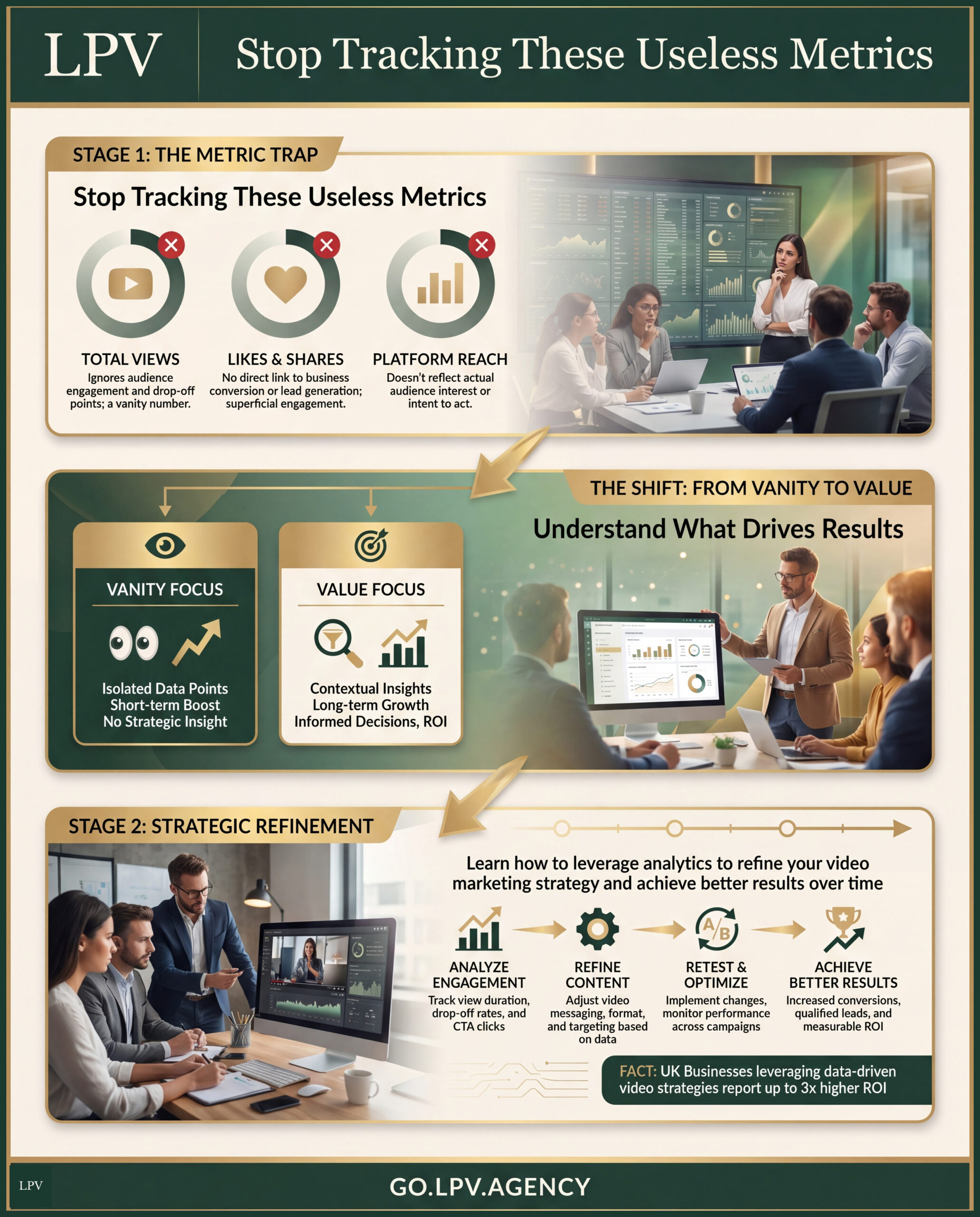
Which marketing results should businesses focus on?
Businesses should focus on actionable results that align with their goals, including conversions, rather than judging success by popularity alone. Tracking the right measures gives you a clearer view of marketing effectiveness and helps you allocate resources more effectively.
At LPV, we prioritise performance over popularity. Our aim is to help businesses see what drives growth, so they can make decisions using useful data rather than a reassuring follower count.
Regularly reviewing content performance also gives you a basis for adjusting your strategy. If you ignore the data, you risk repeating an approach that is not helping you reach the people who need your services.
For more on looking beyond surface-level numbers, read our article on turning vanity metrics into real conversations.
How does LPV plan video content around performance?
We plan video content around performance by researching your market, analysing competitors and testing ideas before recording. This gives us a strategy for reaching the audience that needs your services most, instead of posting content at random.
As part of our research, we test content against a digital panel of 100 ideal client personas before hitting record. We then handle the work from strategy through to execution, with the aim of producing content that resonates with the right audience.
Understanding your market and competitors is central to that approach. It helps us connect content with your strategic marketing goals and gives us data to guide decisions as your marketing develops.
Our guide to building a weekly video system explains more about replacing random posting with a consistent approach.
How much video content do LPV clients need to record?
LPV clients need to record two minutes of video each week; our team handles editing, distribution and consistency across platforms. This keeps the recording commitment manageable while we take care of the rest of the process.
Consistency matters because content production is easy to neglect when you are busy running a business. Our service is designed for UK businesses that recognise the importance of marketing but find it overwhelming or unappealing.
Whether you run a small startup or an established company, we aim to simplify video marketing so you can concentrate on your business. The time saved can also help you focus on the activities that need your attention.
How can businesses improve their marketing decisions?
Businesses can improve their marketing decisions by connecting their measures to business goals, reviewing performance regularly and adjusting their strategy using the data. I would start with these practical steps:
- Identify the measures that align with your business goals and look beyond likes, shares and follower counts.
- Research your market and competitors so your content strategy reflects the audience you want to reach.
- Set aside time each week to record video content and maintain consistency.
- Engage with your audience and review how your content performs.
- Discuss your marketing needs with LPV and adjust your approach using what the data tells you.
Common mistakes include neglecting research, failing to engage with your audience, producing content inconsistently and leaving data out of decisions. Each can make it harder to see whether your marketing is contributing to your goals.
Our article on why focus matters for UK business growth offers another perspective on choosing where to direct your attention.
Key takeaways and next step
- Vanity metrics in marketing can suggest progress even when conversions are stagnant.
- Performance measures help you assess effectiveness and direct resources towards business goals.
- Market and competitor research help shape content for the right audience.
- LPV clients record two minutes of video weekly, and our team handles the remaining production and distribution work.
- Regular review and data-led adjustments help you respond to opportunities.
Ready to stop guessing and start achieving? Contact us today to discuss your marketing needs and how LPV can help.