
Decoding VUCA & BANI: Insights from LPV’s Corporate Connections Meeting in London
TL;DR
- Understanding VUCA and BANI frameworks is crucial for navigating today’s business landscape.
- Key insights from industry leaders Fred Dearden and Professor Tim Dingle emphasize agility and adaptability.
- LPV is committed to helping businesses simplify their marketing strategies amidst complexity.
- Join us in exploring how to turn challenges into opportunities.
- Connect with LPV for tailored content solutions leveraging AI technology.
What Is This? (Short Answer)
This blog post recaps the insights shared during the Corporate Connections meeting in London, where industry leaders discussed the VUCA and BANI frameworks shaping the current business environment.
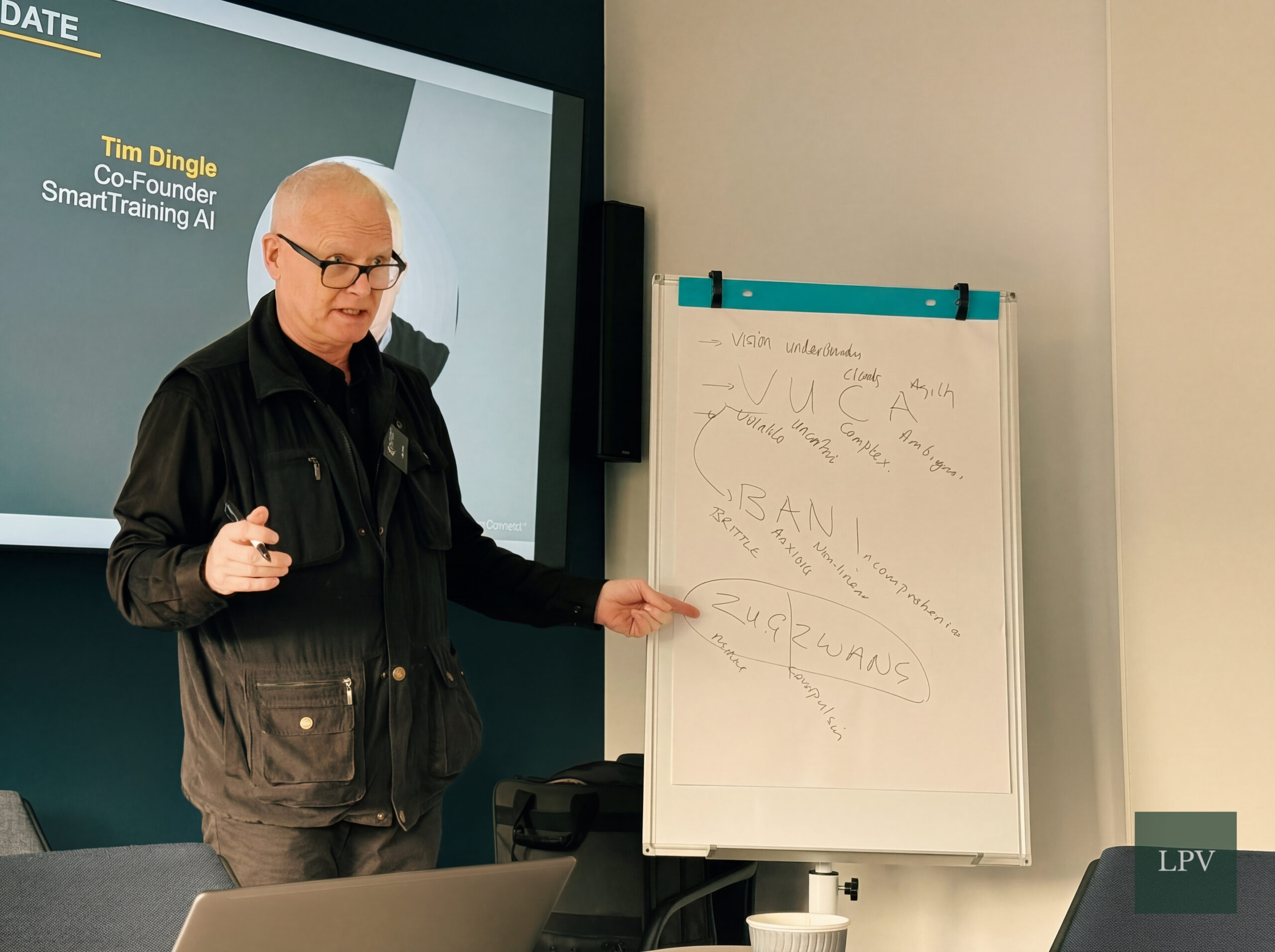
At the recent Corporate Connections meeting in London, LPV hosted an insightful discussion featuring Fred Dearden from Forvis Mazars and Professor Tim Dingle. The focus was on navigating the complexities of our current world, emphasizing the frameworks of VUCA and BANI.
These concepts serve as essential tools for businesses aiming to thrive amidst uncertainty.
Understanding VUCA: The Framework for Uncertainty
The first framework discussed was VUCA, which stands for Volatile, Uncertain, Complex, and Ambiguous. Each component highlights the challenges businesses face today. For instance, volatility refers to the rapid changes in markets and consumer preferences, while uncertainty reflects the unpredictability of future events.
As Fred Dearden articulated, recognizing these elements is the first step towards strategic planning. By understanding VUCA, businesses can develop agile strategies that allow them to pivot when necessary and seize opportunities as they arise.
Exploring BANI: A New Perspective on Business Challenges
In addition to VUCA, the meeting introduced BANI—Brittle, Anxious, Non-linear, and Incomprehensible. This framework reflects the modern business landscape’s emotional and psychological dimensions. As Professor Tim Dingle emphasized, businesses must be aware that the environment can be brittle, where systems collapse easily under pressure.
The notion of being anxious speaks to the heightened stress levels among leaders who need to make critical decisions quickly. Understanding BANI empowers businesses to recognize these emotional factors, further enhancing their adaptability and resilience.

Zugzwang: Recognizing the Trap of Action
Another compelling concept discussed was Zugzwang—a situation where any decision made can lead to a worse outcome. This concept is crucial for leaders to understand as they navigate a landscape filled with complexities. The key takeaway here is that in times of uncertainty, sometimes inaction can be more beneficial than hastily making a decision.
As indicated during the discussion, recognizing when to pause and reflect is vital. Businesses must cultivate the ability to analyze situations deeply before committing to a course of action.

How Does This Work?
Implementing the insights from VUCA and BANI requires a shift in mindset. Businesses need to foster a culture of agility, encouraging teams to embrace change and remain flexible. This involves regular training and updates on market trends to keep everyone informed and prepared.
Who Is This For?
This framework is suitable for business leaders, marketers, and entrepreneurs seeking to navigate today’s complex environment. Those who are proactive in understanding these frameworks will find themselves better equipped to handle uncertainty and thrive in their respective fields.
What Does It Cost?
While the frameworks themselves are free to adopt, the real investment lies in the implementation. Businesses may need to allocate resources for training, strategy sessions, and potentially consulting services to effectively integrate these insights into their operations.
What Are the Risks?
- Failure to adapt could result in missed opportunities and stagnation.
- Overreacting to VUCA and BANI without a strategic approach may lead to hasty decisions.
- Not recognizing Zugzwang can result in detrimental actions being taken at critical moments.
Key Takeaways
- VUCA and BANI frameworks provide crucial insights into the current business environment.
- Agility and adaptability are essential for businesses to thrive amidst uncertainty.
- Understanding emotional and psychological factors can enhance decision-making.
Implementation Checklist
- Conduct training sessions on VUCA and BANI for your team.
- Establish regular check-ins to assess your business’s adaptability.
- Encourage open discussions about strategic decisions and potential risks.
Common Mistakes
- Ignoring the emotional aspect of business challenges.
- Failing to recognize when to pause decision-making processes.
- Not leveraging the frameworks to create actionable strategies.
Closing Thoughts
Understanding and applying the VUCA and BANI frameworks is essential for modern businesses. As demonstrated in our Corporate Connections meeting, insights from industry leaders can guide you through complexities and turn challenges into opportunities.
At LPV, we are dedicated to helping businesses simplify their marketing strategies, even in turbulent times. Let’s connect and explore how our AI-powered solutions can enhance your business’s online presence!

FAQ: Practical Questions People Ask
What is the fastest way to apply Decoding VUCA & BANI: Insights from LPV’s Corporate Connections Meeting in London in a real business?
Start with one repeatable workflow, define the outcome, and automate only that part first. For example: Gaining clarity on today’s business landscape at Corporate Connections London!
Attended the monthly Corporate Connections meeting in London. My guests, Fred Dearden from Forvis Mazars and Professor Tim Dingle, shared invaluable insights.
The discussion centered on deciphering the complexities of our current world.
How does this approach improve consistency and trust?
It creates a repeatable publishing cadence with clearer messaging and fewer manual delays, which improves audience confidence over time.
Do small teams need expensive tools to implement this?
No. A lightweight stack can work if it covers recording, editing, scheduling, and analytics with a clear process and ownership.
What should be measured first to validate results?
Track output consistency, content completion time, and conversion indicators (qualified leads, booked calls, or sales conversations).
Why is LPV focusing on this strategy?
Because it reduces execution friction while improving visibility and lead quality. The goal is practical growth, not vanity metrics.